I’ll patch a roof, pull wet drywall and haul a truck bed full of broken limbs without thinking twice. Give me a cordless drill and a free weekend and I’m happy. But the last time I had storm damage to my house, the part that humbled me wasn’t the carpentry. It was the insurance paperwork that came after.
Severe convective storms, meaning tornadoes, hail and straight-line wind, caused $51 billion in U.S. insured losses in 2025, according to Triple-I, citing Gallagher Re. That was the third year in a row above $50 billion. Plenty of those homeowners were like me: handy, stubborn and sure they could manage it all alone. My rule now is simple. DIY the repairs. Don’t DIY the negotiation.
When a Storm Hits: Safety and Triage First
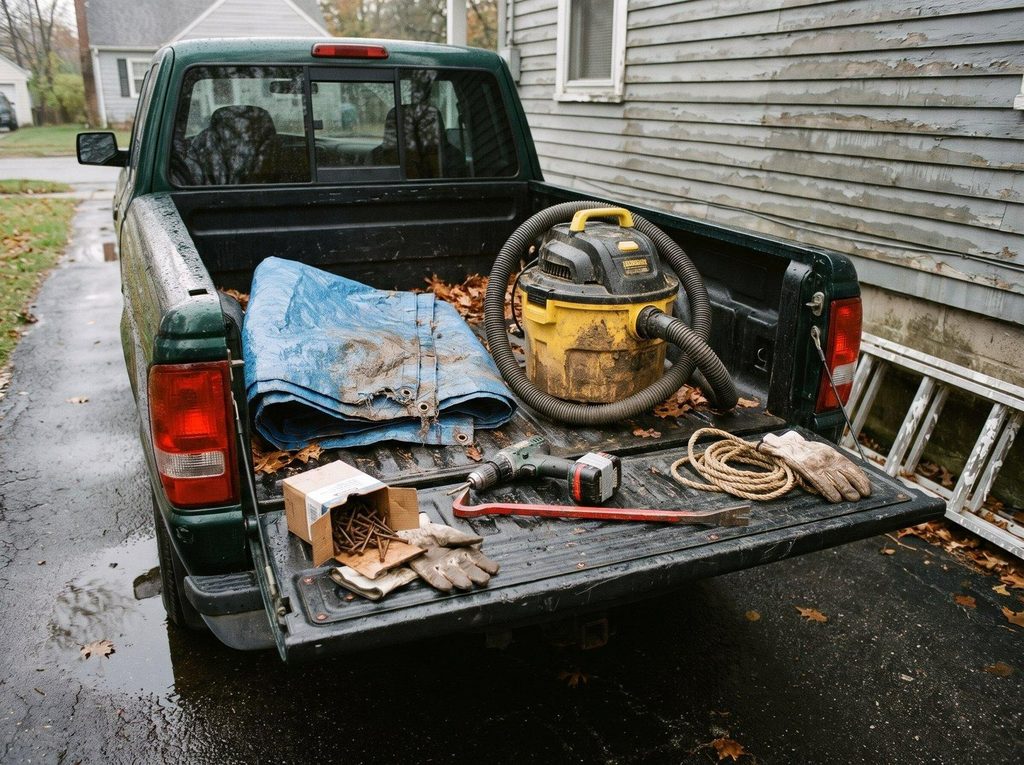
Basic gear for emergency storm cleanup: tarps, a wet/dry vac and cordless tools in a truck bed
Before I touch a single tool, I walk the property and look for anything that can hurt me. Downed lines, sagging ceilings and standing water near outlets all come first. If water is anywhere near the electrical panel, I shut off power at the main and stay out of that room.
Then comes the damage control. I cover open roof sections with heavy tarps, stop active leaks and move anything valuable out of the wet zone. I also shoot photos of everything before I move it, because once the cleanup starts, the evidence disappears fast.
Once it’s safe, I walk a slow lap of the whole house, not just the spot that’s obviously hurt. Hail and wind tend to hit one side harder, so I check all four. I look at siding, window frames, vents and the AC unit, then take a flashlight into the attic for wet insulation, stains or daylight where there shouldn’t be any.
Some home damage goes beyond what a tarp and a weekend of repairs can fix. When the damage is extensive, it’s worth getting local professional advice before accepting an insurance settlement. For example, homeowners dealing with major property damage in Pennsylvania may consider consulting a Pennsylvania public adjuster to help review their claim and assess whether the proposed settlement reflects the full extent of the damage. Taking time to understand your options can help you avoid accepting less than you may be entitled to.
What I Fix Myself After Storm Damage to My House
This is my turf. A wet/dry vac pulls standing water out of a basement or garage quickly. A pry bar and a utility knife get soaked drywall off the studs before mold gets ideas. The truck earns its payment on debris runs, since a single oak limb can fill the bed.
Small drywall damage is well within a weekend warrior’s reach, and I’ve written up the drywall repairs I handle myself and the ones I won’t touch. Shingle replacement on a low-slope section, fence panels and gutter reattachment are also fair game if you’re comfortable on a ladder.
There’s a catch, though. Emergency repairs that stop further damage are one thing. Permanent rebuilds before your insurer has seen the loss are another. Tear out too much too soon and you’ve destroyed the proof of what the storm actually did.
For the jobs I hand off, I get more than one written bid before I commit. Storm chasers show up fast after a big storm with free inspections and pressure to sign today, so I check the license, insurance and references first. I also hold back part of the payment until the work is done.
Documenting the Damage Like a Pro
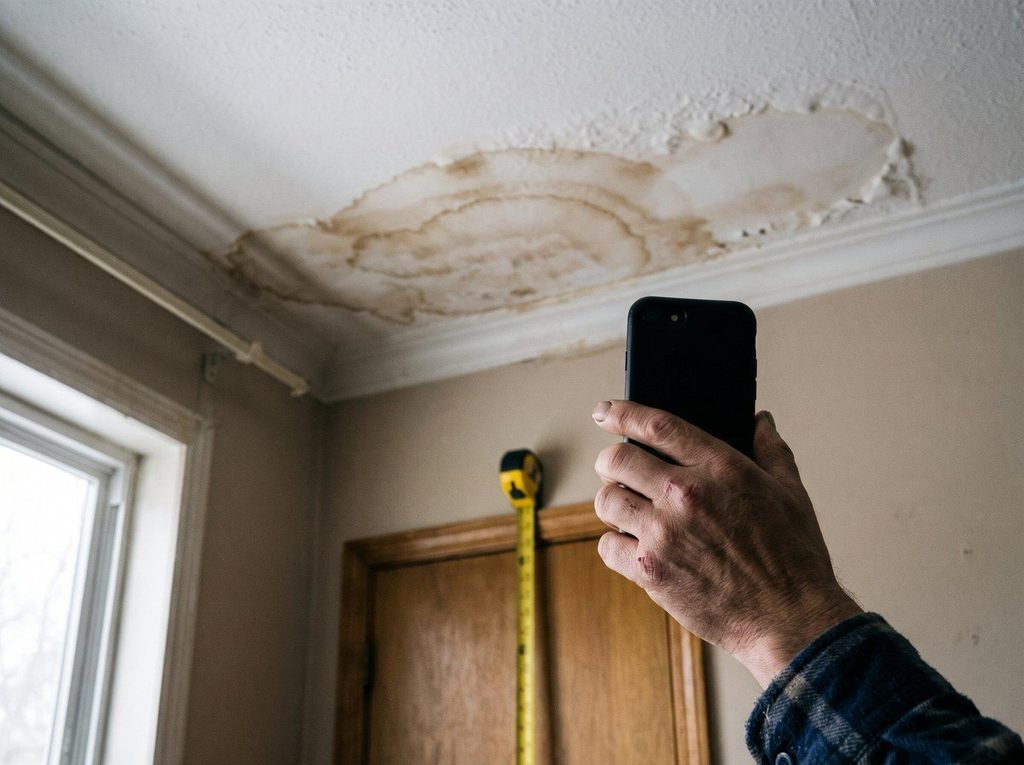
Dated photos with a tape measure for scale make the damage easy to prove
Good documentation is the most useful skill I picked up from the whole mess. I photograph every damaged area from a few angles, add a tape measure for scale, and record a slow video walk-through of each room. Receipts for tarps, pumps and temporary repairs go in one folder. A running log with dates and times goes next to it.
Keep damaged materials until the adjuster or insurer has looked at them, if your policy allows it. Check the policy language on notice deadlines too. Many policies expect prompt notice after a loss, and I won’t guess at the number for you. Read your own paperwork.
While you’re in the policy, check two more things: whether your roof pays out at replacement cost or actual cash value, and whether the damage is covered at all. Standard homeowners policies usually exclude flood damage, which takes separate coverage.
Water is the sneaky one. Insurify’s roundup of Triple-I data through 2022 puts water damage and freezing at 27.6% of homeowners claims, with an average payout near $14,000. Wind and hail made up roughly 40% of claims in the same data. Those aren’t rare events, and the Triple-I storm loss report shows the trend isn’t cooling off.
Where DIY Ends: The Insurance Claim

Comparing the insurer’s estimate against contractor line items takes more patience than skill
A sander costs forty bucks. Nobody sells a claim-negotiation kit.
Insurer estimates and contractor estimates rarely match. Scope is the usual fight: the adjuster writes up the visible shingles, while you know the decking underneath is soaked, the insulation is ruined and the repair will trigger code upgrades. Depreciation is the other one. A roof that’s 15 years old gets paid at a discount, and the math isn’t always explained clearly.
I can tell you what a fair repair costs because I’ve done the work. What I can’t do well is argue line items against a professional claims reviewer who handles these files daily. That’s a different trade. If you’re weighing whether a repair is worth a pro’s time, I covered the same logic in deciding between DIY repairs and a pro.
What a Public Adjuster Actually Does in Pennsylvania
A public adjuster works for you, not the insurance company. They inspect the damage, build the estimate, handle the paperwork and negotiate with the carrier on your behalf.
Pennsylvania regulates this closely. According to the PA Insurance Department, public adjusters must be licensed, and they must use a Department-approved contract. The fee comes out of your claim payments, not on top of them, and no work should start without a signed contract. The rules for those contracts sit in 31 Pa. Code Chapter 115, which is worth skimming before you sign anything.
Two cautions from my own experience. First, storms bring door-knockers, so verify any license with the state before you talk money. Second, fees reduce what you net. For a small claim near your deductible, calling your own insurer directly may be the smarter move.
A Simple Rule I Use: Repair vs. Claim
After a few of these, I stopped agonizing and started using a checklist. It lines up with what I said in my guide on what to do first when a storm hits the roof, just with the claim side added.
I handle it myself when: – The damage is cosmetic or clearly below my deductible – The fix is something I’d do anyway, like a fence panel or a gutter – The insurer’s number matches what a contractor quotes
I bring in a licensed adjuster when: – The claim was denied or the offer looks low – The insurer is dragging its feet – It involves the roof, a fire or major water intrusion – The paperwork is eating more hours than the repair would
Keep the Tools, Hand Off the Paperwork
Fixing your own house is satisfying, and I’ll never stop doing it. But a storm claim isn’t a repair job. It’s a negotiation with a company whose business is paying out as little as the policy allows. Do the cleanup, take the photos, then get a licensed professional in your corner before you accept an offer. Your truck and tools will still be there for the rebuild.