Charles & Hudson often focuses on homes designed for families, where shared spaces, busy kitchens, and growing households shape how a house is organized. But not every home is built around a full household. Many people are setting up spaces on their own, whether for the first time or after a life change.
Living alone brings a different set of decisions. Instead of planning for a full household, the goal is to create a space that supports one person’s daily routine while keeping costs manageable. Furniture, utilities, and everyday essentials still add up quickly, and without careful planning, the first months can become more expensive than expected.
A well-planned setup helps avoid those problems. By focusing on essentials first, choosing furniture that serves multiple purposes, and spreading purchases over time, it is possible to build a comfortable home without stretching the budget too far.
This guide looks at practical ways to set up a solo living space that stays functional, organized, and financially sustainable.

Set the Budget Before the Setup
A home setup stays on track when you calculate your full monthly housing costs upfront. Rent is just one piece of the puzzle; add utilities, internet, trash, parking, renters’ insurance, and basic supplies to reveal the true baseline.
A start-up budget is then built room by room. A bed, lighting, shower basics, and safe food storage are treated as nonnegotiable. Living or dining room basics such as a couch, dining table, and chairs are added – the key is to ask yourself whether it’s an essential or not (do you really need that ultra-wide TV?).
Purchases that are not essential are pushed out to later weeks, so the budget isn’t depleted early.
When planning how to afford to live alone, understanding how a small emergency loan can support the transition can be valuable. Deposits, application fees, utility activation charges, and other essentials that have to be factored in. Often, these expenses must be paid for before the move, placing even carefully thought-out budgets under pressure. In those situations, short-term financing can be used as a structured bridge.
When borrowing is limited to essential move-in costs and repayment is mapped into the monthly budget, stability is maintained, and the home setup remains financially sound.
Choose a Suitable Space
The right apartment is chosen for a variety of reasons. There may be leisure opportunities nearby, green spaces, or shopping opportunities within easy reach. However, maximum size should rarely be a criterion – you need enough space to be comfortable, but there’s often a tradeoff between size and cost efficiency.
Monthly costs are reduced when less space is heated, cooled, and furnished. Storage can be used strategically. Closets, vertical shelving, and under-bed bins are options, so square footage can often be a secondary consideration.
Location is treated as a cost driver. A slightly higher rent is often offset when commuting costs fall. Walkable areas are favored because transportation needs are reduced. Fewer miles are driven, and parking fees (and the stress of congestion) are avoided.
Move-in readiness is improved when the space requires fewer immediate upgrades. Units that include appliances, modern lighting, and adequate outlets reduce first-month spending. When the home works as is, the budget is protected, and savings can be optimized.
Stage Purchases With a Six-Week Plan
A fully equipped home doesn’t need to become a reality in one weekend. Better results are produced when buying is staged across six weeks. Spending is controlled when priorities are tackled methodically instead of being rushed.
The financially prudent setup can be structured as follows:
- Week one focuses on sleep, hygiene, safety, and productivity. A mattress, basic bedding, a shower curtain, and new smoke/carbon monoxide detector batteries come first. For those working from home, a desk and chair are non-negotiable,
- Week two is assigned to food preparation. A small cookware set, a reliable knife set, storage containers, and pantry basics are selected. Meal delivery spending is reduced with simple meal plannng,
- Weeks three and four see floor and table lamps added for better visibility, plus curtains or blinds to control light and privacy,
- Weeks five and six are dedicated to storage solutions, rugs, non-essential appliances, and comfort upgrades that enhance the space without straining the budget.
Furnish for Function, Then Style
The most expensive financial missteps are caused by furniture that looks right but is inefficient or unsuitable. An example is a sofa that is too large, creating foot traffic flow problems and leading to return fees. Better value is achieved when a floor plan is sketched, and measurements are taken before ordering.
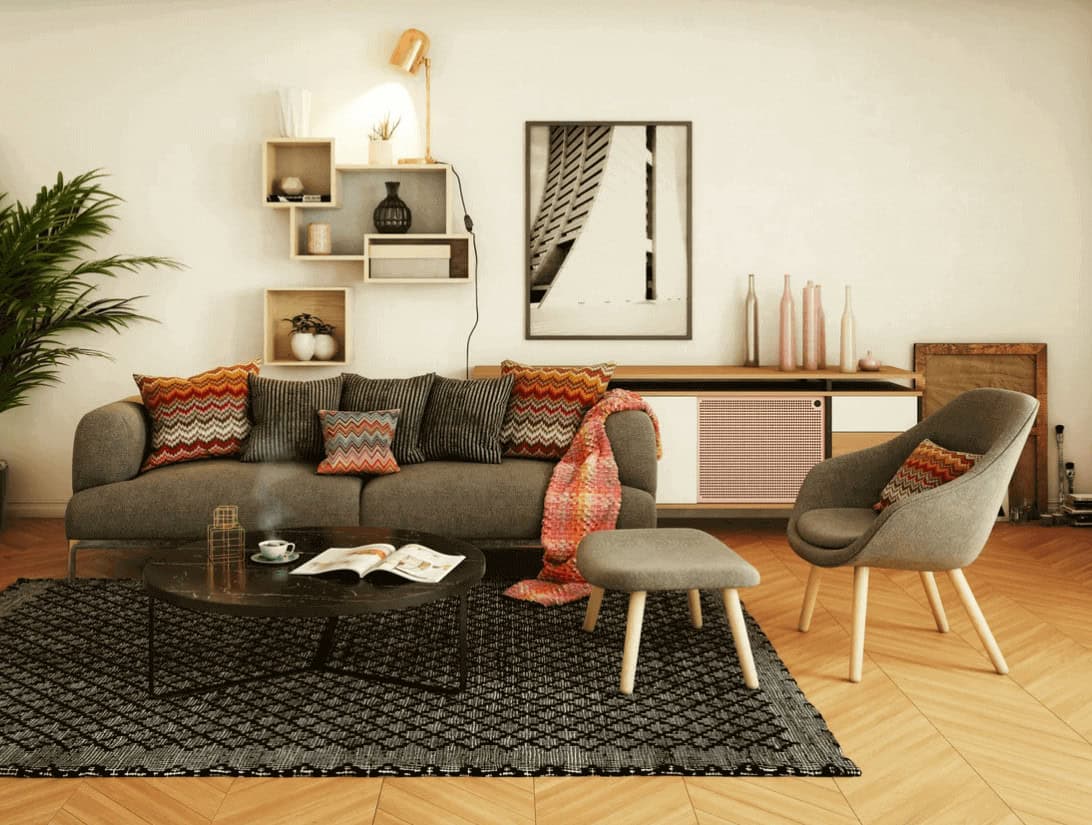
Multipurpose pieces are favored in single-occupant homes. A storage ottoman is used for seating and hidden bins. A bed frame with drawers is chosen when closet space is limited. A drop-leaf table is preferred for small dining areas.
Quality is reserved for items that see constant use. A supportive chair, durable cookware, and a dependable vacuum are chosen first. Decorative items are added later when shopping can take place without pressure.
Reduce Utility Bills With Simple Upgrades
Utility costs are controlled as a core home setup skill. Savings start early with targeted changes: swap in LED bulbs, use power strips to cut standby energy waste, and manage heating/cooling by drawing curtains to block summer sun or winter drafts.
Water use is reduced with low-flow shower heads and faucet aerators. These upgrades are inexpensive, and they are allowed in many rentals as no permanent structural change is required.
Maintenance is planned as prevention. HVAC filters are replaced on schedule, refrigerator coils are kept clean, and dishwasher traps are emptied. Small tasks prevent costly repairs and keep daily life more comfortable.
Build a Safety Net and Keep It Working
A solo living setup stays stable with a modest safety net built upfront. Target one month’s core expenses first, then grow the buffer over time. This reduces panic and stress levels when faced with the unexpected.
Create a simple home inventory using photos and receipts. It streamlines insurance claims during theft or damage and simplifies replacement planning. Keep renters’ insurance current, as coverage stays cheap compared to the risks it protects against.
A maintenance kit is stocked gradually. A plunger, screwdriver, adjustable wrench, flashlight, picture hooks, and basic fasteners are stored in one bin. Common problems are solved quickly, and emergency store trips are avoided.
Build a Home That Stays Affordable
A home setup that matches a budget is built through sequencing and restraint, not deprivation. When core costs are controlled, comfort is achieved without stress. The strongest plans are guided by total monthly housing costs, space efficiency, and staged purchasing that protect cash flow.
A reliable living alone experience is supported by furniture chosen for function, utility bills reduced through small upgrades, and a safety net maintained for predictable surprises.
When these decisions are made early, independence is easier to sustain, and upgrades can be added at the right pace, when they are truly needed and affordable.