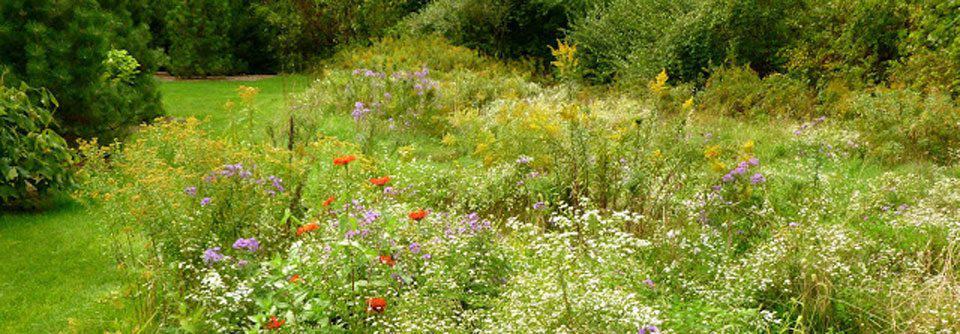
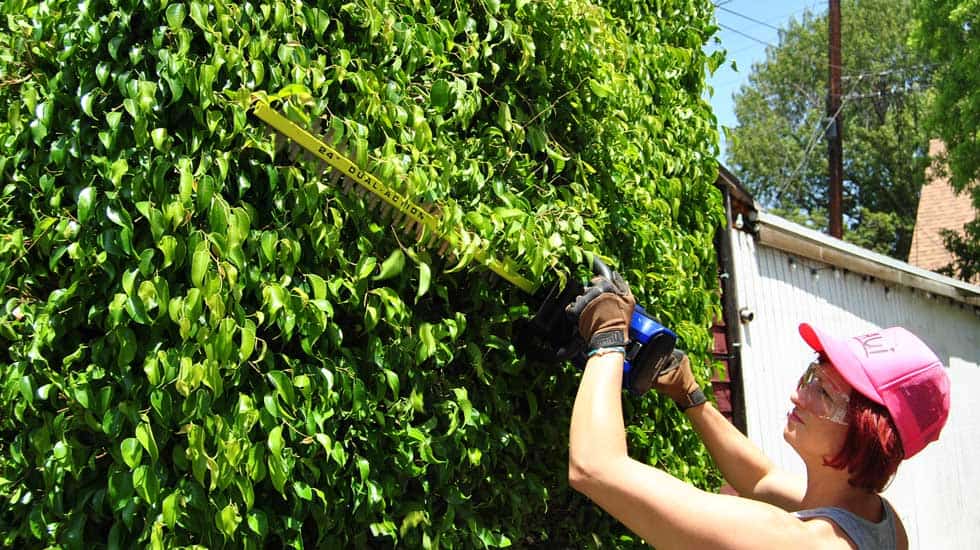
Britons take considerable pride in gardening. With close to half the population listing gardening as a favourite pastime, it’s no wonder homes are adorned with manicured lawns, lush flowerbeds and well-kept hedges. Ponds of all sizes are another frequent garden feature, attracting local wildlife, creating serene surroundings and a relaxing retreat from the everyday grind.
With close to 3 million garden and 500,000 seasonal, village and natural ponds dotting the country, proper water filtration is paramount. This maintains a healthy ecosystem, removes debris, breaks down fish waste and prevents algae overgrowth. Along with correctly-sized pumps to circulate water and ensure optimal oxygen levels, a box or sealed pond pressurised filter keeps water clean and fish populations healthy by preventing stagnation and ammonia buildup.
The Basics of Pressurised Pond Filters
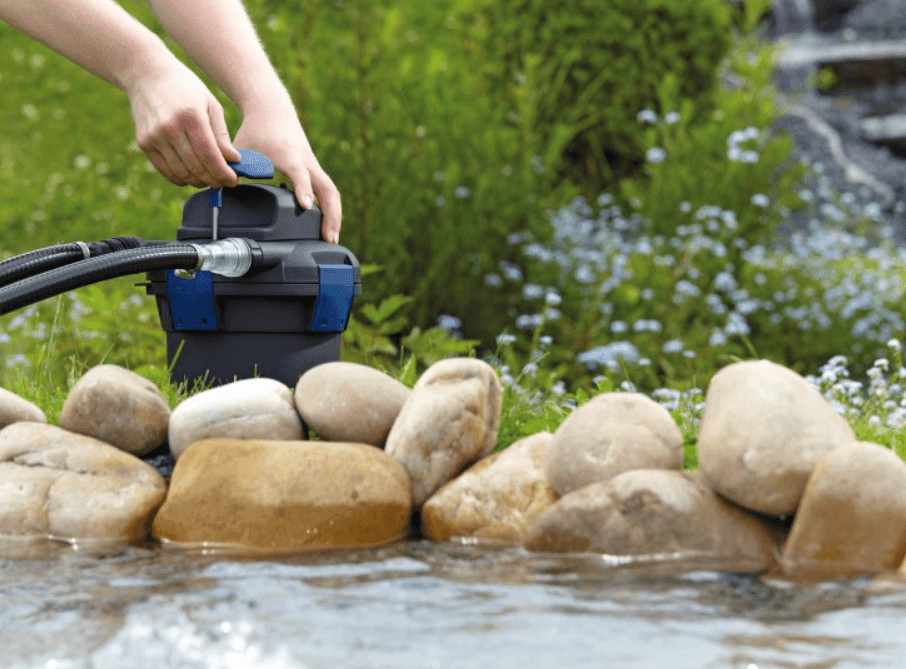
Pressurised filters are popular choices due to their compact size, flexibility with placement and the ability to deliver excellent water clarity. They’re preferred in small to medium-sized garden ponds and moderately-stocked fish ponds.
The sealed design and the ability to push water uphill makes them ideal for ponds with integrated streams, rock features and cascading waterfalls. And because they can maintain pressure without the use of additional pumps, pressurised pond filters can be partially buried out of sight, helping with pond and garden aesthetics.
How It Works
While compact in size, there’s more going on inside than the relatively simple housing reveals. Water passes through several filtration stages as it is cleansed of debris and impurities to sustain healthy pond conditions. Water enters the sealed filter chamber under pressure as it is pushed from the pump, then passes through different filtering media. Key filtering stages include:
- Mechanical filtration: This process physically removes solid waste, including fish waste, algae, leaves, twigs, remnant food and debris. Waste is removed as water passes through tiered layers of coarse and fine foam pads. These prevent algae buildup and poor water quality, and require periodic de-clogging and cleaning.
- Biological filtration: With larger particles removed, water is then biologically cleansed. This is done with large-surface bio-balls or ceramic rings that attract beneficial and naturally-occurring bacteria. These break up toxic ammonia from fish waste, uneaten food and decaying leaves, first into nitrite, and then into harmless nitrate. This is a vital nutrient for aquatic plants responsible for maintaining oxygen levels.
- UV clarifiers (UVC): Most pressurised pond filters have integrated UV clarifiers – essentially an ultraviolet bulb – that prevents algae buildup. The bulb clumps together microscopic single-cell algae, making them large enough to be trapped by the mechanical filtering media.
Key Features and Benefits
Pressurised Operation and Flexible Installation
The sealed, pressurised design provides the ability to run waterfalls and raised returns. The setup is essential for oxygenating water, aerating beneficial bacteria in the filtering media and eliminating foul odours created by dead zones. Moreover, filters can be hidden out of sight while creating unique garden pond water features.
No Gravity Overflows
Unlike larger gravity box filters, pond pressurised filter types remove the risk of water spilling over the sides if the filtering media is clogged. This ensures uninterrupted operation, prevents unwanted water loss, protects ponds from flooding, and keeps surrounding landscaping dry and clean.
Simple Cleaning and Maintenance
Advanced models feature proprietary cleaning mechanisms, such as pull-out handles or multi-directional valves to squeeze internal filtering foam pads without having to remove them, or dismantle the filter for cleaning. In addition, metal clamps and quick-release lids ensure fast access to internal components when filters do get clogged or need servicing.
By combining multi-stage filtering and UV sterilisation, a pond pressurised filter ensures pristine and clear water, and ponds that are healthy and visually appealing. For smaller garden ponds, the compact size makes more sense than larger box and gravity-fed filters both in terms of placement and overall aesthetics, while still providing high filtration rates when paired with a matching pump. This additionally ensures cleaning flexibility and efficient filtering in more demanding settings, such as moderately-stocked koi ponds.
Choosing the Right Pressurised Pond Filter
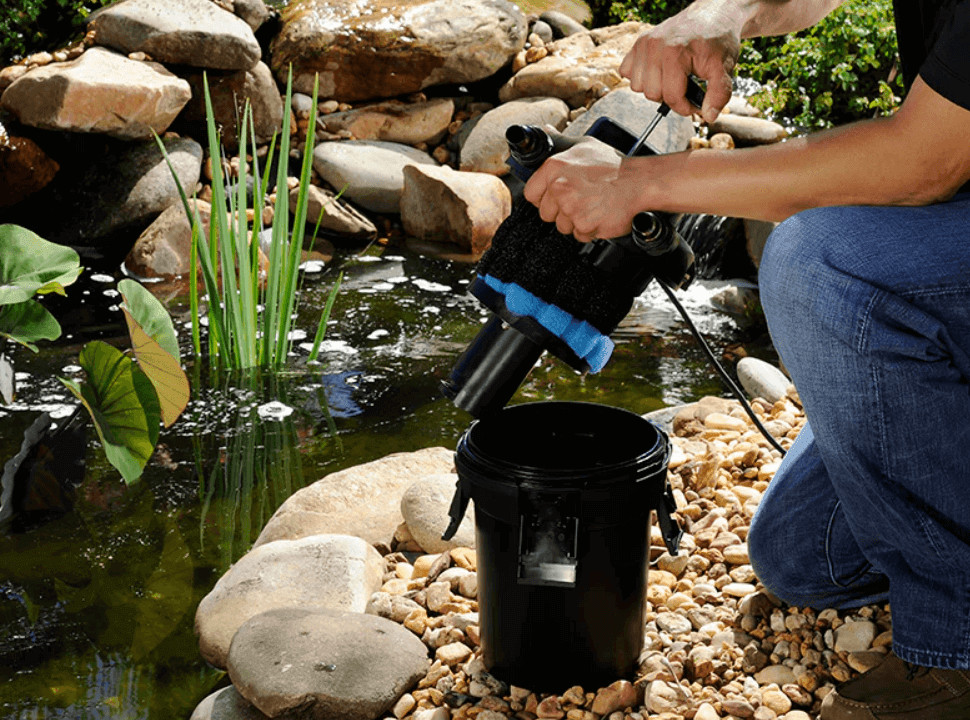
Choosing the right pressurised pond filter kit means evaluating key factors of your pond environment. Key considerations are pond volume, overall fish stock, pond landscaping features, pump capacity and flow rate, and simplified maintenance and cleaning.
Pond volumes refer to the overall length, width and depth of the pond when full. Pressurised filters aptly handle small to medium-sized garden ponds, ensuring consistent filtering.
When buying, take manufacturer claims with a grain of salt, as these usually refer to empty ponds, void of any fish. A good idea is to upsize filters if you want to prevent murky water, excessive algae growth and increased clogging or maintenance.
Generally, filters rated for 10,000 litre ornamental ponds will be suited to 5,000-litre goldfish or 2500-litre koi ponds. Here, it’s also important to consider direct sunshine exposure as this increases algae growth, requiring an additional quarter of listed pond capacity.
Next, match filters with pumps. This ensures correct flow rates and filtration. A common mistake is choosing a pump that is too strong, leading to reduced filtering efficiency, damage to internal seals, and water overflowing into adjacent pond features. Conversely, choosing a pump that is too weak will create more stagnant-water dead zones, with reduced circulation and oxygenation.
For cleaner results, ensure the filter can cycle through the entire volume of water in 1 to 2 hours of operation. If your pond additionally includes landscaped features such as waterfalls, also take into account maximum pressure ratings to ensure easier circulation. To take out the guesswork when matching filters with pumps and related piping, consider purchasing a pressurised pond filter and pump kit.
Lastly, consider features and how easy filters are to maintain. Size UV bulbs according to pond size and settings to prevent algae buildup. And consider filters with electric or manual backwash cleaning and easy-access lids. For optimal results, clean pressurised filters weekly in peak season (or deep clean at least twice yearly), change UV bulbs every 6 months, and filtering media after 2 years.