People move for many different reasons. A new job, retirement, a growing family, lower living costs, or a desire for a different lifestyle can all influence where someone chooses to live. While every move is personal, nationwide relocation trends reveal common patterns that can help homeowners make more informed decisions about buying, selling, and preparing a property.

(photo credit: Microsoft Stock Images)
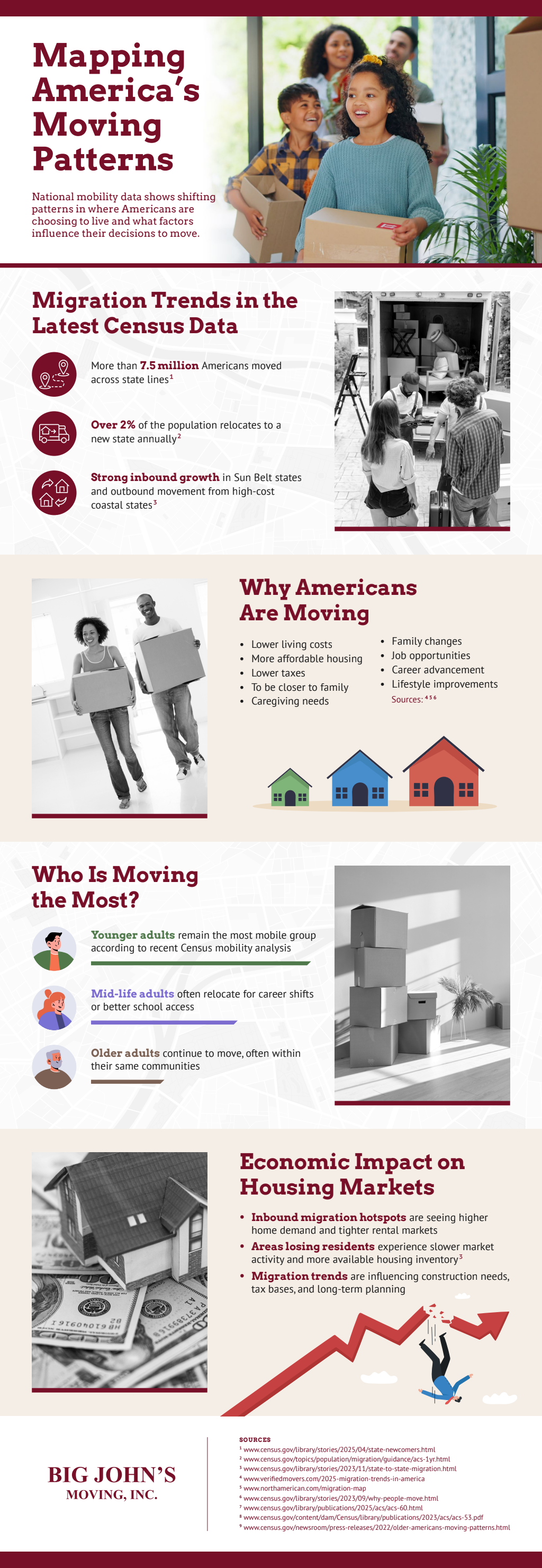
Why Americans Decide to Move
Relocation decisions often begin with changes in daily life. Career opportunities continue to be one of the biggest reasons people move, especially when remote work creates greater flexibility in choosing where to live.
Family needs also play a major role. Some homeowners look for larger homes with additional bedrooms, while others choose to downsize after children move out. Retirement frequently leads people to communities with warmer climates, lower maintenance homes, or easier access to healthcare and recreation.
Financial considerations are another important factor. Housing costs, property taxes, insurance rates, and overall living expenses can influence whether homeowners remain in their current community or explore new locations. These motivations often overlap, making every move a combination of practical and personal priorities.
Regional Trends Continue to Shift
Migration patterns across the United States change over time, but several trends have remained consistent in recent years. Many growing metropolitan areas continue to attract residents because of expanding job markets, newer housing developments, and access to outdoor recreation. Smaller cities have also gained popularity as buyers search for more affordable housing while maintaining access to urban amenities.
At the same time, some homeowners are choosing suburban or rural communities where larger lots and quieter neighborhoods offer a different pace of life. These shifts affect local housing markets. Areas experiencing population growth may see increased competition among buyers, while communities with slower growth often provide more negotiating opportunities. Understanding local conditions is often just as important as following national trends.
Home Features Buyers Are Looking For
Moving patterns also reveal what buyers expect from today’s homes. Flexible living spaces continue to rank high on many wish lists. Home offices, finished basements, bonus rooms, and multi-purpose spaces allow homeowners to adapt as family needs change. Outdoor living areas remain popular as well. Patios, decks, fenced yards, and attractive landscaping create additional usable space and increase a home’s appeal.
Energy efficiency has become another priority. Buyers often appreciate updated windows, modern insulation, efficient heating and cooling systems, and smart home technology that helps reduce monthly utility costs. Homes that have been consistently maintained generally attract more interest because buyers have greater confidence in the property’s overall condition.
Preparing Your Home Before a Move
Whether you’re moving across town or across the country, preparation makes the process much smoother. Start by decluttering every room. Removing unused furniture, clothing, and household items makes packing easier while helping your home appear larger if it will be listed for sale.
Complete minor repairs before they become distractions during showings. Loose cabinet hardware, chipped paint, leaking faucets, and damaged screens are inexpensive fixes that leave a positive impression.
Organize important documents, including warranties, appliance manuals, maintenance records, and receipts for major improvements. Buyers often appreciate documentation that demonstrates responsible homeownership. Creating a room-by-room packing plan also helps reduce last-minute stress and makes unpacking much more organized.
Timing Can Influence the Moving Experience
Although people relocate throughout the year, certain seasons tend to be busier than others. Spring and summer often bring increased real estate activity because families prefer to move before a new school year begins. Warmer weather also makes loading, transporting, and unloading household belongings more convenient.
Fall and winter moves may offer greater scheduling flexibility and sometimes lower relocation costs, depending on local market conditions. Regardless of the season, planning well in advance improves the overall experience. Booking services early, gathering packing supplies, and creating a realistic timeline reduce the likelihood of unexpected delays.
Budget Beyond the Sale Price
Moving expenses extend beyond purchasing or selling a home. Packing supplies, utility transfers, insurance updates, temporary storage, travel expenses, and cleaning services all contribute to the overall cost of relocation. Creating a detailed budget before moving day helps avoid unexpected financial surprises.
Many homeowners also benefit from comparing estimates from more than one moving company before making a final decision. Looking beyond price alone and considering reputation, licensing, insurance coverage, and customer reviews often leads to a smoother relocation experience. Taking time to understand the full financial picture allows homeowners to plan with greater confidence.
Practical Steps for a Successful Move
One of the most effective ways to simplify a move is by starting earlier than you think necessary. Packing a few boxes each week is far less stressful than trying to organize an entire household during the final days before moving.
Next, label every box clearly with both its contents and its destination room. This simple habit makes unloading faster and helps family members find essential items quickly after arriving at the new home.
Take photos of valuable belongings and electronic connections before packing. These images can be helpful for insurance purposes and make reassembling televisions, computers, and entertainment systems much easier.
Finally, create a checklist of address changes, utility transfers, subscriptions, and service providers. Crossing these items off gradually helps prevent overlooked tasks during an already busy time.
Moving patterns across America continue to reflect changing lifestyles, housing priorities, and financial goals. While every relocation is unique, understanding broader trends can help homeowners prepare more effectively and make confident decisions about their next chapter. If a move is on your horizon, begin planning early and focus on one task at a time. Check out the infographic below for more information.
Infographic: