A refrigerant line that’s been flared, brazed, and vacuum-sealed by a certified technician used to be the one part of a mini split install you couldn’t shortcut. Open that circuit yourself without EPA certification, and you’ll risk a bad connection and break federal refrigerant-handling rules. That single requirement is why most homeowners who want ductless cooling still end up paying for a full install crew even when they’re comfortable running wire, mounting a bracket, and setting a condenser on a pad.
Zone Air offers a different approach to that problem. The line sets are marketed as factory-sealed and pre-charged with R-454B refrigerant, with quick-connect fittings designed to simplify installation. This can reduce the need for specialized tools such as flaring equipment, brazing torches, and vacuum pumps. However, pre-charged connections do not automatically exempt installers from EPA certification requirements, and homeowners should verify which installation tasks they can legally perform.
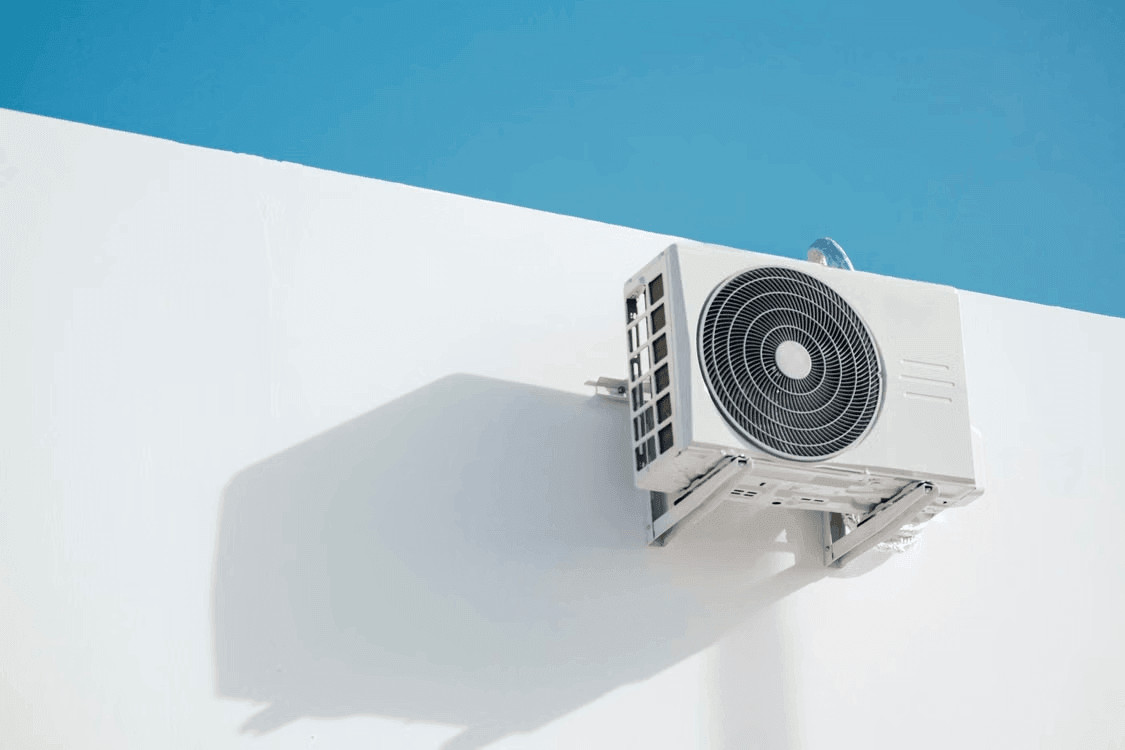
Image credit: Pexels
What Zone Air Actually Sells
Zone Air isn’t a single product. The lineup runs from 9,000 to 30,000 BTU, covers single-zone and multi-zone configurations, and comes in 115V and 230V models. That range matters because a 9,000 BTU unit may suit a single bedroom or home office, while a dual-zone 24,000 BTU setup may be appropriate for a small apartment or a two-room addition, depending on the home’s cooling requirements.
The systems are advertised as having ENERGY STAR-certified and ETL-listed options, although these certifications should be verified for the specific model. Zone Air also states that its systems are assembled and tested in the US.
How the Install Actually Works
The quick-connect fittings are the core of the pitch, so it’s worth walking through what changes compared to a conventional install.
- Mount the indoor and outdoor units. This part is identical to any mini split, on a wall bracket inside and a pad or brackets outside.
- Run the line set between them. Instead of cutting and flaring copper tubing on site, you connect pre-measured, pre-charged quick-connect fittings according to the manufacturer’s instructions. Because connecting refrigerant lines may be regulated work, confirm whether EPA-certified assistance is required.
- Wire the electrical connection. A licensed electrician may be required under local electrical codes, and is generally the safer choice for work involving new circuits or high-voltage connections.
- Power on. Because the line set is designed to arrive sealed and pre-charged, the installation may not require the conventional evacuation and charging procedures used with standard mini splits. However, all required installation checks and commissioning steps must still be completed before operation.
That fourth step may simplify one of the more technical stages of installation. A standard split system can underperform or develop problems if the refrigerant lines are improperly evacuated, connected, or charged, which is exactly the step Zone Air’s fittings are designed to simplify.
The Quick Connect Difference
Plenty of mini split brands market themselves as DIY-friendly. Fewer actually simplify refrigerant-line connections through factory-sealed, pre-charged fittings, although this does not necessarily remove applicable certification requirements.
Because the line sets ship factory-sealed and pre-charged, Zone Air’s design may allow installers to avoid some of the conventional refrigerant preparation steps, including field flaring, brazing, and vacuum pumping. However, the EPA states that connecting or disconnecting pre-charged refrigerant lines can still require Section 608 certification when the activity could compromise the refrigerant circuit. That’s a narrower, more specific claim than “easy install,” and it’s the one that actually changes how the installation process is approached.
If you’ve read up on ductless systems before, you’ve probably seen conflicting advice about whether a DIY install voids a warranty or violates code. Ourguide to AC repair, installation and maintenance covers what to check locally before you commit to any self-install project, since permit and inspection rules still vary by jurisdiction even when the refrigerant step is handled.
What You Get for the Price
Systems are advertised as starting at $1,899.99. Every order is advertised as shipping free, subject to the company’s current shipping terms, which on equipment this size and weight is a real cost saved rather than a throwaway line in the checkout flow.
The warranty backs that up: 5 years on parts and 7 years on the compressor, which is the single most expensive component to replace if it fails. However, labor costs, installation errors, and certain other expenses are excluded from warranty coverage.
Strengths
Simplified refrigerant connections. The pre-charged, factory-sealed line set is what makes the rest of the install potentially easier, although EPA certification and local licensing requirements still need to be checked.
Longer-term compressor coverage. A 7-year compressor warranty provides additional parts protection, subject to the manufacturer’s warranty terms and exclusions.
Free shipping on a heavy, awkward product. Mini split condensers and line sets aren’t small, and not paying freight on them is a direct dollar savings where free shipping applies.
Recognized for its installation process. Zone Air states that it has been recognized by minisplitreview.com, a site focused specifically on evaluating DIY mini split options, for its easy install process. This recognition should be considered alongside independent reviews and verified product specifications.
Where It Falls Short
The quick-connect system simplifies refrigerant connections, but it doesn’t cover electrical work, wall penetration, or local permitting, all of which still require real skill or a licensed professional depending on where you live. Treat the DIY claim as applying specifically to the manufacturer’s simplified installation design, not as a guarantee that every part of the job can legally be completed without professional assistance.
The product range extends to 30,000 BTU, but capacity alone doesn’t determine whether a system can cool an entire home. Anyone replacing a central system for an entire home should consider a proper cooling-load calculation and whether the available configurations suit the property’s layout and requirements.
And because this is a self-install product by design, you’re trading the convenience of a scheduled contractor crew for your own weekend and toolbox. If you’d rather not run wire or mount a condenser yourself, the savings here come with real time and labor attached.
Who Should Actually Buy This

Image Credit: Pexels
Zone Air fits a homeowner cooling a room, a few rooms, or a small living space who’s comfortable with basic home improvement work and wants to avoid paying a crew specifically for tasks they can safely and legally complete themselves. It’s a good match for anyone who’s already compared options and landed on ductless over a window unit for noise or efficiency reasons.
It’s a poor fit for anyone needing more cooling capacity than the available configurations can provide, anyone unwilling to arrange professional assistance for regulated electrical or refrigerant work, and anyone who wants a single contractor to own the entire project end to end.
What Homeowners Should Check Before Buying
Before ordering, confirm the system’s cooling capacity, electrical requirements, local permit rules, and warranty conditions. It’s also worth checking whether the installation requires EPA-certified refrigerant work, a licensed electrician, or both. These details can affect the total project cost and determine whether a DIY approach makes financial sense.
The Verdict
The case for Zone Air comes down to one mechanical decision: pre-charging the line set at the factory instead of leaving the circuit open for field work. That single change can simplify refrigerant-line installation, although it does not automatically eliminate EPA certification requirements. The product is also backed by a 5-year parts and 7-year compressor warranty, subject to exclusions, plus advertised free shipping.
For a single room, a home office, or a small multi-zone space, it’s a different installation approach worth considering rather than just a cheaper version of the same one. For whole-home cooling, check whether the available capacity and configurations meet your needs. For everything in between, it’s worth comparing against a traditional installed system before you decide which weekend you’re willing to give up.