Ice dams are not a snow problem.
They are a heat problem. According to the Michigan State Police MI Ready winter guide, warm air leaking up from the living space is usually the main cause, and sunshine plays little part.
If your Novi roof grows a ridge of ice along the eaves every January, the fix starts in the attic, not on the shingles.
How does an ice dam form on a Novi roof?
An ice dam forms when heat from the house melts snow on the upper roof and the water refreezes at the cold eaves.
The average January low in Novi is 19°F, according to WeatherSpark climate data, so the eaves stay well below freezing for weeks.
Here is the cycle.
Warm attic air heats the roof deck. Snow melts and runs downhill. The water reaches the overhang, which has no heat under it, and freezes.
Over several days the ice builds into a dam. New meltwater pools behind it and can creep up under the shingles. That is how a stain shows up on a ceiling along an exterior wall.
What are the early warning signs?
Large icicles along the gutters are the first sign. MI Ready lists them as an indicator of ice damming. Other signs are worth a look from inside the house:
- Brown or yellow stains on ceilings near exterior walls
- Peeling paint at the top of an outside wall
- Frost or damp insulation on the underside of the roof deck
- Gutters that sag or pull away under ice weight
Check the attic with a flashlight on a cold, clear day. Frost on the nails that poke through the deck means warm, moist air is reaching the roof.
Is the damage a repair or a replacement?
It depends on how long the water has been getting in. A single winter of seepage often means a repair: a few lifted shingles, bent flashing (the metal that seals roof joints) and one damp patch of decking. Several winters of it can mean soaked sheathing and rotted rafter ends. At that point a replacement makes more sense than patching.
If you see damage like this, the Novi roofers at Schoenherr Roofing handle roof repair and roof replacement for homes in Novi and across Oakland County. Ask for the decking to be checked at the eaves, because that is where ice dam damage hides.
What stops ice dams for good?
Insulation and air sealing come first, then ventilation. The goal is a cold attic. A roof that stays the same temperature as the air outside cannot melt snow unevenly.
Insulation and air sealing
MI Ready recommends at least R-30 attic insulation, with R-38 preferred in northern climates. Michigan’s energy code, based on the 2015 International Energy Conservation Code with state amendments, calls for R-38 in ceilings in Climate Zone 5, according to the Insulation Institute.
Before adding insulation, seal the gaps around light fixtures, attic hatches, plumbing stacks and wiring. Insulation slows heat, but it does not stop moving air.
Ventilation
Air should enter at the soffits (the underside of the eaves), flow along the underside of the roof deck and leave through ridge or roof vents. MI Ready describes this same path.
Make sure insulation has not been pushed over the soffit vents.
Baffles, which are rigid channels that hold insulation back, keep that airway open.
What can you do this week?
You can reduce the risk before the next storm with a few low-cost steps. MI Ready advises clearing leaves and debris from gutters and downspouts so meltwater can drain.
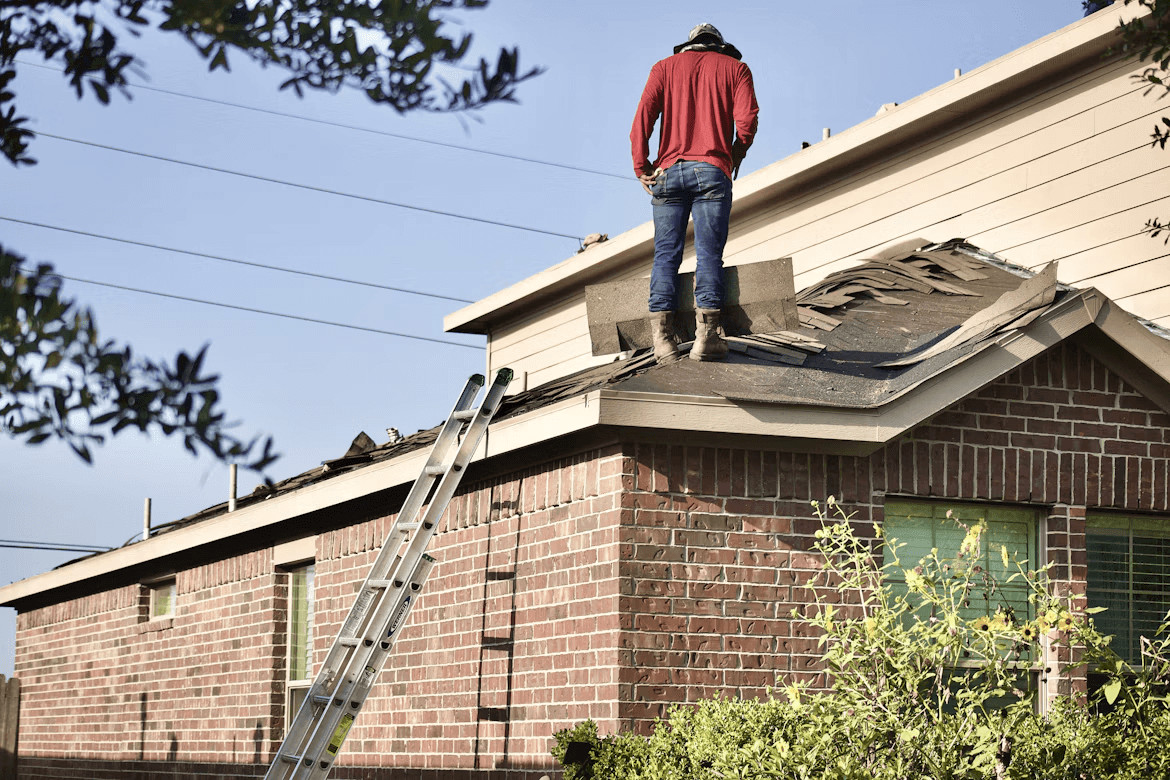
A long-handled roof rake, used from the ground, pulls snow off the lowest few feet of the roof.
Never climb onto an icy roof, and do not chip at ice with a hammer or shovel.
That is how shingles get torn.
Gutters matter because they are the last stretch of the water path. A clogged gutter holds meltwater at the eave, where it freezes into the base of a dam.
Clear them in late fall, after the leaves drop, and check that downspouts empty well away from the foundation.
The state page also notes that no method can guarantee an ice dam will never damage a home. That is why the attic work matters more than any winter-day fix.
How do you choose who inspects the roof?
Pick a contractor who looks at the attic as well as the shingles. A good inspection covers the insulation depth, the vent paths, and the deck at the eaves.
Ask for findings in writing and for photos. Schoenherr Roofing offers free estimates, which gives you a no-cost way to compare findings before you commit to any work.
Photos of the attic let you see what the inspector saw. Start with the attic, fix the heat leaks, and the roof will do its job through the next Michigan winter.