Many homeowners unintentionally scar protective composite deck shells or forfeit manufacturer stain warranties through improper pressure washing, such as using high-PSI pinpoint nozzles or harsh bleach chemicals meant for bare wood.
Protecting your outdoor investment requires moving away from the aggressive cleaning methods typically used on traditional timber. Modern capped composite boards feature a resilient plastic shield designed to resist moisture and fading, but that protective layer remains vulnerable to excessive mechanical force and corrosive chemical agents.
Preserving both the structural integrity and the aesthetic finish of your deck demands a methodical shift in your routine upkeep. When you respect manufacturer boundaries and adopt gentle cleaning habits, you protect your boards against premature degradation and keep your warranty fully active.

Why Does Improper Pressure Washing Damage Modern Composite Shells?
Modern composite boards rely on an outer polymer capping that provides superior resistance to fading, scratching, and mold. Exposing this specialized shell to extreme pressure strips away its protective qualities and leaves the underlying fibers exposed to moisture intrusion.
Manufacturers set strict equipment limits to prevent surface gouging and fiber splintering. Using a pressure washer that exceeds these thresholds generates concentrated force capable of slicing straight through the outer polymer cap. Once that barrier breaks down, your deck loses its primary defense against weathering and staining.
Understanding Surface Vulnerabilities
Modern polymer caps offer great protection against the elements, but they still have physical limits. Homeowners often find that removing stains from composite decking requires a gentle touch to avoid scratching the outer shell. Aggressive scrubbing easily leaves permanent marks that ruin the uniform look of your outdoor space.
Identifying Safe Cleaning Tools
Soft-bristled brushes serve as your best defense against trapped dirt and surface pollen. A simple car wash brush attached to a long extension pole makes the job quick and painless. This setup lets you reach every corner of your patio without bending over or straining your back.
Hard metal scrapers or stiff plastic bristles will instantly carve deep grooves into your synthetic boards. These microscopic scratches collect dirt and create a breeding ground for mildew. Sticking to soft tools keeps your synthetic lumber smooth and perfectly intact.
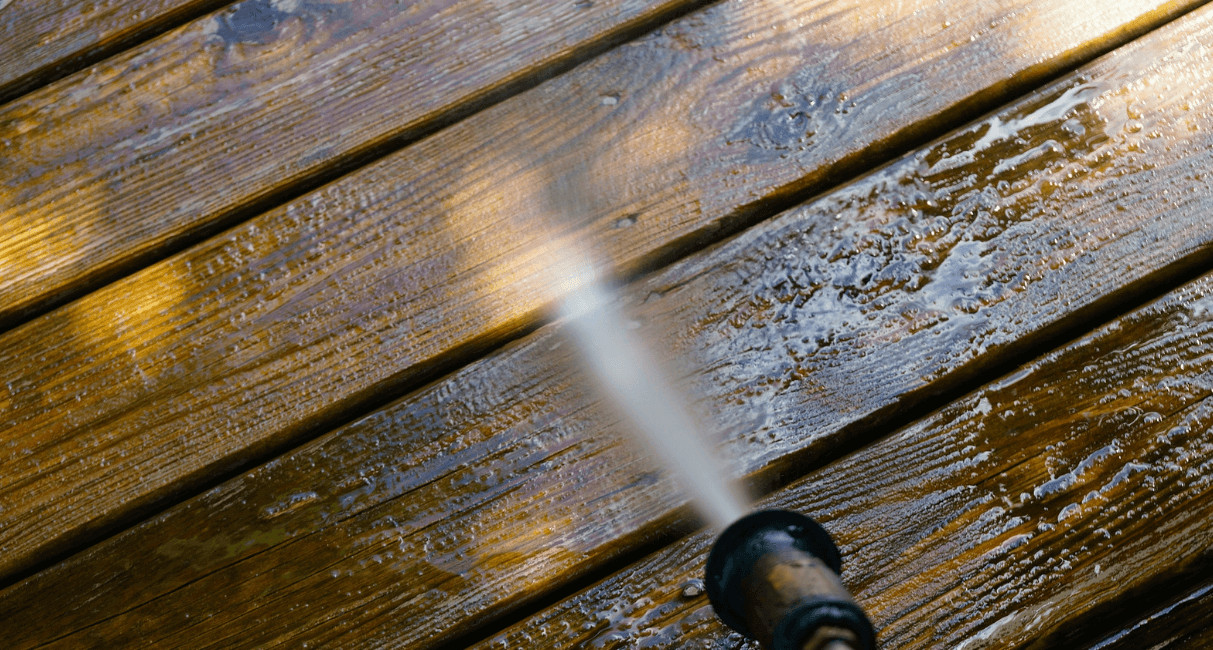
Manufacturer care rules cap power washers at 3,100 PSI with fan tips and recommend mild soapy water within seven days to preserve stain warranty coverage.
How Can You Clean Your Deck Without Voiding Your Warranty?
Cleaning your capped composite surface safely starts with the right pre-scrub technique and controlled rinsing parameters. Avoid harsh chemical agents entirely, as they can erode the protective shell.
The Soap and Brush Method
- Sweep loose debris: Clear away all leaves, dirt, and twigs before introducing any liquid cleaners to the surface.
- Apply mild soap: Mix warm water with a mild dish soap or a specialized composite deck cleaner to lift everyday grime.
- Scrub with care: Use a soft-bristle brush to gently work the soapy solution across the grain without scratching the cap.
Protect the plants and shrubs around your deck before you start. Wet them down first and cover delicate ones with a tarp, since cleaning solution runoff can burn foliage. Rinse them again once you finish.
The Pressure Rinsing Rules
- Cap your PSI: Never exceed 3,100 PSI when operating a pressure washer on your composite deck.
- Use fan tips: Attach a wide fan-tip nozzle to disperse water pressure evenly across a broader surface area.
- Maintain distance: Keep the spray wand at least 8 inches away from the board surface to prevent localized gouging.
Start every rinse on the lowest pressure setting your machine offers, and raise it only if the grime stays put. Keep the wand moving in steady, overlapping passes so the spray never lingers in one place.
Wear eye protection and closed-toe shoes whenever the machine is running, and hold the wand with both hands. High-pressure spray can cut skin and drive debris into it, so never point it at people, and read your washer’s manual before the first pass.
Why Is Quick Cleanup Essential for Stain Warranties?
Spills happen during outdoor gatherings, but leaving food, beverages, or organic debris sitting on your deck for too long creates serious warranty vulnerabilities. Sentry Exteriors specifies that the surface must be cleaned within seven days to maintain the stain warranty on decking.
Adhering to this timeframe prevents tannins, oils, and mold spores from chemically bonding with the outer polymer layer. When you tackle spills promptly, you eliminate the need for aggressive scrubbing or harsh chemical correctives later on.
What Cleaners Safely Tackle Stubborn Rust and Tannins?
Different stains require specialized treatment formulas that will not compromise your board warranty. Traditional wood bleaches and chlorine solutions strip board color and break down protective capping layers.
Deck brighteners containing oxalic or phosphoric acid are specially designed to tackle these specific issues. These targeted solutions lift stubborn rust spots and organic tannin discoloration safely, all while keeping your protective deck shell intact. By choosing the right compound for the specific blemish, you ensure thorough remediation without risking your coverage.
How Do You Handle Daily Maintenance and Spot Removals?
Maintaining a pristine outdoor living space involves consistent, low-effort habits that prevent buildup before it starts. Regular rinsing with a standard garden hose keeps surface dust and pollen from accumulating into stubborn layers.
When tackling stains from composite decking, always test any specialized cleaning product on a small, hidden corner of the deck first. This precaution ensures your chosen solution works well with your specific board composition before you treat high-visibility areas.
Tackling Hard Water Deposits
Dealing with mineral buildup from sprinklers requires a targeted approach. A care guide by Trex noted that hard water deposits can be cleaned on composite decking surfaces with white vinegar. Reviewing your product manual helps you apply these household cleaners accurately. Drying the space with a soft cloth – instead of letting it air dry – stops new spots from settling onto the boards.
Clearing Snow and Ice Safely
Winter weather brings heavy snow and ice that require careful removal from synthetic deck boards. Always reach for a plastic shovel instead of a metal blade – metal edges easily gouge the outer polymer layer. You can sprinkle calcium chloride or rock salt to melt stubborn ice patches, then rinse the residue away with warm water once temperatures rise above 32 degrees.
Scheduling Routine Deck Inspections
Catching small issues early stops them from turning into massive repair bills down the road. Walking your entire deck surface 2 times a year helps you spot loose fasteners or shifted boards before they cause structural problems. A quick visual check keeps your family safe and your property looking its absolute best.
Record any visible changes in the board spacing or color fading in a simple home maintenance log. Treat this record as a reliable baseline for tracking wear. Having these details ready makes filing a warranty claim much smoother if unexpected damage occurs.
Gentle routine washing and rapid spot cleanup protect both the visual grain and long-term manufacturer warranty of composite boards. By treating your capped decking with the care it requires, you ensure a vibrant, durable outdoor space for years to come.