Most homeowners designing or renovating today share a common ambition: open the home to the outdoors without losing control of the environment inside. Fresh air, natural light, and a patio that actually feels like part of the house — these are real priorities, not just aesthetic preferences. Getting there requires more than a set of French doors. It takes the right combination of glass, structure, and screening to make the transition work.
That is where retractable screen doors change the equation. Rather than choosing between an open door and a screened one, you get both — a full view and a protected space, depending on what the moment calls for. When the screens are not in use, they retract into compact housings and disappear entirely, leaving your sightlines and architectural details intact. It is a small mechanical detail that makes a significant difference in how a space feels and how often it actually gets used.
Why Indoor-Outdoor Living Demands Better Screening
The push toward indoor-outdoor living has reshaped how architects and homeowners think about floor plans. Opening a living room to a covered patio or connecting a kitchen to a backyard dining area creates a sense of space that no interior renovation can replicate. For entertaining, the payoff is even more obvious — guests move naturally between spaces, and the boundary between inside and outside stops feeling like a barrier.
The challenge is that open spaces are only enjoyable under the right conditions. Direct sun can overheat a room within an hour, insects follow the breeze indoors, and weather changes fast. Fixed screens address some of these problems but introduce others: they block views, collect dust, and make a space feel enclosed even when the weather is perfect. Motorized retractable screens solve this by giving homeowners real-time control. Lower them when you need protection, retract them when you do not, and the opening stays exactly as useful as the day demands.
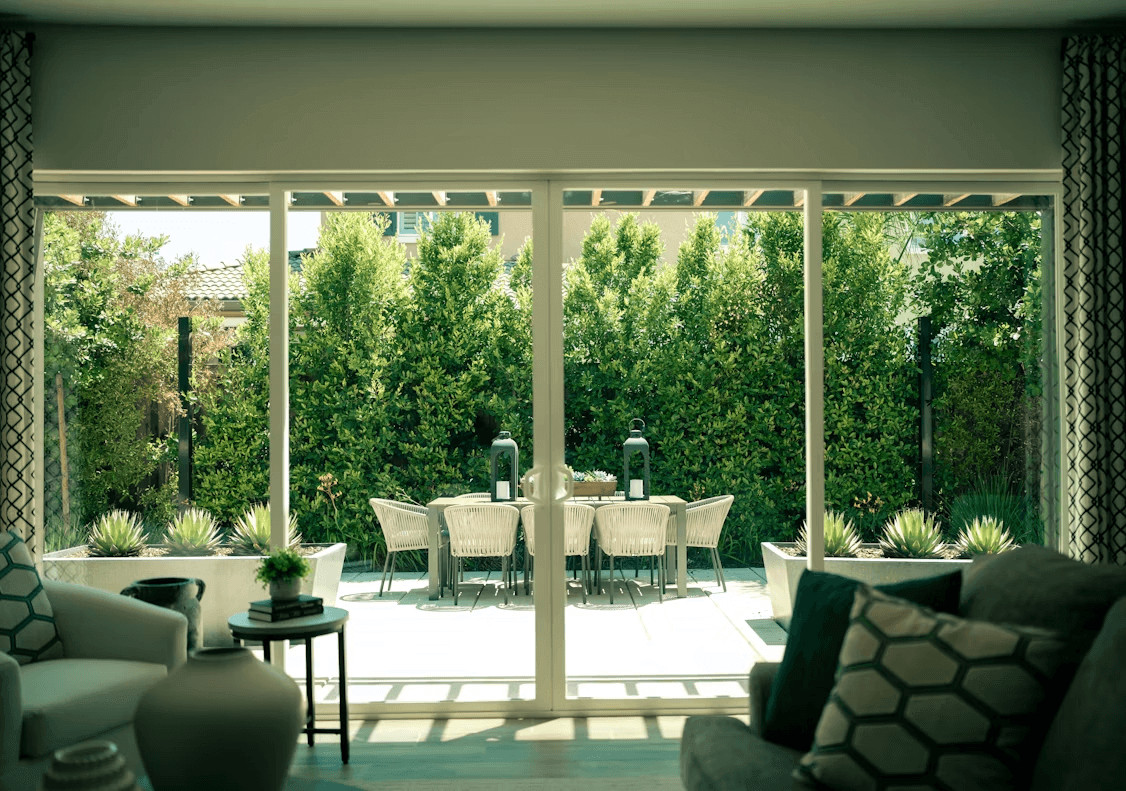
This kind of adaptability is what separates a well-designed indoor-outdoor space from one that looks good in photographs but rarely gets used. The homes that genuinely blur the boundary between inside and outside are the ones where the transition requires no effort — where you do not have to decide in advance whether to open the space or close it off.
What Retractable Screens Actually Do for a Space
The functional range of retractable screens is wider than most people expect. They work on standard single doors, wide French doors, sliding glass panels, and multi-panel folding walls that open an entire wall of a room. That flexibility means the same solution scales from a modest back door to a 20-foot opening onto a pool deck.
Ventilation is one of the clearest benefits. When screens allow air to move through the house freely, air conditioning drops during spring and fall — not because the system is turned off, but because the home does not need it as often. The mesh used in quality retractable screens filters insects without meaningfully restricting airflow or visibility, so the tradeoff that comes with traditional screening largely disappears.
Sun control is a separate but related advantage. Solar-rated mesh blocks a significant share of UV radiation, which keeps interior temperatures lower during peak afternoon hours and reduces fading on floors, furniture, and textiles. For rooms with south- or west-facing exposures, this is not a minor convenience — it is a practical necessity that extends the life of finishes and reduces cooling loads over the course of a season.
There is also the question of how the space feels day to day. A room that can be opened fully to the outdoors, without the visual weight of a fixed screen, reads as larger and more connected to the landscape. That quality is difficult to quantify but easy to notice, and it is one reason retractable screens tend to get used more often than the fixed alternatives they replace.
Fitting Screens Into the Architecture
Retractable screens work best when they are planned as part of the design rather than added as an afterthought. For new construction or major renovations, motorized screens can be recessed into the ceiling or wall framing so that the housing is invisible when the screens are retracted. The result is a clean opening with no visible hardware — the screen simply appears when needed and disappears when it is not.
Retrofits are more common and still highly effective. Surface-mounted housings can be color-matched to existing trim, and the profile of modern systems is compact enough that the hardware does not dominate the opening. The key is choosing a system whose proportions suit the opening and whose finish matches the surrounding materials. A well-matched retrofit is nearly as clean as a recessed installation, and it is far less disruptive to achieve.
The outdoor space itself matters just as much as the hardware. Screens protect a space, but they do not design it. Understanding what today’s homeowners really want from their living spaces points to a consistent theme: people want outdoor areas that serve specific purposes — dining, relaxing, gathering — and that feel as considered as any interior room. Screens make those purposes achievable year-round by removing the conditions that drive people back inside.
Privacy and Psychological Comfort
Privacy is an underappreciated benefit of retractable screens. Dense mesh and specialty privacy fabrics create a visual barrier from the outside without blocking the view from within. For homes in tighter neighborhoods or on smaller lots, this means a patio can feel genuinely private without fencing or landscaping that would otherwise close off the space entirely.
Beyond the physical, there is something to be said for the experience of sitting in a room that is open to the outdoors without any of the usual concerns. The sound of wind, the smell of rain, the quality of natural light — these things matter to how a space feels and how much time people actually spend in it. Removing the hesitation around opening the house, the worry about bugs or sudden weather, changes how often people use the space. Screens that disappear when not needed make that openness feel effortless rather than deliberate.
For families with young children or pets, this ease of use is especially valuable. A screen that operates with a single button press or a voice command removes the friction that would otherwise keep a door closed. The more accessible a space is, the more it becomes part of daily life rather than a feature reserved for special occasions.
Choosing a System That Fits the Opening
The right system depends on the opening size, how the space is used, and how much automation makes sense for the household.
Large openings — folding glass walls, wide covered patios, screen rooms — are best served by motorized systems. These can span distances that manual screens cannot and integrate with smart home platforms, so a single command or schedule can manage multiple screens at once. For standard doors and windows, manual retractable screens are a practical, lower-cost option that most people find easy to operate and maintain.
Material quality separates reliable systems from frustrating ones. Aluminum components resist rust and hold their shape over time. High-quality mesh resists tearing and sagging, which matters because a screen that sags or bunches in the housing will not retract cleanly. A well-built system should operate quietly and consistently for years without adjustment. When comparing options, it is worth asking manufacturers directly about warranty terms and replacement mesh availability — both are indicators of how a company stands behind its product over the long term.
Installation matters too. Even a quality screen system will underperform if it is not mounted correctly. For large or motorized systems in particular, professional installation is worth the cost. Proper alignment of the housing and tracks ensures smooth operation and prevents the wear that comes from a screen that binds or catches during use.
Maintenance Over Time
One of the practical advantages of retractable screens is that they spend much of their life stored away. When the mesh is retracted into its housing, it is protected from wind, rain, debris, and UV exposure — the same conditions that degrade fixed screens over time. This extends the life of the mesh considerably and reduces how often cleaning is necessary.
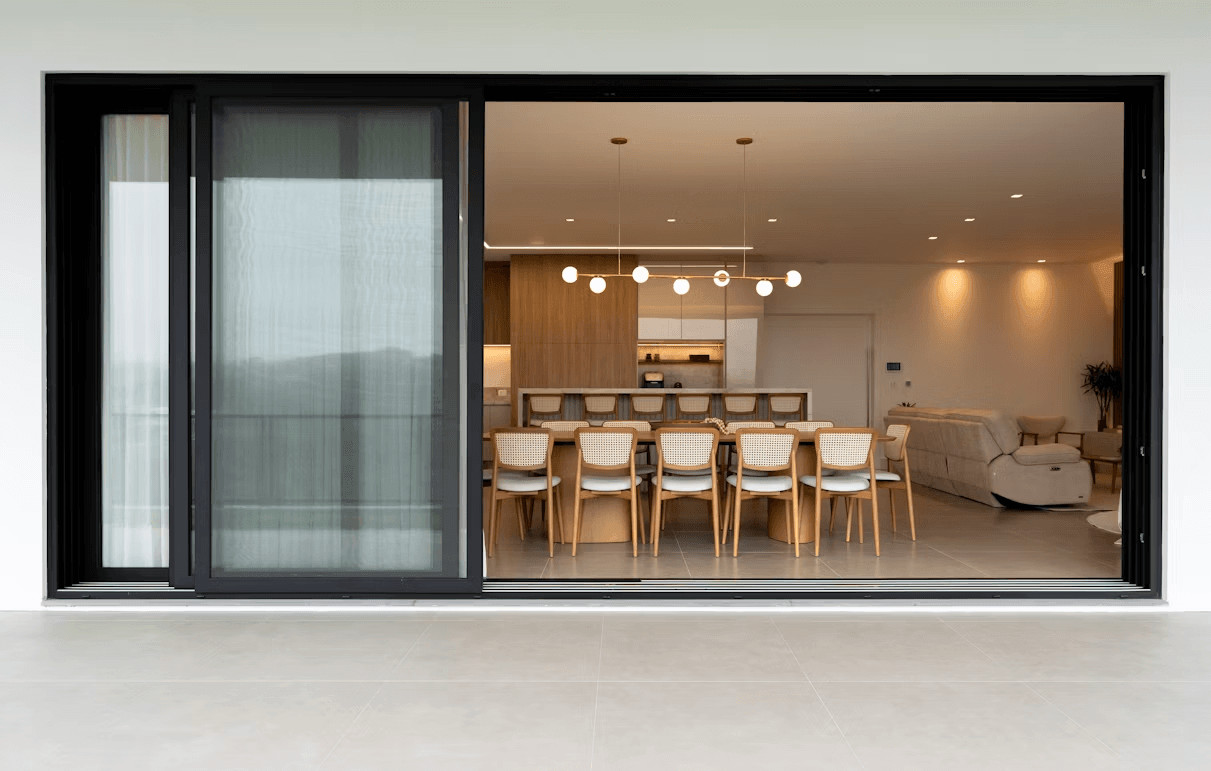
When maintenance is needed, it is straightforward. Wiping the tracks with a damp cloth removes the dust and grit that cause drag. The mesh itself can be cleaned with a soft brush or a vacuum attachment. Neither task requires tools or special products, and neither takes more than a few minutes. For a product that gets daily use, that is a reasonable maintenance commitment.
Over the long term, a quality retractable screen system holds its value in more ways than one. It extends the usable season for outdoor spaces, reduces wear on interior finishes, and adds a feature that prospective buyers increasingly look for — particularly in markets where outdoor living is a year-round consideration. Homes that offer a genuinely functional connection between inside and outside tend to stand out, and retractable screens are one of the more cost-effective ways to deliver that quality.
Conclusion
Connecting indoor and outdoor spaces well requires more than opening a wall. It requires a way to manage what comes through that opening — light, air, insects, and heat — without sacrificing the view or the sense of openness that makes the design worth having. Retractable screens provide that control in a form that disappears when it is not needed.
Whether you are designing from scratch or improving an existing space, they are one of the more practical investments available for making a home genuinely livable on both sides of the glass. Additionally, working with a custom glass company can help you plan expansive openings that bring the outside in, but those openings need a way to stay functional when bugs, heat, or wind become a problem.