A leaking roof doesn’t always mean you need a full flat roof replacement. Rarely does that stain on your ceiling tell you where the leak is coming from or whether your insulation is wet.
While roofing requirements vary by location, homeowners across North America face many of the same decisions when dealing with aging or leaking flat roofs. Toronto offers a useful example because its roofs must withstand freezing winters, snow accumulation, and seasonal temperature changes.
Flat Roofs Toronto is one contractor whose published approach illustrates how these decisions can be made. The company services flat and low-slope roofs throughout Toronto and the Greater Toronto Area (GTA), including garages, rear additions, and commercial properties.
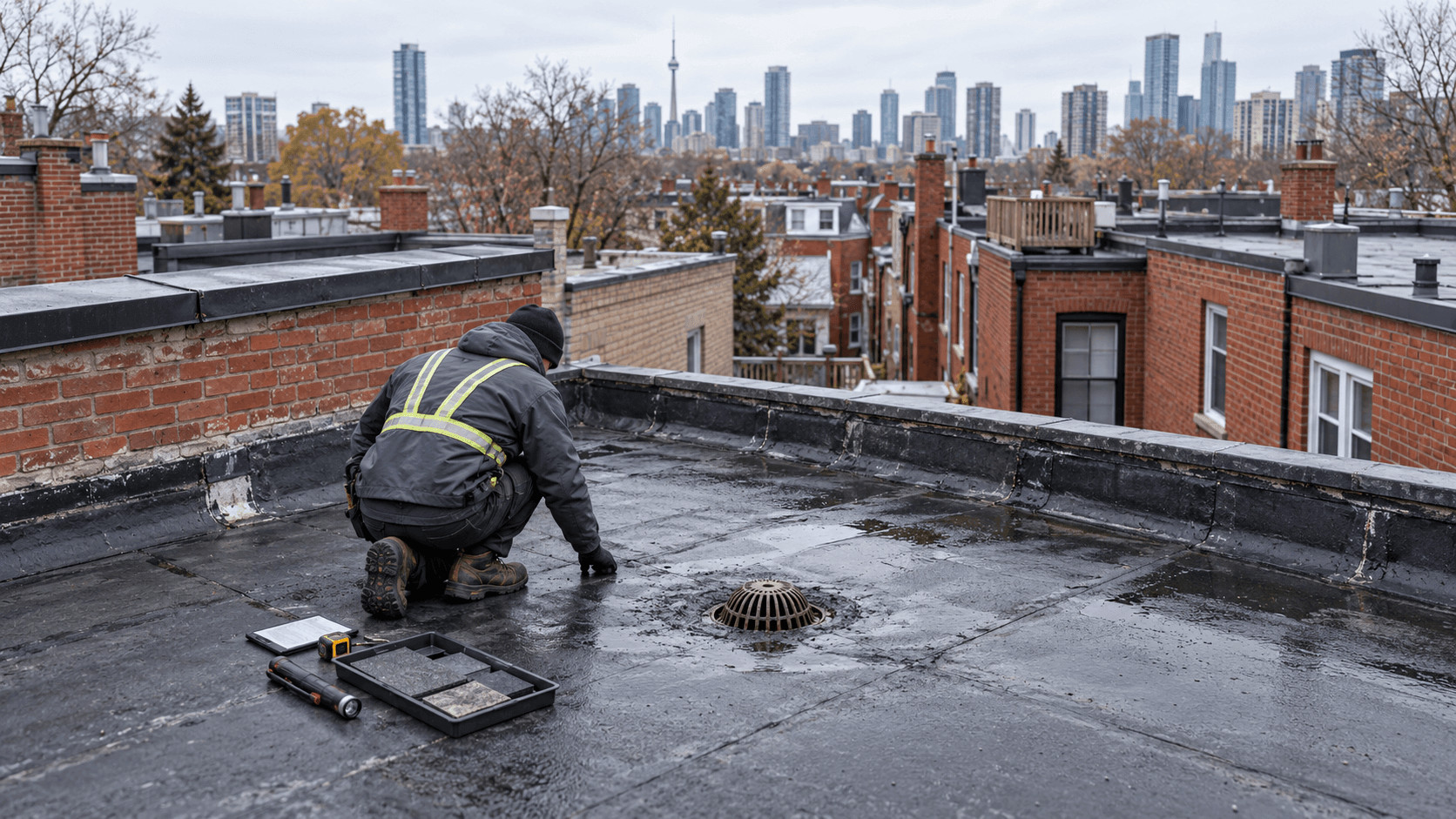
Its published approach emphasizes inspecting the existing roof before recommending replacement based solely on its appearance. It follows a logical process from inspecting the roof to selecting a system and providing a written quote.
Flat Roofs Toronto: Service Overview
Based on the company’s published information, the following summarizes its roofing services and the considerations homeowners should verify before hiring.
| Scoring Category | What to Consider |
| Flat-roof expertise | Specialization in flat and low-slope roofing systems |
| Inspection and scope | Assessment of existing layers, insulation, drainage, and deck condition |
| Emergency accessibility | Advertised 24/7 emergency contact for active leaks |
| Pricing and value | Written estimates outlining the proposed system and scope |
| Warranty clarity | Separate manufacturer and workmanship warranties, with terms to confirm |
This overview reflects the company’s published services rather than firsthand testing or an independently verified performance rating.
In This Review
- Who Is Flat Roofs Toronto Best For?
- How Does It Decide Between Repair And Replacement?
- Which Flat Roofing Systems Does It Offer?
- How Are Quotes And Costs Handled?
- What About Emergency Response And Warranties?
- What Do Customer Feedback And Project Photos Show?
- Pros And Cons
- Final Verdict
Who Is Flat Roofs Toronto Best For?
The service is designed for owners who experience chronic leaks, pooling water, or an aging single-ply roof membrane. Its services cover residential flat roofs, additions, warehouses, and retail properties throughout the Toronto area.
The company also handles leak repairs and skylights, plus associated insulation or drain work when replacement isn’t needed.
That’s significant because leaks often involve joints, parapet flashing, or drainage, not just the main roof membrane.
Although the company serves a Canadian market, these are common concerns for homeowners with flat-roof garages, extensions, and other low-slope structures across the United States as well.
How Does It Decide Between Repairing And Replacing A Flat Roof?
One useful aspect of the company’s published service model is its emphasis on evaluating the existing roof before recommending a solution.
Flat Roofs Toronto notes that it inspects the roof, takes core samples to assess existing layers and insulation, and checks deck condition and structural suitability. It also considers the number of existing roof layers and whether the structure can support an additional roofing assembly. The firm lists three approaches that may be taken:
- Targeted repair: Fix a localized defect when the remaining roof is sound.
- Recover: Place a new roof over the existing roof assembly if it is dry, structurally sound, has an acceptable number of layers, and can support the added weight.
- Full tear-off: Take off the old assembly and rebuild when the roof is worn out or moisture penetration makes recovery impractical.
Roof recovery allows you to avoid stripping off and disposing of your existing roof, which can be costly. A full tear-off, meanwhile, exposes the roof deck, allowing contractors to address damage and make insulation or drainage upgrades.
The company’s replacement page says the estimate results in a written recommendation with supporting photos and a quotation including the system, timeline, and price. This allows owners to compare options.
For US homeowners considering similar work, the same inspection principles apply, although local building codes and requirements for roof recover systems may differ.
Which Flat Roofing Systems Does It Offer?
Material selection depends on the building and roof use.
Its sections on roofing systems include modified bitumen, cold-applied roofing, EPDM rubber, TPO, PVC, and built-up roofing. Torch-applied modified bitumen membranes are heated so they can be bonded to the roof. Cold-applied systems use adhesive and do not require an open flame.
TPO and PVC seams are heat-welded, while EPDM is a flexible rubber roof membrane with seams typically joined using adhesives or seam tape. Roof traffic, weather exposure, drainage, and deck condition all influence material selection.
Lifespan is worth asking about as well. According to GAF’s guide to commercial roof lifespans, TPO roofs typically last 20–30 years, PVC 15–30 years, modified bitumen 10–30 years depending on the system, built-up roofing 15–20 years, and EPDM 10–15 years. Actual service life varies considerably with installation quality, maintenance, and climate.
Freeze-thaw winters like Toronto’s can place additional stress on roofing membranes, seams, and flashing. Ask how long the proposed roofing system is expected to last and how that compares with the manufacturer’s warranty coverage before comparing quotes.
The real benefit is that homeowners have several roofing systems to discuss instead of assuming one membrane will work for every building. The company claims its written proposal ties the suggested assembly to the roof’s condition and function.
These materials are also commonly used in the United States, making the comparison useful for homeowners evaluating low-slope roofing options outside Toronto.
How Are Quotes And Costs Handled?
Flat Roofs Toronto advertises a free, no-obligation roof consultation. According to its published process, customers receive a written estimate outlining the proposed roofing system, scope of work, and project price.
Pricing is based on the square footage of your roof, its condition, whether the existing assembly requires a tear-off, accessibility, and any necessary deck or drainage repairs.
Flat roof replacement costs vary widely by material, roof size, and how much of the old assembly has to come off. As a rough US guide, This Old House estimates installed costs of 7–9 per square foot for modified bitumen, 8–11 for TPO, and 9–13 for rubber membrane roofing. In Canada, 2026 estimates suggest a broader range of CAD 7–17 per square foot for flat roof replacement. These figures are only starting points, and additional work such as insulation upgrades, drainage improvements, or tear-off disposal can increase the final cost. That is why a written quote based on an inspection of your own roof matters more than any published average. Flat roof replacement costs vary widely by material, roof size, and how much of the old assembly has to come off. As a rough US guide, This Old House estimates installed costs of 7–9 per square foot for modified bitumen, 8–11 for TPO, and 9–13 for rubber membrane roofing. In Canada, 2026 estimates suggest a broader range of CAD 7–17 per square foot for flat roof replacement. These figures are only starting points, and additional work such as insulation upgrades, drainage improvements, or tear-off disposal can increase the final cost. That is why a written quote based on an inspection of your own roof matters more than any published average. Flat roof replacement costs vary widely by material, roof size, and how much of the old assembly has to come off. As a rough US guide, This Old House estimates installed costs of 7–9 per square foot for modified bitumen, 8–11 for TPO, and 9–13 for rubber membrane roofing. In Canada, 2026 estimates suggest a broader range of CAD 7–17 per square foot for flat roof replacement. These figures are only starting points, and additional work such as insulation upgrades, drainage improvements, or tear-off disposal can increase the final cost. That is why a written quote based on an inspection of your own roof matters more than any published average. Flat roof replacement costs vary widely by material, roof size, and how much of the old assembly has to come off. As a rough US guide, This Old House estimates installed costs of 7–9 per square foot for modified bitumen, 8–11 for TPO, and 9–13 for rubber membrane roofing. In Canada, 2026 estimates suggest a broader range of CAD 7–17 per square foot for flat roof replacement. These figures are only starting points, and additional work such as insulation upgrades, drainage improvements, or tear-off disposal can increase the final cost. That is why a written quote based on an inspection of your own roof matters more than any published average. Flat roof replacement costs vary widely by material, roof size, and how much of the old assembly has to come off. As a rough US guide, This Old House estimates installed costs of 7–9 per square foot for modified bitumen, 8–11 for TPO, and 9–13 for rubber membrane roofing. In Canada, 2026 estimates suggest a broader range of CAD 7–17 per square foot for flat roof replacement. These figures are only starting points, and additional work such as insulation upgrades, drainage improvements, or tear-off disposal can increase the final cost. That is why a written quote based on an inspection of your own roof matters more than any published average.
Additionally, the company states that it documents concealed deck damage discovered during tear-off and provides estimates for additional repairs before seeking owner approval. This matters because the original estimate may not account for damage hidden beneath the existing roof.
Ontario’s guide to hiring a roofer recommends getting written quotes that include details of the work and itemized labor and material costs. The company’s advertised on-site assessment and written scope provide a starting point for comparing estimates, although homeowners should confirm exactly what each quote includes.
The same advice applies in the United States: homeowners should request detailed written estimates and clarify how unexpected repairs will be handled before work begins.
Some publicly reported customer experiences mention fair or reasonable pricing, although individual project costs will depend on roof size, condition, and the work required.
What About Emergency Response And Warranties?
The company advertises a 24/7 emergency roofing phone line for situations involving active leaks. Its FAQ explains that work during wet weather may initially focus on making the roof watertight, with permanent repairs completed when conditions improve.
Here’s where the warranty promise should be just as specific. Flat Roofs Toronto states it offers two types of warranty: a manufacturer’s warranty associated with the selected roofing materials or system and a workmanship warranty covering installation.
It also states both are provided in writing. The manufacturer’s warranty varies depending on the system and materials selected, while its workmanship warranty applies to the installation regardless of the system chosen.
The Canadian Roofing Contractors Association’s standard warranty guidance illustrates why workmanship coverage should have a clearly defined scope and term. However, that association’s warranty program is available only through qualified participating contractors and should not be confused with the warranty offered by Flat Roofs Toronto.
The published FAQ does not establish a universal lifetime replacement warranty.
Before signing a contract, homeowners should ask for the exact warranty duration, exclusions, transferability, and procedures for making a claim. These questions are equally important when hiring a roofing contractor in the United States.
What Do Customer Feedback And Project Photos Show?
Flat Roofs Toronto has a public Google review listing where prospective customers can examine feedback and descriptions of completed services. Positive comments visible in publicly available review snippets mention communication, responsiveness, cleanup, and pricing.
However, customer experiences can vary, so homeowners should review recent feedback and consider both positive and negative comments before making a decision.
Work featured in the company gallery consists of roof installations in the Toronto area. The photographs show roofing activities such as membrane application, parapet flashing, and deck preparation.
Project photos can help homeowners understand a contractor’s experience with different roofing systems, although photographs alone cannot verify installation quality or long-term performance.
Pros And Cons
What Works
- Inspection-led choices: The published process defines when targeted repair differs from recovery or a full tear-off.
- Several system choices: Roofing options cover common residential and commercial low-slope applications.
- Written scope: The company advertises a free roof evaluation followed by a written quote specifying the proposed system and work.
- Emergency contact: A round-the-clock line is advertised for urgent leak inquiries.
What to Consider
- Replacement timing depends on conditions: Emergency availability does not necessarily mean immediate replacement. Rain and other weather conditions can delay membrane installation.
- Specialist trade scope: The company’s published services focus on flat and low-slope roofing rather than pitched-roof shingles or general exterior contracting.
- Geographic availability: Services are concentrated in Toronto and the GTA, so homeowners elsewhere will need to find a qualified local contractor.
- Warranty details: Homeowners should confirm the specific terms and coverage before proceeding.
Final Verdict
Flat Roofs Toronto provides a useful example of why a flat roof replacement decision should begin with a thorough inspection rather than an assumption that the entire roof needs replacing. The company describes a process for assessing the existing roof, choosing the appropriate work, and preparing a written quote.
Its range of roofing systems, published service information, project gallery, and customer feedback provide useful starting points for evaluating its suitability. However, homeowners should still verify the proposed scope, warranty terms, and final pricing before committing.
For Toronto-area homeowners, Flat Roofs Toronto may be worth considering when comparing contractors for flat roof repair or replacement. For homeowners elsewhere in North America, the broader lesson is the same: choose a contractor who understands your home’s flat roof design, can explain the condition of your existing roof, compare realistic repair and replacement options, and provide a detailed written proposal.
Before committing to a new roof, make sure you understand what’s happening beneath the old membrane.