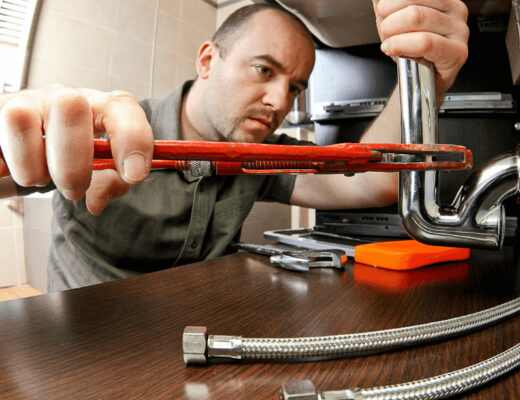
A damaged sewer line is one of the more stressful repairs a homeowner can face. For years, fixing one often meant digging a long trench through a lawn, driveway, patio, or garden just to reach the damaged pipe.
That is no longer always necessary.
Modern trenchless methods can repair or replace underground sewer lines through relatively small access points, reducing the amount of digging needed and helping preserve the surrounding property. For many homeowners, that can mean less disruption, fewer restoration costs, and a faster return to normal.
But “trenchless” is not a single repair method, and it is not automatically the best option for every damaged pipe. The right choice depends on the condition of the existing line, the type of damage, accessibility, soil conditions, and what a camera inspection reveals.
For homeowners in Southern California navigating these decisions, resources such as Top Tier Plumbing & Air can also provide a useful example of the sewer repair and diagnostic services commonly available in the region.
Here is what homeowners should understand before deciding whether trenchless sewer repair makes sense for their property.
What Is Trenchless Sewer Repair and How Does It Work?
Trenchless sewer repair refers to methods that fix or replace underground sewer pipes without excavating a trench along the entire length of the damaged line.
Instead, plumbers typically work through one or two access points and use specialized equipment to repair the pipe underground.
The biggest advantage is fairly obvious: less digging. A traditional excavation might require removing sections of lawn, concrete, landscaping, or pavement to expose the pipe. Trenchless methods can often avoid much of that disturbance.
However, several different techniques fall under the trenchless category, and each is suited to different pipe conditions.
Cured-in-Place Pipe Lining (CIPP)
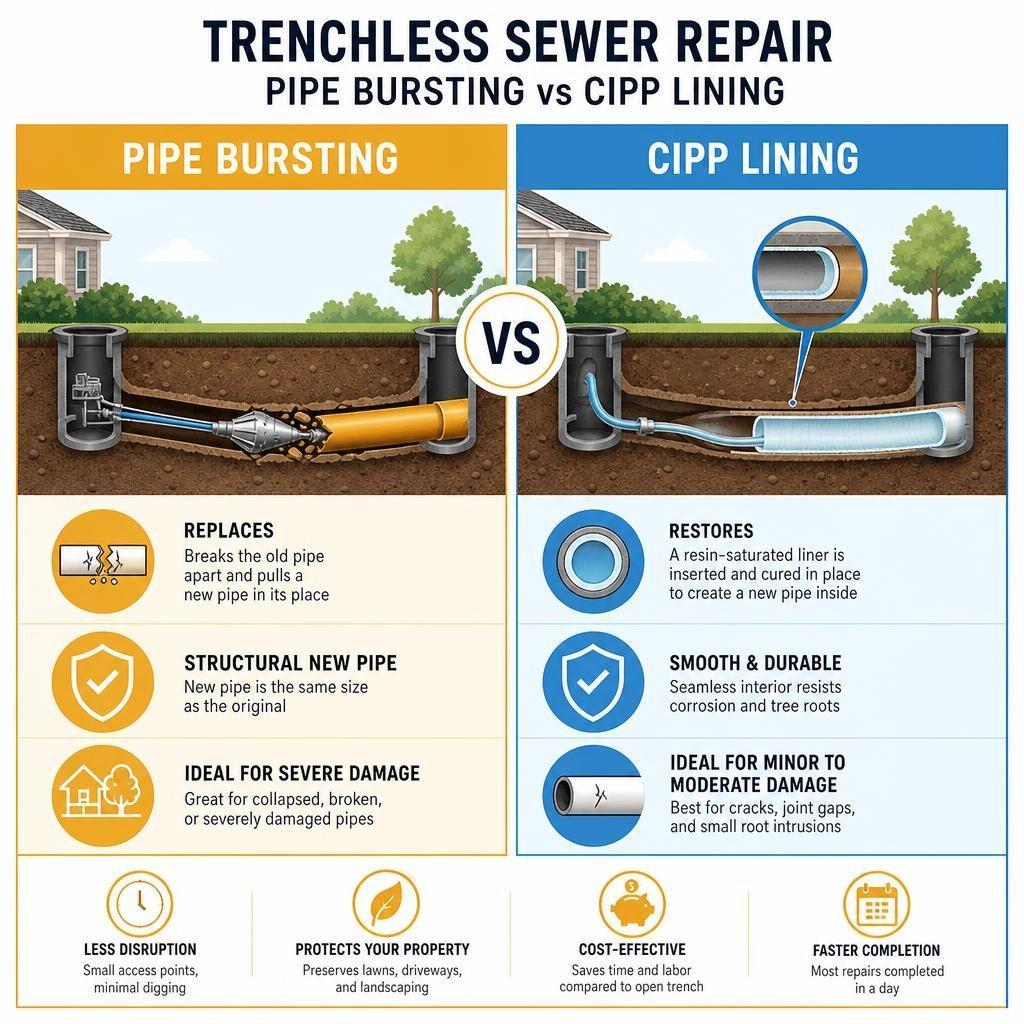
CIPP, often called pipe lining, creates a new pipe surface inside the existing sewer line.
A flexible liner coated with resin is inserted into the damaged pipe and positioned along the affected section. The liner is expanded against the existing pipe walls and then cured using heat, steam, hot water, ultraviolet light, or another approved curing process.
Once hardened, the liner creates a smooth new interior surface.
CIPP can be useful for problems such as:
- Cracks
- Minor joint separation
- Small root intrusions
- Corrosion
- General deterioration in otherwise structurally viable pipes
The existing line still needs to be in good enough condition to support the liner. A completely collapsed pipe or one that has shifted significantly out of alignment may require another repair method.
Because the liner sits inside the existing pipe, it also slightly reduces the interior diameter. In many residential applications, the difference is small, but homeowners should still ask whether it could affect flow in their particular sewer line.
Pipe Bursting
Pipe bursting is often used when the existing sewer line is too badly damaged for lining but does not necessarily require a full open trench.
A cone-shaped bursting head is pulled through the old pipe. As it advances, it breaks the deteriorated pipe outward into the surrounding soil while pulling a new replacement pipe behind it.
This provides a full pipe replacement while limiting excavation to access points at either end of the affected section.
Pipe bursting is commonly used where the old line has extensive corrosion, root damage, cracking, or structural deterioration.
High-density polyethylene, or HDPE, is frequently used for the replacement pipe because it is flexible and resistant to corrosion and root intrusion.
Slip Lining and Spin Casting
Other trenchless techniques are available, although they are less common for typical residential sewer repairs.
Slip lining involves inserting a smaller pipe into the existing damaged pipe. Because the replacement pipe must fit inside the original line, the method reduces the internal diameter and works best on relatively straight sections with enough room to maintain adequate capacity.
Spin casting applies a repair material to the interior pipe wall using rotating equipment. It is often used to reinforce deteriorated sewer or stormwater infrastructure.
These methods can be useful in certain situations, but CIPP and pipe bursting are generally more familiar options for homeowners dealing with damaged residential sewer laterals.
Signs Your Sewer Line Needs Attention Before Choosing Trenchless Sewer Repair
Sewer line problems do not always begin with a dramatic backup. Many start with smaller warning signs that become more frequent as the problem worsens.
Paying attention early can give homeowners more repair options and reduce the chance of secondary property damage.
Common warning signs include:
- Whole-house backups: If toilets, tubs, showers, and floor drains begin backing up at the same time, especially at the lowest level of the home, the problem may be in the main sewer line rather than an individual drain.
- Persistently slow drains: A drain that repeatedly slows down after being cleared may indicate a deeper obstruction, root intrusion, or structural problem.
- Gurgling sounds: Gurgling toilets or bubbling sinks can occur when trapped air is pushed through the plumbing because wastewater is not flowing normally.
- Sewage odors: Persistent sewer smells indoors or outdoors can point to a damaged line, failed seal, or another drainage problem that deserves investigation.
- Wet or sunken yard areas: Soggy soil, unusually lush patches of grass, or depressions in the yard can sometimes signal an underground leak.
None of these signs automatically means that a sewer line has collapsed. They do, however, justify a professional inspection if the problem is recurring or affects multiple fixtures.
How Plumbers Diagnose the Problem
Before recommending a repair method, a qualified plumber should inspect the sewer line to determine what is actually happening underground.
A common approach is a video inspection. A small camera is fed through the sewer lateral, allowing the technician to evaluate the condition of the pipe and locate damaged sections.
CCTV camera inspection can help identify problems such as:
- Root intrusion
- Cracked pipe walls
- Corrosion
- Joint separation
- Collapsed sections
- Heavy buildup
- Bellied or sagging pipe
- Areas where standing water collects
The inspection also helps determine whether the pipe is structurally sound enough for a trenchless repair.
Homeowners should be cautious about accepting a major trenchless repair recommendation without some form of inspection first. The appropriate method depends heavily on what is happening inside the pipe.
When the Damage Is Too Severe for Trenchless Methods
Trenchless repair can solve many problems, but there are situations where conventional excavation may still be necessary.
Examples include:
- Fully collapsed sections: Some collapsed pipes cannot support a liner or allow equipment to pass through.
- Severe misalignment: Pipes that have shifted significantly because of soil movement or settlement may need to be physically repositioned.
- Extremely deteriorated materials: Some older pipe materials may be too degraded to serve as a suitable host for lining.
- Major soil instability: If the surrounding soil has eroded, shifted, or otherwise become unstable, excavation may be necessary to correct the underlying problem.
- Complex pipe layout: Certain bends, transitions, or lateral connections can make some trenchless methods impractical.
A contractor should be able to explain why a particular method is suitable for the actual condition of the line rather than recommending trenchless work simply because the technology is available.
Trenchless vs. Traditional Excavation: Key Differences
Understanding the practical differences between trenchless repair and open excavation can make the decision easier.
| Factor | Trenchless Repair | Traditional Excavation |
| Property Disruption | Usually limited to small access points | Full trench may be required along the damaged section |
| Typical Timeline | Many residential projects can be completed relatively quickly | Often takes longer because of digging, backfilling, and restoration |
| Landscape Impact | Lawn, driveway, and garden may remain largely intact | Landscaping, pavement, or concrete may need removal |
| Equipment Required | Specialized trenchless equipment | Excavators, backhoes, and other digging equipment may be needed |
| Labor Requirements | Often fewer excavation and restoration hours | More labor may be needed for digging and rebuilding surfaces |
| Restoration Cost | Usually limited | Can include sod, concrete, paving, landscaping, or hardscape replacement |
| Material Durability | Modern liners and replacement pipes can provide long service lives | Depends largely on the material installed |
| Best Use Case | Accessible pipes with suitable structural conditions | Severe collapse, misalignment, inaccessible sections, or unsuitable pipe conditions |
| Feasibility | Depends on inspection findings | Can access almost any damaged section if excavation is possible |
Trenchless repair tends to be most appealing where the existing pipe can be treated without exposing it completely and where homeowners want to preserve landscaping or hardscaping.
Traditional excavation still has an important place. In some situations, digging directly to the damaged pipe remains the most reliable way to correct the problem.
The Real Costs and Long-Term Value of Choosing Trenchless Sewer Repair
Homeowners sometimes assume trenchless repair will automatically cost less because it involves less digging.
That is not always true.
The specialized equipment and materials used in CIPP or pipe bursting can make the plumbing portion of the project relatively expensive. The more useful comparison is the total project cost, including what happens after the sewer line itself has been repaired.
Traditional excavation may also require:
- Replacing lawn or sod
- Repairing irrigation systems
- Rebuilding garden beds
- Repouring concrete
- Repaving sections of driveway
- Replacing patios or walkways
- Restoring damaged landscaping
Those restoration expenses can substantially change the final cost comparison.
Trenchless work may also reduce the number of labor hours devoted to excavation, backfilling, and rebuilding the property afterward.
When Does Replacement Make More Sense Than Repair?
There is no single percentage or formula that determines when homeowners should repair a sewer line and when they should replace it.
Instead, the decision should account for the overall condition of the system.
Questions worth considering include:
- How old is the sewer line?
- What material is it made from?
- Is the damage limited to one small area or present throughout the pipe?
- Has the line already required repeated repairs or drain clearing?
- Are roots entering through several joints?
- Is the pipe beginning to corrode, crack, or deform in multiple areas?
- How much longer is the existing material likely to remain serviceable?
A localized crack in an otherwise healthy pipe may justify repair. A line with several deteriorated sections, repeated root intrusion, and an aging pipe material may be a stronger candidate for replacement.
Homeowners should ask the contractor to show them the inspection footage and explain whether the recommended solution addresses one isolated defect or the condition of the entire line.
Property and Environmental Benefits
Less excavation can also mean less disruption to the property itself.
Traditional digging may disturb mature trees, landscaping, underground irrigation, established garden beds, patios, and other features that are difficult or expensive to replace. This is especially worth considering when you’ve already invested time and money in DIY landscaping projects for your yard.
Trenchless methods generally work within the existing underground path of the sewer line, reducing how much surrounding soil needs to be moved.
That can be especially helpful for properties where the sewer lateral passes beneath mature landscaping, driveways, patios, walkways, retaining walls, pool decks, or established garden areas.
Reduced excavation can also mean less soil displacement and less use of heavy machinery, although the overall environmental impact still depends on the equipment, materials, and repair method used.
How to Choose the Right Contractor for Trenchless Sewer Repair
Trenchless sewer work requires more than access to the right equipment.
The contractor must understand how to diagnose pipe conditions, choose an appropriate repair method, work with the existing plumbing system, and comply with applicable local requirements. As with other substantial home improvement projects, the lowest estimate is not necessarily the one that offers the best long-term value.
When comparing contractors, homeowners should look for several basics.
- Appropriate licensing: Verify that the contractor holds the licenses required for the work being proposed. In California, homeowners can check a contractor’s license directly through the Contractors State License Board. CSLB regulates California’s construction industry and provides license and complaint-disclosure information for consumers.
- Insurance coverage: Liability insurance and workers’ compensation can help protect homeowners if property damage or injuries occur during the project.
- Camera inspection before final recommendations: The contractor should be able to show why the recommended method matches the condition of the pipe.
- Written scope of work: The estimate should clearly explain what work is included, what materials will be used, and what the quoted price covers.
- Permit knowledge: Permit and inspection requirements vary by jurisdiction and project scope. A contractor working regularly in the area should know what approvals may be required.
California’s licensing guidance specifically identifies several contractor classifications that may install or repair building sewers, including Plumbing (C-36) contractors, which is another reason homeowners should verify the contractor’s classification rather than simply assuming that any general home-service provider is qualified for the work.
Questions to Ask Before Hiring
Before signing an agreement, ask:
- What trenchless methods do you use, and which one do you recommend for this particular pipe?
- What did the camera inspection reveal?
- Can I see the inspection footage?
- Do permits or inspections apply to this project?
- Who is responsible for obtaining them?
- What materials will be used?
- What warranty applies to the workmanship and materials?
- Is property restoration included in the quote?
- Under what circumstances could the final price change?
The important part is not simply whether a contractor answers “yes.” Homeowners should expect a clear explanation of how the proposed repair addresses the actual condition shown during inspection.
Red Flags to Watch For
A few warning signs should make homeowners slow down before agreeing to major sewer work.
- A firm repair price before inspecting the line: Basic price ranges may be possible over the phone, but a final recommendation should reflect the actual pipe condition.
- No camera inspection for recurring or structural problems: Without seeing the pipe, it may be difficult to distinguish a routine blockage from damaged infrastructure.
- No written scope of work: A detailed written agreement protects both the homeowner and contractor.
- Repeated drain clearing without further investigation: If the same sewer line repeatedly backs up, simply clearing it may not address the underlying cause.
- Pressure to approve work immediately: Unless there is an active sewage emergency, homeowners should normally have enough time to understand the recommendation and compare options.
- A dramatically low estimate with little detail: Specialized trenchless work requires trained technicians and specialized equipment. A vague low quote deserves closer scrutiny.
Frequently Asked Questions About Choosing Trenchless Sewer Repair
Is trenchless sewer repair suitable for all pipe materials and damage types?
No. Suitability depends on both the material and condition of the existing pipe.
CIPP generally requires an existing line capable of supporting the liner, while pipe bursting requires a suitable path for the equipment and replacement pipe. Older materials such as severely deteriorated Orangeburg pipe may present additional challenges, and a fully collapsed or badly displaced line may require excavation.
A camera inspection is generally the best starting point for determining which methods are realistic.
How long does trenchless sewer repair typically take compared to traditional excavation?
Many residential trenchless projects can be completed faster than conventional excavation because crews do not have to expose the entire length of pipe.
Some straightforward projects may be completed within a day, while others take longer depending on pipe length, depth, access, preparation, curing requirements, and inspection procedures. Traditional excavation may require additional time for digging, pipe replacement, backfilling, and surface restoration.
Homeowners should ask contractors for a project-specific schedule rather than relying on a standard timeline.
Do Trenchless Sewer Repairs Require Permits in California?
Permit requirements vary by city, county, and the scope of the repair.
Sewer replacement and substantial repair work may require local approval or inspection, so homeowners should confirm the requirements with the relevant local building or public works authority before work begins. A contractor who regularly performs sewer work in the area should also be able to explain which permits apply and who will handle them.
Homeowners should be cautious if they are encouraged to skip a required permit simply to reduce cost or shorten the project.
Conclusion
Trenchless sewer repair gives homeowners more options than they had in the past. A damaged underground pipe no longer automatically means excavating an entire yard, driveway, or landscaped area.
But the technology works best when it is matched to the right problem.
Before agreeing to a repair, homeowners should understand what the inspection shows, why a particular trenchless method is being recommended, what alternatives are available, and what the complete project cost includes.
A good decision starts with a few basics: investigate recurring warning signs, request a proper sewer camera inspection, compare repair with replacement where appropriate, get the scope and price in writing, and verify that the contractor meets local licensing and permit requirements.
For the right pipe and property, trenchless repair can provide a durable solution while avoiding much of the disruption associated with traditional excavation. The goal is not simply to choose the least invasive method, but to choose the repair that solves the underlying problem and makes sense for the home over the long term.