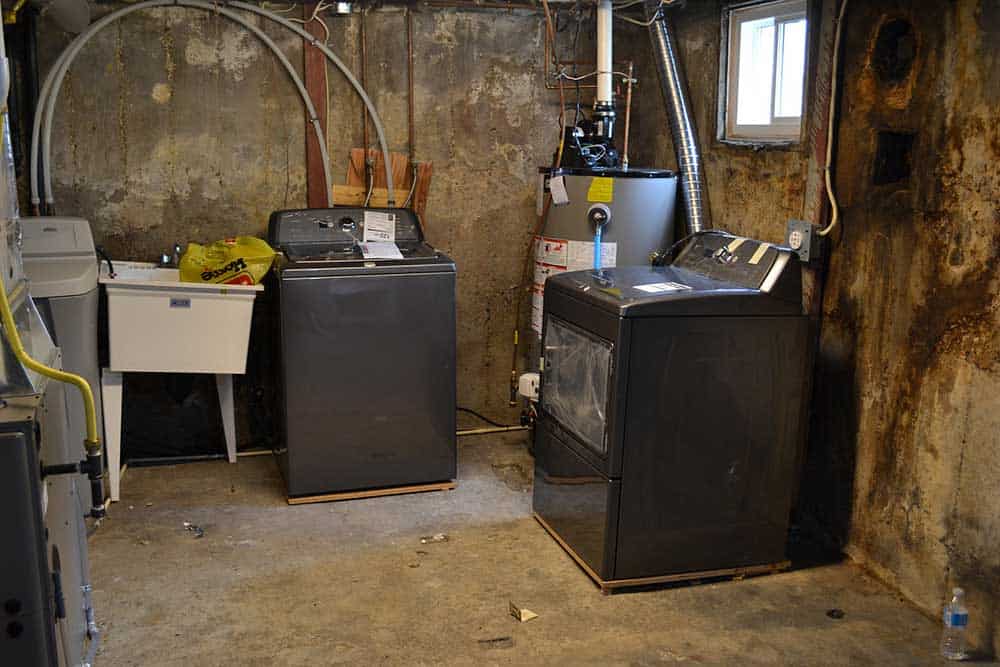
Basements often end up as overlooked storage areas or laundry rooms, ignored until a problem forces homeowners to pay attention. But neglecting the space below ground level carries serious risks—poor moisture control can compromise the foundation, cause extensive financial damage, and create health hazards for anyone living in the house. Addressing these vulnerabilities early through professional basement waterproofing is the most reliable way to protect a property. By stopping hydrostatic pressure and persistent leaks before they cause structural decay, homeowners can secure their investment against the long-term effects of chronic dampness.
When water finds its way inside, the damage rarely stays confined to a single puddle. Excess moisture weakens load-bearing supports, destroys stored belongings, and sets up the conditions for fungal growth. Many property owners fail to realize how quickly unchecked dampness can erode a home’s market value and threaten respiratory health. If a severe flood or leak does occur, calling in an expert for water damage restoration becomes necessary to safely extract the water and salvage the structure. Prevention, however, remains the smartest financial strategy against water intrusion—and the one that costs far less in the long run.
The True Cost of Water Infiltration
Water damage erodes a home silently. The process usually starts small—a hairline crack in the foundation, a spreading damp spot on a lower wall, or a lingering musty odor that no amount of ventilation seems to clear. Without intervention, these minor symptoms escalate into major structural failures that require expensive professional repairs. Heavy rainfall, melting snow, and poor drainage saturate the soil around a house, building up hydrostatic pressure. That force pushes groundwater against the porous concrete foundation, widening existing cracks and eventually compromising the walls’ ability to support the structure above.
The resulting repair bills can be overwhelming. Fixing a bowed foundation, tearing out ruined drywall, remediating mold, and replacing damaged electrical wiring costs thousands—and sometimes tens of thousands—of dollars. A documented history of basement flooding also makes a property difficult to sell. Buyers naturally hesitate when they see past water issues, which often forces sellers to reduce their asking price significantly. Homeowners insurance policies frequently exclude gradual water damage and mold remediation, meaning those costs fall entirely on the owner. Waterproofing a basement acts as a safeguard against both the physical deterioration and the financial losses that follow unchecked moisture intrusion.
Understanding the Mold Threat
A damp basement provides an ideal environment for mold and mildew. Mold spores exist naturally in the air, but they need moisture, warmth, and organic material to colonize. A dark basement filled with cardboard boxes, exposed wood framing, and drywall gives fungi exactly what they need to take hold. After a water intrusion event, mold can begin spreading across surfaces in just 24 to 48 hours—which is why rapid moisture removal is so critical. Waiting even a few days to address standing water or persistent dampness dramatically increases the remediation effort required.
Indoor mold growth presents a serious and well-documented health risk. As colonies expand, they release microscopic spores and volatile organic compounds (VOCs) into the surrounding air. Because air naturally flows upward through a house—a process known as the stack effect—these contaminants drift from the basement into the main living areas where the household spends most of its time. Breathing indoor mold over an extended period triggers respiratory problems, including asthma attacks, allergic reactions, and chronic sinus congestion. Some mold species, such as Stachybotrys chartarum, produce mycotoxins that can cause more severe neurological and immune responses. Children, the elderly, and people with compromised immune systems face the highest risks. The only permanent way to protect a household from these symptoms is to eliminate the moisture source feeding the mold.
How Waterproofing Systems Work
Effective waterproofing requires a targeted approach, combining interior and exterior strategies based on the property’s specific vulnerabilities. Interior systems manage water that has already breached the foundation. Contractors typically install a French drain along the inside perimeter of the basement to catch infiltrating water and channel it toward a sump pump. The pump then actively expels the water away from the house, keeping the floor dry even during severe storms. A battery backup system ensures the sump pump continues running during power outages, which often coincide with the heaviest rainfall events.
Exterior waterproofing stops water before it ever reaches the concrete. This method involves excavating the soil around the foundation walls to expose the exterior surface, applying a heavy-duty waterproof membrane, and installing a drainage system to redirect groundwater away from the structure. It is a more labor-intensive process than interior waterproofing, but it addresses the root cause rather than managing the symptoms. Maintaining clean gutters, extending downspouts at least six feet from the house, and ensuring the soil grades away from the foundation are also vital parts of this strategy. For homeowners looking to protect their property, understanding why drainage design determines long-term structural health makes it easier to spot vulnerabilities before they become expensive problems.
The Role of Vapor Barriers and Dehumidification
Stopping liquid water is only half the battle. High humidity levels cause their own set of problems, even in basements that appear dry on the surface. Because concrete is naturally porous, water vapor slowly permeates the foundation walls and floor over time. This steady accumulation leads to condensation on cold surfaces, persistently damp walls, and eventual mold growth—all without a visible leak. Installing a heavy polyethylene vapor barrier across the walls and floor blocks this moisture vapor and creates a clean, sealed interior environment that supports any finished space above it.
A commercial-grade dehumidifier works alongside the vapor barrier to control airborne moisture. Standard residential dehumidifiers cannot handle the air volume or the specific conditions of a damp basement. Commercial units run continuously to extract excess moisture, keeping the relative humidity below 50%—the threshold required to stop mold from growing. Running a dehumidifier also reduces the musty odor that many homeowners associate with older basements, making the space more comfortable and usable. Some models include built-in hygrometers and automatic shutoff features, which simplify ongoing maintenance. Controlling both liquid water intrusion and vapor transmission ensures the basement remains a genuinely healthy space throughout the year.
Recognizing the Warning Signs
Catching moisture problems early keeps repair costs manageable. Homeowners should inspect their basements regularly, particularly after heavy rain or during the spring thaw when snowmelt saturates the surrounding soil. One clear warning sign is efflorescence—a white, chalky residue left on concrete walls when water evaporates and deposits its dissolved minerals on the surface. This crystalline powder is direct evidence that water is actively seeping through the foundation. Peeling or bubbling paint, warped wood paneling, rusting metal fixtures, staining on walls or floors, and a persistent musty smell all point to hidden moisture issues that require prompt attention.
Acting quickly on these symptoms prevents minor leaks from turning into structural emergencies. A licensed waterproofing contractor can assess the basement, identify the source of the moisture, and recommend a targeted repair plan. While many home improvement projects work well as weekend tasks, managing structural integrity and groundwater requires specialized knowledge and equipment. Knowing when to DIY or call a pro for home damage repair options helps homeowners avoid decisions that could worsen the flooding or delay a fix that would have been straightforward if addressed sooner.
Maximizing Home Value Through Waterproofing
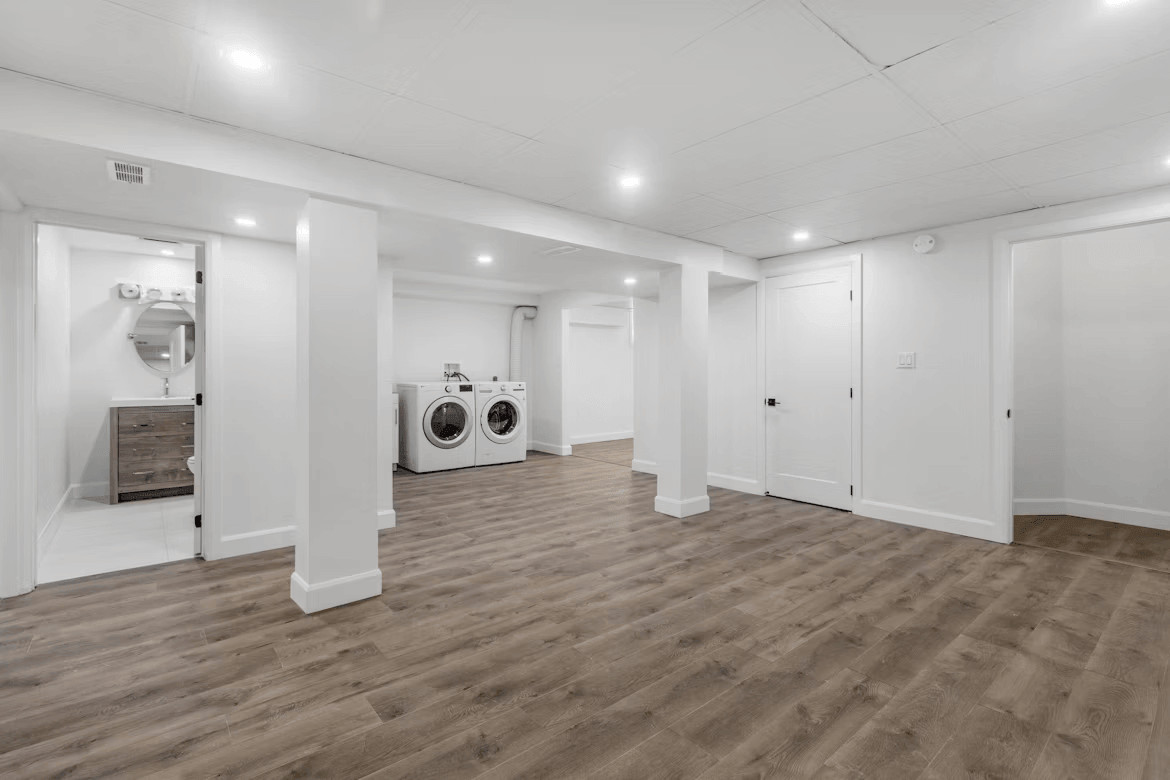
A professionally waterproofed basement creates new opportunities to expand a home’s living space. Once the area is dry and odor-free, it can be finished and transformed into a family room, home office, gym, or guest suite—adding usable square footage without the cost of a full addition. Waterproofing must always be the first step in any basement remodel. Without a dry, stable foundation, new flooring, drywall, and furniture remain permanently vulnerable to water damage, turning a renovation investment into a recurring repair expense. Skipping waterproofing to save money upfront almost always results in higher costs later, when a flooded finished basement requires both water remediation and full reconstruction of the newly installed space.
A finished, dry basement also increases a property’s resale value in a measurable way. Buyers look for homes with versatile, protected lower levels, and they are willing to pay a premium for spaces free from the dampness and structural concerns common in older houses. Real estate professionals consistently note that a properly finished basement delivers a strong return on investment compared to other renovation projects. Securing the foundation against water intrusion ensures that any subsequent improvements rest on a stable, protected base rather than a liability waiting to surface.
Long-Term Maintenance and Peace of Mind
Waterproofing a basement requires a significant upfront investment, but it pays off by preventing catastrophic water damage and preserving the home’s value over time. The system does require basic maintenance to keep functioning properly. Homeowners should test sump pumps before the rainy season and verify that battery backup systems work in case of a power outage. Keeping gutters and downspouts clear of leaves and debris also stops water from spilling over and pooling against the foundation, which would undermine even the best interior waterproofing system.
The most lasting benefit of a waterproofed basement is peace of mind. A protected foundation means homeowners no longer have to panic during heavy rainstorms or deal with the stressful, expensive aftermath of a flooded lower level. Taking control of basement moisture safeguards the physical structure, protects indoor air quality, and secures the home’s long-term value—three outcomes that make professional waterproofing one of the most practical investments a homeowner can make. For anyone who has dealt with a flooded basement even once, the value of never repeating that experience is difficult to overstate.