If you’ve shopped for a new garage door recently, you’ve probably noticed that one style shows up everywhere: the sectional garage door. Walk down almost any residential street in the U.S., and you’ll see it.
Horizontal panels stacked one above the other, rolling smoothly up and overhead instead of swinging out into the driveway.
There’s a reason this design has become the default option for new construction and replacements alike. It solves practical problems that older door styles never quite figured out. And it does so without forcing homeowners to sacrifice style.
It Saves Space Where You Need It Most
Traditional one-piece and swing-out doors need clearance in front of the garage to operate. That’s wasted space you can’t use for parking, storage, or a workbench. A sectional door eliminates that problem. Because it travels straight up and back along the ceiling, you can park your car right up against the door and still open it without any interference.
This is especially valuable for homes with shorter driveways or attached garages where every square foot counts.
It’s Built From Repairable, Replaceable Parts
A sectional door is made of multiple horizontal panels connected by hinges, with rollers running along vertical and horizontal tracks. That construction has an underrated benefit. If one panel gets dented by a wayward basketball or a fender-bender, you usually don’t have to replace the whole door. A technician can often swap out the damaged section and leave the rest intact.
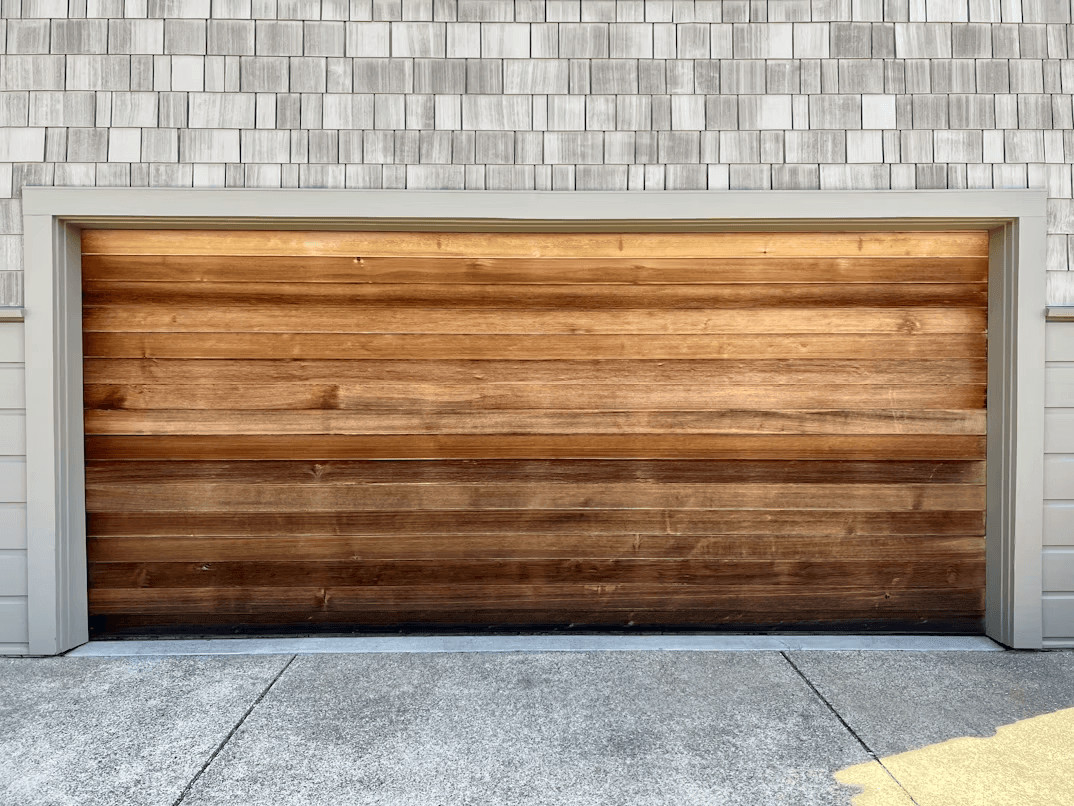
Compare that to a single-panel door, where damage to any part of the surface usually means replacing the entire unit. Over the life of a garage door, that difference adds up in repair costs.
It Offers Real Insulation and Noise Control
For garages attached to living space, insulation matters more than most homeowners expect. Sectional doors are widely available with multiple layers of insulation sandwiched between steel or composite skins.
That helps regulate the temperature inside the garage and reduces how much outside noise and outside temperature bleed into the rest of the house. If your garage sits below a bedroom or next to a home office, this is one of the more noticeable upgrades you’ll feel day to day.
It Comes in Almost Any Style You Want
Part of the reason sectional doors have stayed popular as design trends shift is flexibility. Manufacturers offer them in traditional raised-panel looks, carriage-house styles with faux hardware, and increasingly popular full-view designs with glass and aluminum framing. Heading into the design trends for this year, homeowners are leaning toward darker finishes.
Matte black, charcoal, and deep wood-grain tones, paired with cleaner, less ornamental hardware. Sectional doors adapt easily to all of these looks because the panel structure gives designers more surface area to work with than a single-panel door.
The Trade-Offs Worth Knowing
Sectional doors aren’t perfect for every situation. Because they have more moving parts than a single-panel design—hinges, rollers, and multiple tracks—they typically need slightly more routine maintenance and can cost more upfront. You also need enough ceiling clearance to accommodate the tracks, which can be a constraint in garages with very low headroom or obstructions like ductwork near the header. This overhead space is also worth considering if the garage serves multiple purposes, such as a home gym, workshop, or indoor practice area with golf simulator enclosures, since the door tracks and hardware can affect the usable height and layout.
For the vast majority of residential garages, though, these trade-offs are minor compared to the benefits. The combination of space efficiency, repairability, insulation options, and style versatility is hard for other door styles to match.
Getting It Right
If you’re replacing an aging garage door or finishing a new build, a sectional door is worth strong consideration. But the installation details matter just as much as the door itself. Panel gauge, spring balance, track alignment, and insulation rating all affect how the door performs for the next 15 to 20 years.
Working with an experienced installer who can assess your garage’s ceiling height, climate exposure, and usage patterns will help you land on the right configuration the first time, rather than discovering a mismatch after the door is already hung.
Among the available styles, sectional garage doors: the most popular choice for a reason remain a smart starting point for almost any homeowner weighing their options. A quick consultation can confirm whether they’re the right fit for your specific garage.