Most of us think of household dust as nothing more than a cosmetic annoyance, something to wipe off the coffee table before company arrives. But settled dust is rarely just harmless grime. It often contains pollen, pet dander, mold spores, and dust-mite particles, which means it plays a real role in indoor air quality, not just how tidy a room looks. Building a few practical habits, like choosing the right vacuum for carpets, rugs, and upholstery, can go a long way toward limiting how much dust accumulates and gets kicked back into the air you breathe. That said, no cleaning routine wipes dust out completely, and cleaning itself is just one piece of a bigger puzzle that also includes moisture control, proper ventilation, and cutting down on pollutant sources around the house.
What Household Dust Contains
Indoor dust is almost never just dead skin flakes and street dirt. It’s typically a mix of outdoor pollen tracked in on clothing, pet dander, mold spores, fragments from insects like dust mites and cockroaches, shed human skin cells, and soil particles carried in on shoes. What ends up in any given home’s dust depends on a lot of variables, including whether there are pets around, the local climate, how well the space is ventilated, the kinds of furnishings present, and simply how the people living there go about their day.
Because dust can harbor allergens and biological contaminants, the issue of resuspension becomes important. Something as ordinary as walking across a carpet, sweeping a floor, or shaking out a cushion can send settled particles floating back into the air, where they’re far more likely to be inhaled. This matters most for people managing asthma, allergies, or chronic respiratory conditions, along with young children and older adults, who tend to be more vulnerable to airborne irritants. It’s worth being cautious here, though: cutting down on dust can reduce exposure, but it’s no guarantee of relief from respiratory symptoms. Both the U.S. Environmental Protection Agency and respiratory-health groups like the American Lung Association have pointed out that dust composition and how easily it becomes airborne depend on a tangle of interacting factors unique to each home.
Build a More Effective Cleaning Routine
Dust doesn’t settle evenly across a home. Baseboards, window treatments, shelves, upholstered furniture, carpets, and the space under bedroom furniture tend to collect the lion’s share of it. Rather than trying to scrub every surface with equal diligence, it’s usually more realistic and more effective to concentrate effort on the rooms that see the most daily use.
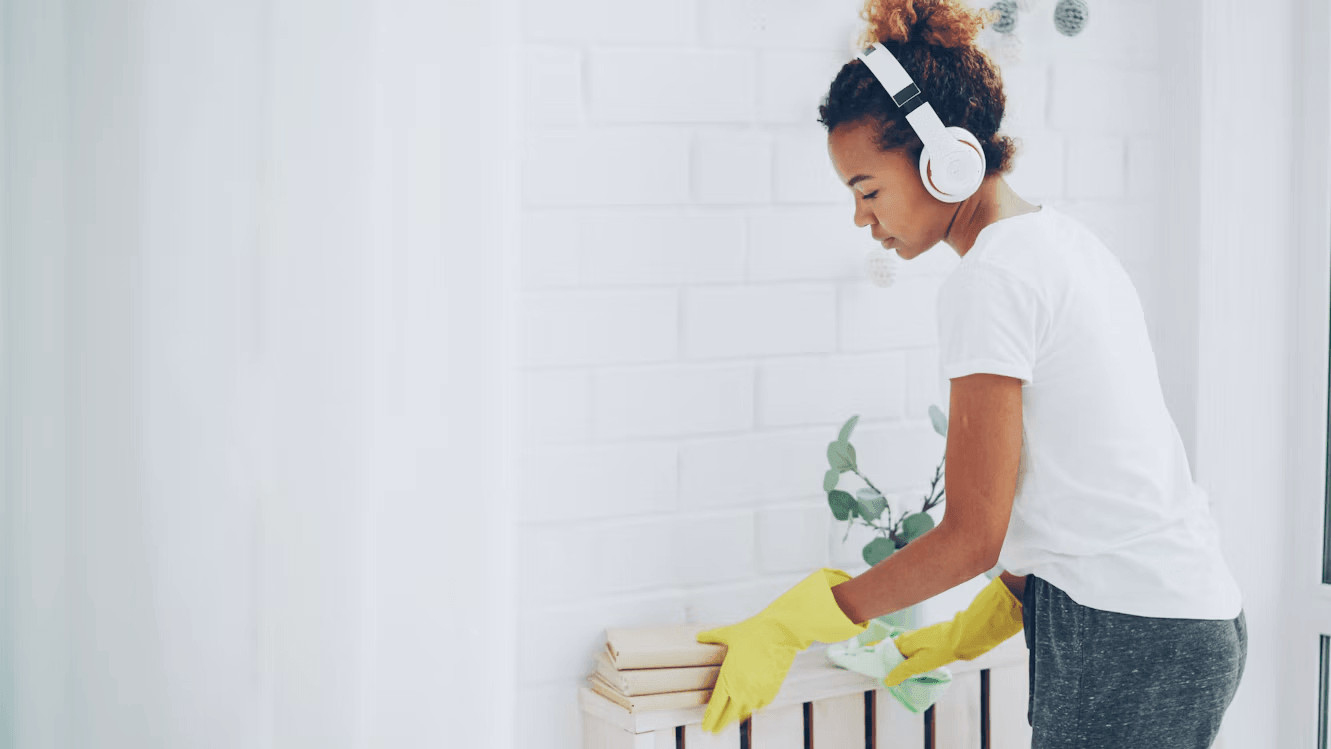
Damp methods work better than dry ones when it comes to trapping settled dust. Dry dusting tends to just push particles from one surface into the air, where they’ll eventually drift down and land somewhere else. A damp microfiber cloth, by contrast, actually captures dust instead of scattering it. Working from the top of a room downward means anything dislodged along the way can still be collected later, rather than settling back onto spots you’ve already cleaned. When it comes to carpets, rugs, and upholstered furniture, regular vacuuming according to the manufacturer’s instructions is generally the way to go. Using a higher-efficiency filter may help cut down on how much collected dust leaks back into the room, though how well any appliance actually filters depends heavily on its overall condition and upkeep.
A practical starting point: damp-dust the hard surfaces, give soft furnishings regular attention, and tackle high-traffic areas before worrying about rooms that see less use.
Cleaning schedules shouldn’t be set in stone. They should flex with household conditions. Homes with pets, wall-to-wall carpeting, young children, or allergy-sensitive residents will typically need more frequent attention than a home without those factors.
Reduce Dust at Its Source
Cutting down on how much outdoor material makes its way inside can meaningfully slow dust buildup. Simple measures like using doormats, removing shoes at the entryway, and keeping windows shut during high pollen or pollution periods all help, though none of them block every particle entirely.
Clutter and heavy fabrics play a role too. Open shelving, decorative textiles, and thick curtains are all dust magnets, so storing rarely used items in closed containers can make a noticeable difference. Washing bedding according to its care label is another simple, often-overlooked step. Some people suggest ripping out carpet altogether as a dust-reduction fix, but flooring choices come with their own trade-offs around cost, comfort, and accessibility that go well beyond just dust control.
Moisture management deserves just as much attention, since damp conditions are a breeding ground for mold and dust mites alike. Leaks, condensation, and lingering dampness should be addressed promptly, and indoor humidity levels are best guided by recognized public-health recommendations rather than chasing one specific number. If you’re dealing with visible mold or recurring water damage, that’s usually a sign to call in a professional rather than reach for a spray bottle.
Cleaning Safely for People With Allergies or Asthma
Anyone sensitive to dust should try to stay out of the room during activities that stir it up, such as vacuuming, sweeping, and dusting, whenever that’s realistic. Giving disturbed particles time to settle before stepping back in, and airing the room out afterward, can cut down on exposure even further.
Equipment upkeep matters more than people often realize. Following the manufacturer’s instructions for emptying containers, swapping bags, and cleaning or replacing filters helps keep performance where it should be. A neglected filter can quietly undercut everything else you’re doing. It’s also worth separating what a filter actually does, which is capture particles, from broader marketing claims about health improvements. No single device wipes out allergens entirely.
When to seek help: persistent wheezing, trouble breathing, or asthma that won’t settle down are reasons to talk to a doctor, while extensive mold, water damage, or pest problems usually call for professional remediation that goes beyond routine cleaning. None of this is meant to substitute for medical diagnosis or treatment.
Common Mistakes to Avoid
- Dry-dusting surfaces, which usually just redistributes particles instead of removing them
- Focusing on visible floors while ignoring upholstery, bedding, and vents
- Assuming a single cleaning session permanently clears out allergens
- Skipping filter maintenance or using equipment incorrectly
- Leaning on air cleaners alone when the actual culprit is a leak or pest issue
- Making unsupported promises about “allergen-free” results
A Practical Dust-Control Plan for Different Homes
In a home with pets, it helps to prioritize upholstery, rugs, and pet resting spots, along with regularly washing pet bedding. A carpeted bedroom benefits from consistent floor care, clean bedding, and some attention paid to the space under the bed. A household dealing with asthma or allergies might schedule cleaning for times when the sensitive person is out of the house, lean on damp cleaning methods, and keep tabs on moisture sources. These are just starting examples, not medical prescriptions. How often you clean should really be shaped by your own household’s symptoms, surfaces, and schedule.
Evidence, Sources, and Editorial Standards
This article draws on guidance from the U.S. Environmental Protection Agency regarding indoor air quality and biological contaminants, the American Lung Association on respiratory health, and the Centers for Disease Control and Prevention on asthma and allergen exposure. Cleaning doesn’t eliminate every indoor pollutant, and any claims here about filtration or humidity control are presented with appropriate caution rather than as guarantees.
Keeping a Home Cleaner With Less Dust
The core principles aren’t complicated: remove dust rather than just shuffling it around, pay extra attention to high-traffic and fabric-covered areas, limit incoming particles and moisture, and protect sensitive household members while cleaning is underway. A good place to start is simply identifying the three dustiest spots in your home and building a manageable routine around them. Consistent, targeted upkeep tends to hold up better over time than the occasional marathon deep clean, though ongoing dampness, mold, pests, or respiratory symptoms are all signs that it might be time to call in specialized help.