Construction sites bring a lot of moving parts together. The general contractor oversees the project, while subcontractors take care of jobs such as framing, electrical work, plumbing, and roofing. Equipment may come from another company, and the property owner has a role as well. If an accident happens, sorting out responsibility can get complicated fast.
Falls remain one of the most serious hazards in construction. In 2024, construction workers accounted for 95% of workplace deaths caused by falls to a lower level. Slips, trips, and falls also make up a significant share of nonfatal workplace injuries in the United States. For construction workers, the consequences can include serious injuries, time away from work, and lost income.
Who is responsible depends largely on what happened at the site. The worker’s employer may be involved, but so might a general contractor, subcontractor, property owner, or equipment supplier. In some cases, more than one company may have had a hand in the conditions that led to the accident.
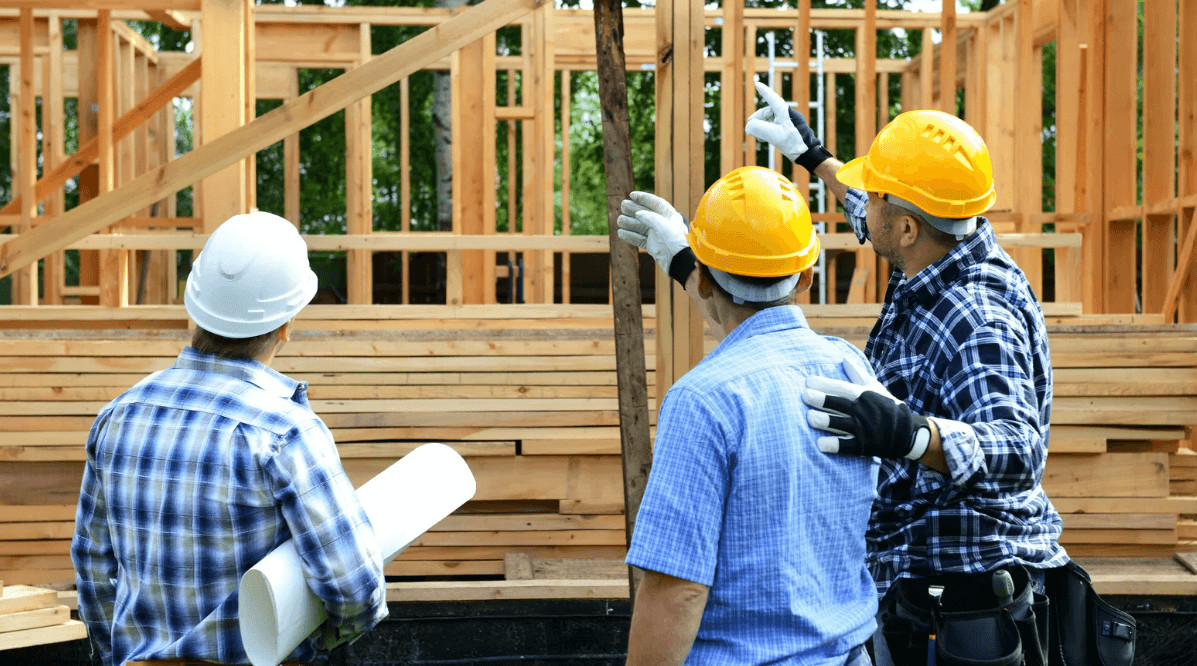
Why the Employer Isn’t Always the Answer
According to the legal website Sakkas, Cahn & Weiss, LLP, recovering from a construction accident involves more than physical healing. An injury can also affect a worker’s income and financial stability. One important point is that the worker’s employer is not always the only party responsible for a construction accident.
When workers are injured, they may first look to the company that employs them. In most cases, however, compensation from their employer comes through the workers’ compensation system rather than a personal injury lawsuit.
Workers’ comp operates on a no-fault basis. Employees generally do not have to prove that their employer did something wrong to receive medical and wage benefits. In return, employers are typically protected from personal injury lawsuits filed by their employees.
This is known as the exclusive remedy rule. A construction worker injured because of their employer’s equipment or safety failures will often pursue workers’ compensation benefits instead of filing a negligence claim against that employer.
The rule mainly protects the worker’s direct employer. It does not necessarily protect every other company working at the site. That distinction matters when an accident involves several contractors or crews.
Other Parties Who May Be on the Hook
A construction jobsite often has several companies performing different tasks in the same area. If another company creates the hazard that injures a worker, the worker may have options beyond workers’ compensation.
In North Carolina, for example, workers may be able to bring a negligence claim against a third party. Determining whether that applies can depend on who controlled the work and created the hazard, issues often reviewed by a Charlotte construction accident lawyer.
A general contractor or construction manager may face liability when a dangerous condition falls within an area they were responsible for supervising and they fail to address it. That can be true even when a subcontractor’s crew created the hazard.
Another subcontractor may also be responsible. For example, if an electrical subcontractor leaves exposed cables across a commonly used walkway and another worker is electrocuted, the electrical contractor’s actions could become part of the liability question.
Property owners may face liability for certain hazards tied to the property or an existing structure. Equipment and materials suppliers can also become involved when defective machinery or products cause an injury. Those disputes may fall under product liability law rather than a standard negligence claim.
Architects and engineers may face liability in more limited situations. A defective design could lead to a claim, as could failing to address a dangerous condition when the professional had both the responsibility and authority to do so.
How Federal Safety Rules Sort Out Responsibility
OSHA doesn’t decide who gets sued after an accident. Its rules can, however, help show how safety responsibilities are divided on a construction site. Under OSHA’s multi-employer citation policy, more than one employer can be cited for the same hazardous condition.
Good safety training for home improvement and construction projects can also help workers recognize hazards and understand the procedures meant to prevent jobsite accidents.
OSHA identifies four types of employers that may be responsible for a safety violation. The creating employer caused the hazard. The exposing employer has workers who are exposed to it. The correcting employer is responsible for fixing the problem. The controlling employer has general supervisory authority over the worksite and may have the power to require another company to correct a hazard.
A company can fall into more than one category at the same time. It may also have safety responsibilities even when its own employees did not create the dangerous condition.
This helps explain why responsibility after a construction accident can extend beyond one company. The contractor that created a hazard, the company whose workers were exposed to it, and the contractor responsible for site safety may all have different roles in what happened.
Building the Case for Multiple Parties
When several companies are involved, figuring out responsibility often comes down to determining who controlled the work and the area where the accident happened. Site logs, subcontractor agreements, safety meeting notes, and earlier reports of unsafe conditions can help establish which company had the authority and duty to address the hazard.
Photos and witness accounts collected soon after the accident can also be important. They may provide a clearer picture of site conditions than a reconstruction completed weeks or months later.
A worker pursuing workers’ compensation benefits and a separate negligence claim against a third party should also expect the two cases to overlap. A workers’ compensation insurer may have a right to recover some of the money it paid if the worker later receives compensation from a third-party settlement or judgment.
This is often handled through subrogation. It does not necessarily prevent a worker from pursuing both types of compensation, but the claims need to be coordinated so that payments and reimbursement rights are properly handled.
Law firms that handle construction injury claims often coordinate these issues as part of the case. They may pursue the workers’ compensation claim while also determining whether another contractor, property owner, supplier, or company could face a separate claim.
Finding out who was responsible for a construction site injury usually starts with what was happening on the job when the accident occurred. Site records, contracts, safety reports, photos, and witness accounts can help show who controlled the work area and who was responsible for dealing with the hazard.
That may point to a general contractor, subcontractor, property owner, equipment supplier, or another party involved in the project. Sometimes responsibility is shared by several of them.
The company that employed the injured worker is only one part of the picture. On a jobsite where several crews and contractors work side by side, the details of who controlled the work and the hazard often determine where responsibility falls.