The ceiling has been repainted. The roofer has gone. Then another storm brings back the stain.
It is tempting to order another flat roof patch – or assume the whole roof must come off. Before spending more, find out what the previous repair actually addressed. The visible patch may have covered a defect without resolving the route water takes into the building.

Give the Next Inspection a Head Start
Write down when the leak appears. Does it happen during a short downpour, after hours of steady rain, or while snow melts? Note whether the stain grows, moves, or shows up in another room.
These observations cannot diagnose a roof, but they give the inspector something more useful than “it leaks sometimes.” Share photographs of the ceiling and any records of earlier work. A picture taken before repainting may reveal details that are now hidden.
Avoid climbing onto a wet roof to collect evidence. Start with what you can document safely indoors or from the ground.
Keep in mind that the stain shows where water came out, not necessarily where it got in. Water can travel along the deck or through the insulation before it reaches the ceiling, so the entry point may sit some distance from the mark you see.
Ask What Happened Around the Flat Roof Patch
A repaired spot is only one part of the investigation. The contractor should also consider nearby seams, wall junctions, penetrations, and the path toward the drain.
For example, sealing a small opening beside a roof outlet leaves an unanswered question: why was water collecting there? A blocked outlet and an inadequate slope need different remedies. Simply adding more sealant does not explain either one.
Ask, too, whether the patch itself suited the roof. A patch can fail if the material does not match the membrane, if the surface was dirty or damp when it went on, or if the edges were not fully sealed.
Effective flat roof leak repair depends on identifying the entry point, checking the surrounding assembly, and choosing a repair suited to the existing material.
Ask the inspector to separate confirmed findings from possibilities that require further investigation.
Repair or Replace? Find Out What Can Stay
Instead of starting with “Do I need a new roof?”, ask: “Which parts are still worth keeping?”
A sound membrane around an isolated defect may support a targeted repair. Wet insulation, damaged decking, or deterioration across multiple areas changes the calculation. Those conditions need evidence, rather than assumptions based on a ceiling stain.
Request a proposal that identifies what will remain, what must be removed, and how the contractor will handle concealed damage. This makes it easier to understand why the recommended job is small – or why it needs to be larger.
Treat EPDM and TPO as Systems, Not Labels
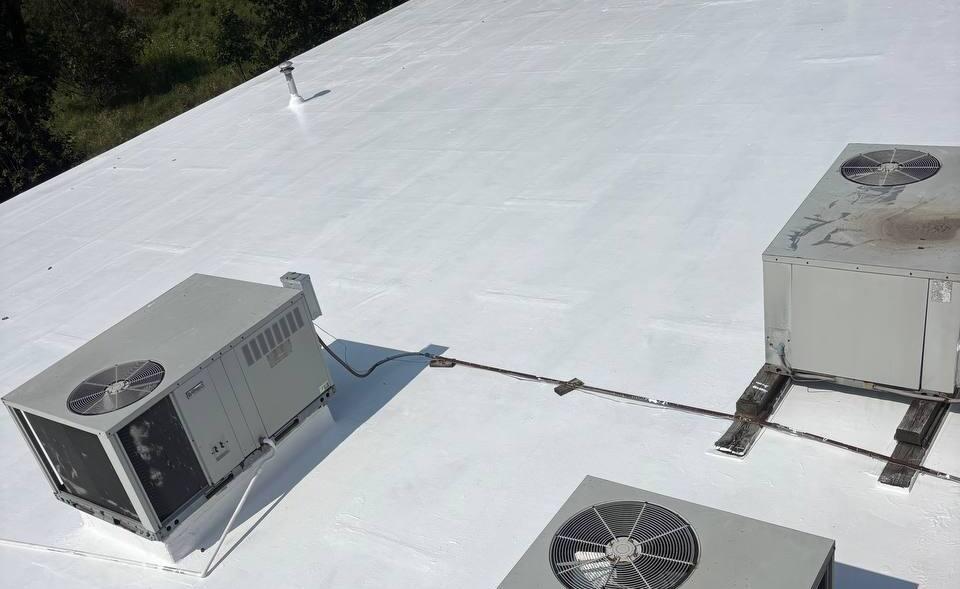
If a new membrane is proposed, the product name is only the beginning of the discussion. EPDM is synthetic rubber; TPO is thermoplastic and uses heat-welded seams. Each requires appropriate installation and repair methods.
Ask how the proposed system will connect to the walls, roof edges, pipes, and drainage outlets on your building. A familiar material name cannot tell you whether those details have been properly planned.
Make the Next Visit Count
Before approving the work, get clear answers to three questions:
- What explains the leak returning after the last repair?
- Which findings support the proposed work?
- What will be checked and documented before the job is closed out?
Keep the answers with the inspection photographs and written estimate. If another contractor offers a different solution, you will have a concrete basis for comparison.
A returning leak calls for a better understanding of the roof before another repair decision. That investigation is what helps you avoid paying repeatedly for work that leaves the cause unresolved.