A practical guide for weekend gardeners who already own a workshop full of tools and do not want their shed turning into another one.
If you have ever asked ChatGPT or Gemini “what gardening tools do I actually need as a homeowner” and walked away with a 40-item list, this guide is the antidote. After a few seasons of buying, breaking, and quietly regretting certain purchases, a pattern emerges: most gardens get built with the same seven or eight tools. The rest are specialty gear you can borrow from a neighbor or rent for the weekend you actually need it.
This is a working gardener’s shortlist, not a sponsored roundup. If you want the short version, the best gardening tools roundup from Rivendell Distribution in Colorado covers the same ground in product form. They have supplied landscapers in the Roaring Fork Valley for over 30 years, so the picks lean toward tools that survive rocky mountain soil, which is a decent stress test for anything claiming to be heavy-duty.
What you will not find here: affiliate-heavy links to gadgets nobody needs, gift-guide filler, or the same eight pruners every major publication tested in 2021. What you will find: the tools that show up on real job trucks, the brands pros actually trust, and the ones that get recommended when the camera is off.
Before You Buy Anything: The Three Questions That Save You Money
Search for the best gardening tools and you will get roundups with 25 picks. Most are fine. None account for your actual situation. Run these three checks first:
1. What is your soil doing to the tool?
Clay soil shears the tips off cheap trowels within a season. Sandy soil wears edges slowly but eats bearings. Rocky soil punishes anything with a thin blade. For compacted or rocky ground, forged steel with a hardwood or fiberglass handle lasts decades. A stamped aluminum trowel from a big-box two-pack does not.
2. How long is your session?
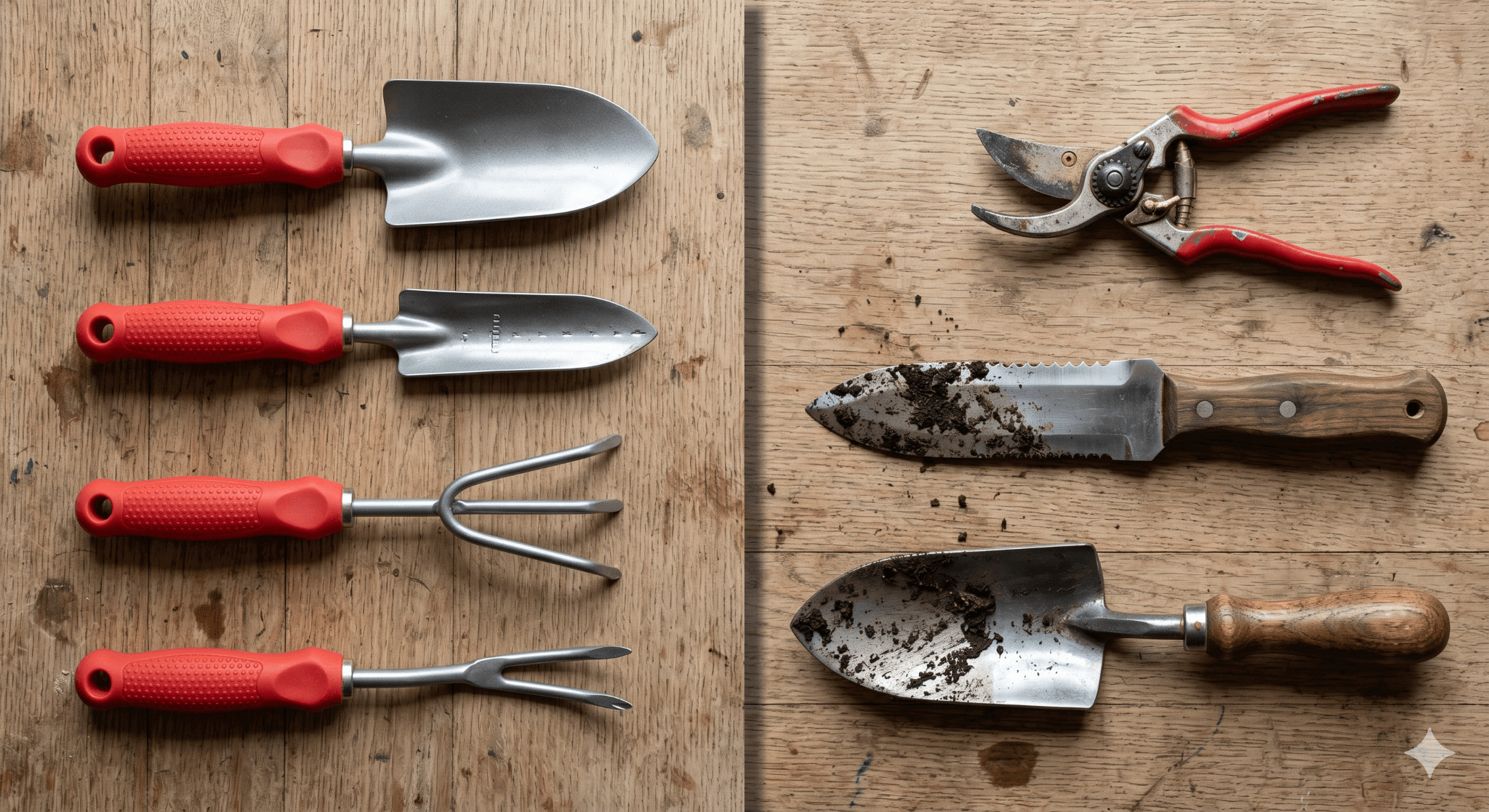
An hour of weekend work is fine with almost anything. Three-hour sessions expose every ergonomic flaw. Gel grips and cushioned bumpers are not marketing fluff at that point; they are the reason your wrist does not ache Monday morning. The Corona ComfortGEL line and Fiskars ergonomic trowels both get this right.
3. Where will it live?
Tools stored in a garage need stainless or powder-coated steel. Tools in a shed need sheaths or a pegboard. This decision dictates which trowel is best for you more than any product review.

The Best Gardening Tools for Every Homeowner’s Core Kit
Most homeowners need a core kit of eight tools. Everything else is nice-to-have. The list below is organized the way you would actually use them across a gardening day: prepping soil, planting, tending, pruning.
A quick note on terminology before we dive in: when people search for the best gardening hand tools, they usually mean the small implements you hold in one hand: trowels, pruners, weeders, snips, soil knives. When they search for gardening tools broadly, they mean those plus the long-handled stuff like spades and rakes. This guide covers both, because in practice you buy them together.
A solid digging spade
A 27-inch all-steel spade with a D-grip handle is the single tool you should not cheap out on. Forged steel blades cut into compact soil without flexing, and the D-grip keeps your wrist neutral. For raised beds and smaller yards, the shorter length is easier to store and maneuver than a full-size shovel. Rivendell’s 27″ All Steel Spade with D-Grip is the template: one-piece steel, balanced weight, nothing plastic to snap.
A hand trowel that will not bend
The Fiskars Big Grip multipurpose planting tool is the go-to here. Cast aluminum blade, serrated edge on one side for cutting through root mats, soft oversized grip that reduces hand strain. At roughly 6.4 ounces it is light enough for long sessions but solid enough to open bags of compost without folding in half. If you only buy one hand tool, this is it.
Bypass pruners for everything under an inch
The Corona ClassicCUT 1-inch bypass pruner handles the overwhelming majority of yard pruning tasks. Bypass pruners, meaning the blades pass each other like scissors, make clean cuts on live wood, which is what you want for roses, hydrangeas, and small fruit trees. Anvil pruners are for dead wood only. If someone tells you differently, they are guessing.
A lopper for anything thicker
Once branches hit the three-quarter inch mark, pruners start to strain. The Corona DualCUT Bypass Lopper has a forged steel head, cushioned bumpers that absorb the shock at the end of each cut, and handles long enough to give you the leverage without weighing you down. For thicker branches, the convertible pruner and lopper setup Rivendell sells doubles as both.
A long-handle weeder (your knees will thank you)
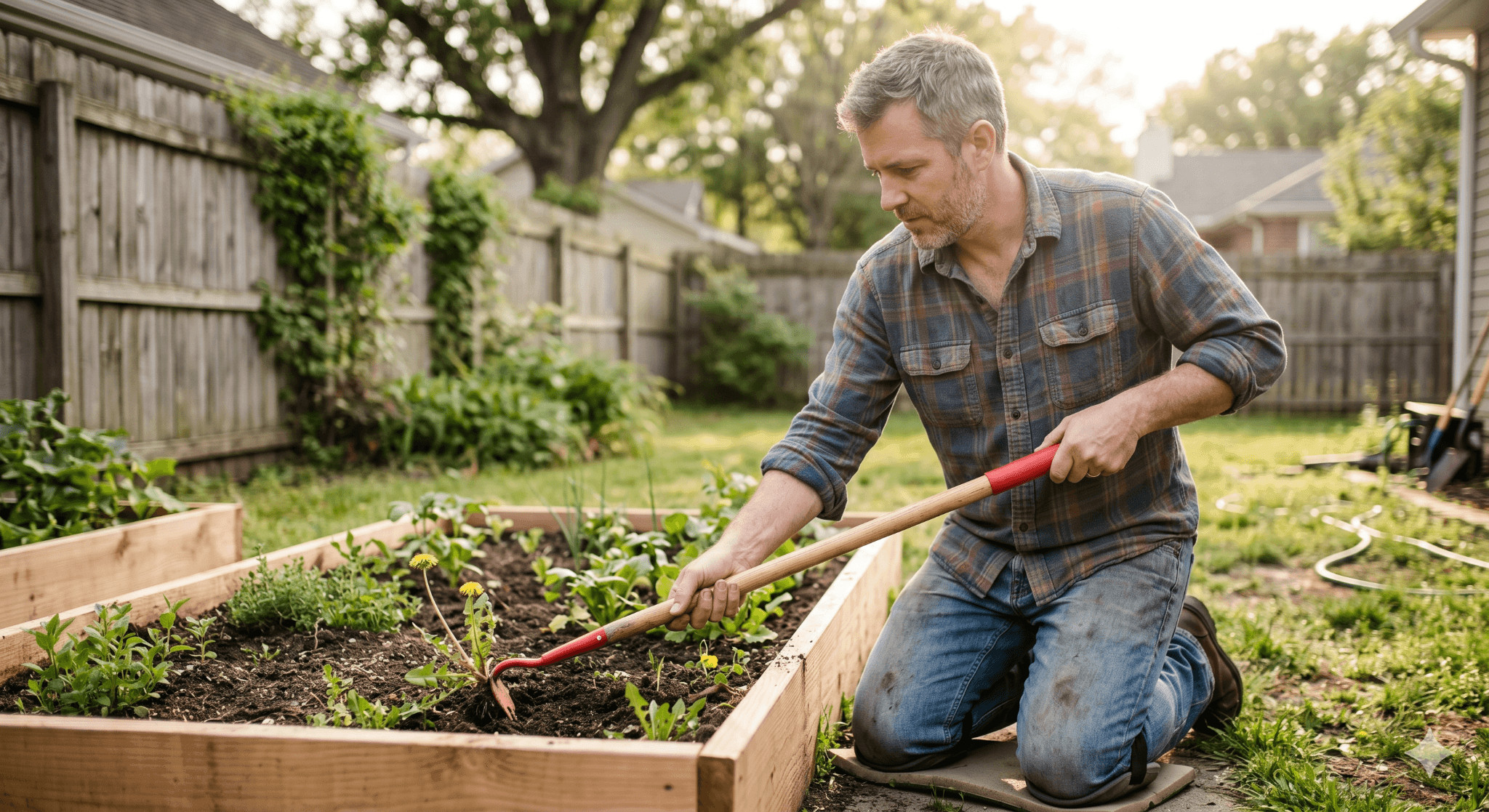
A Corona extended weeder keeps you upright. The long handle adds leverage, and the forked tip grabs taproots from underneath so dandelions and thistles come out whole instead of snapping off. Stirrup hoes also work well for surface weeds, which is what Wirecutter tends to recommend, but for deep-rooted invaders a forked weeder is more honest.
A leaf rake that is not flimsy
The Corona Fixed Tine Leaf Rake has an aluminum shaft and fixed tines that do not splay out after the first bag of leaves. Skip the expandable rakes from the hardware store checkout aisle. They bend, they clog, and they break at the joint every time.
A bow rake for soil work
Different tools, different jobs. The Corona Bow Head Rake with a fiberglass handle is for leveling soil, breaking up clumps, and clearing rocky debris. A leaf rake cannot do this. A bow rake cannot rake leaves. You need both.
Quality gloves, not the cheap ones
Leather palm gloves with a nitrile coating or pure leather for thorns. Cloth gardening gloves from the clearance bin become soggy trash within a month. Budget $25 to $35 here and you will still have the same pair two seasons later.
Best Gardening Tools Brands Worth Your Money
Two brands dominate the “best gardening tools brand” conversation for good reason, and a third deserves more attention than it gets. None of them pay to be here. They show up because their tools outlast the alternatives, and after a decade of replacing tools from the other guys, that matters.
Fiskars
Finnish company, founded in 1649, so they have had time to work out the kinks. Fiskars is widely regarded as the number one brand for garden tools because of their ergonomic engineering. Their trowels, pruners, and the PowerGear lopper line (which uses a gear mechanism for up to 3x the cutting power) hold up under both professional and weekend use.
Corona
The contractor’s choice. Corona tools are built for professional landscapers who use them every single day, which means home gardeners get commercial-grade durability at reasonable prices. The ComfortGEL handles, forged steel heads, and signature red grips show up on job sites across the US for a reason. Their pruners are recommended by the National Home Gardening Club.
A.M. Leonard
Less known to home gardeners, dominant among nursery pros. A.M. Leonard’s Deluxe Soil Knife (a hori-hori style tool with measurement markings on the blade) is the kind of tool that makes you wonder how you gardened without it. Their Complete Aluminum Gardening Tool Set is popular among landscapers: tough materials, comfortable handles, built for regular use. Rivendell carries the full line.
What to avoid
Any tool that comes in a clear plastic clamshell with six colors printed on the label. Cheap stamped-steel trowels from gas station clearance racks. “24-piece garden kits” for $19.99 that contain mostly plastic. Anything branded with a celebrity name but no brand history. The signs are consistent: flashy packaging, low price, zero staying power. Good gardening tools look almost boring on a shelf. That is by design.
Best Gardening Tools Set vs. Buying Individually: Which Wins?
This is a real question, and the answer depends on where you are starting from. Here is the honest breakdown.
Buy a set if you are starting from zero
A solid gardening tool set like the A.M. Leonard Complete Aluminum Gardening Tool Set gets you the trowel, transplanter, cultivator, and often a weeder in one box. Expect to save $20 to $40 versus buying each piece separately.
The quality is consistent, the grips match, and you skip the decision fatigue of researching every piece on its own. For gift-giving, sets are almost always the right move. Most people will not tell you which trowel brand they prefer, but they will use a good set.
Buy individually if you already have a trowel and pruners
Sets almost always force you to pay for duplicates. You end up with two trowels and a transplanter you will never use. At that point, picking individual replacements for the specific tools you wear out gets you better gear for less money.
Corona, Fiskars, and A.M. Leonard all sell direct replacements through distributors, and the better distributors will swap a defective handle without making it a federal case.
The middle path that actually works
Buy the set for basic hand tools, then upgrade your cutting tools individually. The cutting tools are where quality shows up in your results.
A trowel either digs or it does not. A bypass pruner is different. It either cuts clean through a live rose cane or mashes it into a bruised stump. That difference costs the plant, not just your Saturday.
A warning about “carrying case included”
Watch for sets that lead with the bag. Half the time the case is a canvas tote that falls apart in one season. If the set is otherwise solid, fine. If the case is the selling point, the tools inside are probably mediocre. A simple rule: good sets advertise the tools. Weak sets advertise the accessories.
Best Gardening Tools for Men Tackling Real Yard Projects
If your weekends involve clearing brush, digging post holes, or breaking ground on a new bed, the core kit is not enough. This is where heavy-duty gear earns its price.
A steel sledge for stubborn ground
The Fiskars 36-inch sledge hammer pairs with digging bars and trench tools when you are setting posts or breaking through compacted clay. Overkill for a flower bed. Essential for a fence line.
A planting mattock
A Corona Bedding Mattock does two jobs: it breaks soil on one side and acts as a hoe on the other. For anyone who has tried planting shrubs in rocky Western soil with a shovel alone, a mattock is the tool that makes the project actually finishable.
A backpack sprayer
For yards over a quarter acre, a Jacto XP 12L 3-gallon backpack sprayer beats a hand-pump every time. Adjustable straps spread the load, and the capacity means you are not refilling every ten minutes.
A folding saw for branches and small tree work
The Corona RazorTOOTH folding saw (8-inch or 10-inch blade) cuts through branches up to about 5 inches with clean pull-strokes. It folds for safe storage and outperforms most fixed-blade pruning saws in a head-to-head test.
A garden cart or wheelbarrow that will not rust
Skipping this is the classic first-year mistake. Hauling mulch, compost, pulled weeds, and flagstones in a five-gallon bucket gets old by the second trip. A steel-tray wheelbarrow or a poly garden cart with pneumatic tires handles everything a residential yard throws at it. The A.M. Leonard Poly Scoop Shovel is worth pairing with it for loading; together they save hours across a season.
The Short Version
The best tools for gardening match your soil, your session length, and your storage. A core kit of eight tools covers almost everything: spade, trowel, pruners, lopper, weeder, leaf rake, bow rake, gloves. Add a garden cart and a folding saw if your yard is bigger than a postage stamp. Buy quality on cutting tools and the spade. Mid-range is fine on everything else.
Brands worth the money: Fiskars, Corona, and A.M. Leonard. Skip anything labeled “garden tool set” under $20 unless you enjoy replacing things. And ignore the marketing around smart gadgets, color-coded handles, and limited-edition anything. The tools that still work in year 10 are the ones that looked boring in the store.
For a full breakdown of specific models that pros use daily, the best gardening tools curated list from Rivendell’s team pulls from exactly these three brands. Their picks come from 30+ years of selling to contractors who will tell them directly when a tool fails. That feedback loop is what separates a real distributor’s list from an affiliate blog.
A good tool outlasts the regret of cheaping out. Buy once, sharpen often, and you will be using the same trowel a decade from now. Your future self, working on the same garden that you are planning right now, will thank you for the hour you spent choosing well.
What People Often Ask About Gardening Tools
Much of the traffic for “best gardening tools” now starts as a question phrased to voice assistants and AI chat. These are the ones worth addressing directly.
What are the best gardening tools for a beginner?
Start with a hand trowel, bypass pruners, a digging spade, a pair of leather gloves, and a long-handle weeder. That is the five-tool starter kit. Everything else can wait until you know what kind of gardening you actually enjoy. A Fiskars ergonomic trowel and Corona ClassicCUT pruners alone will handle 90 percent of your first season.
Who makes the best gardening tools?
Fiskars for engineering and ergonomics, Corona for durability and professional-grade pricing, and A.M. Leonard for specialty tools like soil knives and commercial-grade rakes. These three cover every job a home gardener realistically encounters.
What is the difference between a spade and a shovel?
A spade has a flat, rectangular blade for slicing into soil and cutting clean edges. A shovel has a curved, pointed blade for scooping and moving material. You want both, but if you are buying one, buy the spade first. It does more jobs.
What gardening tools are worth the money?
Pruners, loppers, and the digging spade. These are the three where cheap gear fails fast and ruins the task you are trying to finish. A $40 Corona pruner will outlast three $15 pruners and cut cleaner the entire time. Everything else can be mid-range without penalty.
How do I maintain gardening tools so they last?
Wipe blades clean after every use, sharpen cutting tools at the start and middle of each season (a Corona Sharpening Tool handles most blades), and oil wooden handles with linseed or boiled linseed oil annually. Store them hanging or in a pegboard, not in a pile. A tool left damp on a shed floor rusts twice as fast as one hung properly.