The living room is the heart of most homes — the place where families gather, guests are welcomed, and lazy Sunday afternoons are spent. At the center of it all sits one piece of furniture that does more heavy lifting than almost any other: the sofa. Yet despite how central it is to daily life, choosing the right one is often rushed or left until the very end of a decorating project. Getting it right from the start can save years of regret.

Start With How You Actually Live
Before thinking about color or fabric, it helps to think about lifestyle. A household with young children or pets needs different performance from upholstery than a quiet reading nook for one or two people. Do you host large groups often, or is movie night usually just you and a partner? Do you eat on the sofa, work from it, or nap on it during the day? These small, practical questions do more to narrow down the right shape and size than any style trend.
Once the daily use is clear, the next step is scale. A sofa that looks perfectly proportioned in a showroom can overwhelm a small apartment or feel lost in a large open-plan space. Measuring the room, marking out the footprint with tape, and accounting for walkways and doorways prevents a costly mismatch.
When browsing options for a new centerpiece, many people compare a wide range of styles — from compact loveseats to sprawling sectionals — such as the collection of sofas available for different room sizes and layouts, which makes it easier to see how proportions and configurations vary side by side.
Fabric, Frame, and Fill: What’s Underneath Matters
The visible upholstery gets most of the attention, but the frame and cushion fill determine how a sofa performs over the years. Kiln-dried hardwood frames tend to resist warping better than softwood or particleboard. High-resilience foam holds its shape longer than standard polyurethane foam, while feather-and-down blends offer a plush feel but require more regular fluffing.
| Feature | Budget-Friendly Option | Mid-Range Option | Premium Option |
| Frame | Softwood/particleboard | Hardwood composite | Kiln-dried hardwood |
| Cushion fill | Standard foam | High-density foam | Foam-wrapped down |
| Upholstery | Polyester blend | Performance fabric | Top-grain leather |
| Expected lifespan | 3–5 years | 7–10 years | 15+ years |
| Typical price range | $300–$700 | $800–$1,800 | $2,000+ |
Fabric choice is just as important as construction. Performance fabrics — often labeled as stain-resistant or “pet-friendly” — have become popular because they combine washability with a soft hand-feel. Leather remains a durable classic that ages well but shows scratches more visibly and costs more upfront. Natural fibers like linen look elegant but wrinkle and stain more easily, making them a better fit for lower-traffic formal spaces.
Color, Shape, and the Room’s Overall Balance
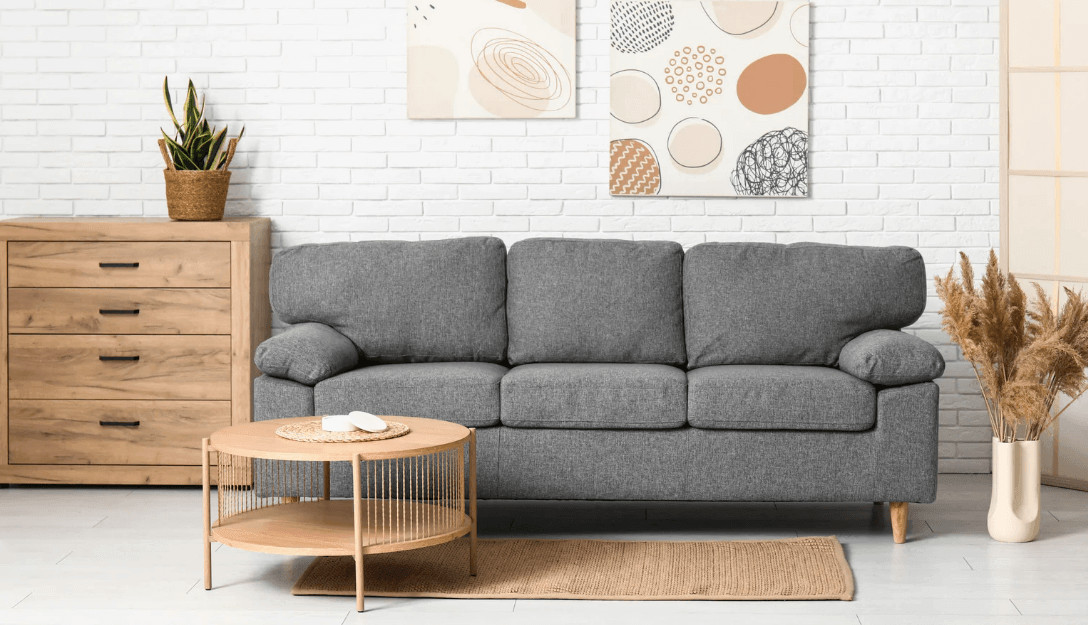
Neutral tones — grays, beiges, and soft whites — remain the safest long-term choice because they adapt easily to changing decor trends and accent colors. A bold-colored sofa can anchor a room beautifully, but it commits the space to a certain palette for years, since replacing a large upholstered piece is far less frequent than swapping a rug or throw pillows.
Shape matters just as much as color. A track-arm sofa reads as modern and minimal, while rolled arms lean traditional. Sectionals maximize seating in open floor plans and work well for households that entertain often, while a classic three-seat sofa paired with accent chairs offers more flexibility for smaller or more formal rooms.
A Simple Decision Framework
For anyone feeling overwhelmed by the options, breaking the decision down into a short checklist tends to help:
- Define the use case — everyday lounging, formal entertaining, or a flexible multi-purpose space.
- Measure the room — including doorways and hallways for delivery.
- Set a realistic budget range based on expected years of use, not just sticker price.
- Test comfort in person whenever possible, since firmness and depth are hard to judge from photos alone.
- Match fabric to lifestyle, prioritizing durability if children, pets, or heavy daily use are involved.
Final Thoughts
A sofa is rarely an impulse purchase, and it shouldn’t be. It shapes how a living room feels, how comfortably people can gather, and how well the space holds up over years of daily use. Taking the time to think through lifestyle, construction quality, and proportion before falling in love with a particular color or style tends to lead to a choice that still feels right long after the new-furniture smell has faded.
For further reading on furniture care and maintenance, resources such as the Better Homes & Gardens furniture care guides offer practical, brand-neutral advice on keeping upholstered pieces looking their best.