The heating is on, the room feels fine, but nobody wants the chair beside the window. It’s easy to blame old glass. New windows are a big expense, though, and a cold spot isn’t enough to tell you whether they’re worth it.
Sometimes the repair is a worn strip of weatherstripping or a latch that no longer pulls the window shut. Sometimes the window really does need replacing. The useful question is what has gone wrong, because those problems need different fixes.
A cold window and a leaking window need different repairs
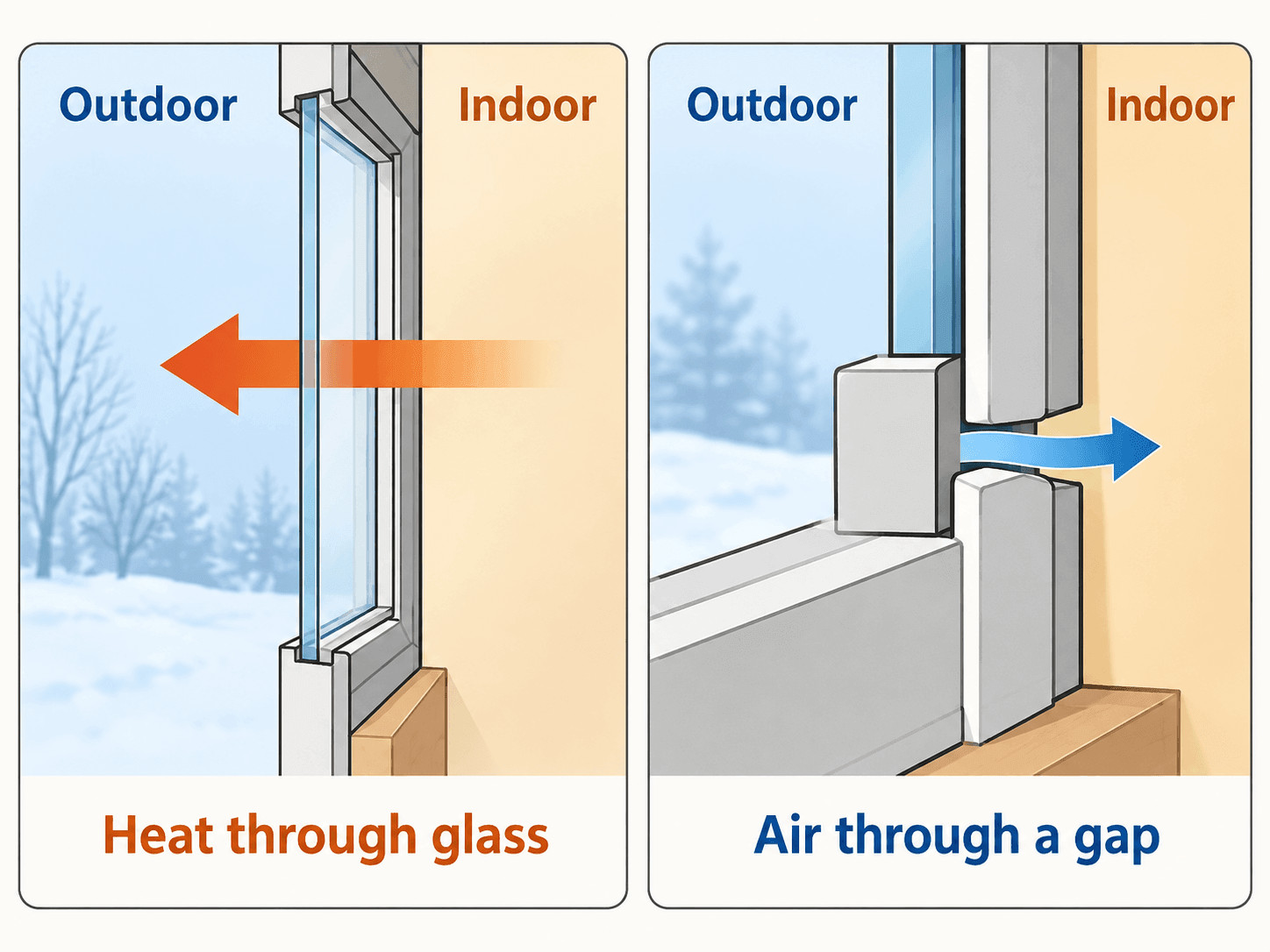
Even a tightly closed window lets heat pass through its glass and frame. On a cold evening, its inside surface may feel much colder than the wall around it. Sealing the edges won’t change how well the glass itself insulates.
A draft is outside air coming through an opening. The gap might be around the moving part of the window or where the frame meets the wall. If the window is otherwise sound, closing that gap may be all the work it needs.
Weatherstripping seals the edges that move when you open a window. Caulk is used for suitable fixed joints. They aren’t interchangeable: caulking an opening shut creates another problem, and sealing over the frame’s drainage holes can trap water.
A window that’s hard to latch deserves a closer look before you add either material. The moving section, called the sash, needs to meet the frame properly. A thicker strip won’t necessarily fix a poor fit; it may just make the latch harder to close.
When you can’t find an obvious gap
A damaged seal can be easy to spot, but other problems are less obvious. A window may look fine and still feel noticeably colder than the wall around it. A thermal camera can help you see where that temperature difference is coming from, whether it’s concentrated around the frame or extends into the surrounding wall.
You don’t necessarily need a standalone thermal camera for a quick check. Devices such as the Rision thermal camera for smartphone connect to a compatible phone and display surface temperature differences on the screen. When checking a window, include part of the surrounding wall in the image so you have something to compare it with. A close-up of the glass alone gives you less context.
For example, a cool band down one side of the frame gives you a specific edge to examine. A larger cool patch above the window may point toward a problem in the wall instead. Neither pattern proves the cause, and the camera can’t see through the wall.
Glass also reflects surrounding heat, which can make an image misleading. Direct sunlight changes surface temperatures too. A shaded window, with the room heated normally and a clear difference between indoor and outdoor temperatures, offers a more useful starting point than sun-warmed glass.
For one troublesome window, buying a camera may be more than you need. Thermal imaging is also something to ask about if you’re arranging a home energy assessment.
A repair can be more than a fresh seal
A worn seal doesn’t make the whole window worthless. Neither does a faulty handle. Depending on the window’s design and condition, repairs may include adjusting the hardware or replacing a damaged part while leaving the frame in place.
There may also be a middle option if the trouble is in the glass. Some windows allow the glass unit to be replaced without removing the entire frame. It’s worth asking whether that is possible when the frame is sound, especially if you like the existing windows and want to keep them.
Before paying for work, make sure the cold is actually coming from that area. A long curtain can cover a heating vent, and a draft from a nearby door can be mistaken for a window problem. If the entire room stays cold while the rest of the house warms up, the heating or insulation may need attention.
When replacing the window makes sense
A badly deteriorated frame is another matter. The same goes for a window that still won’t open or close properly after reasonable repairs. Replacement makes more sense when several parts are failing, or when the glass performs poorly and the available repairs won’t address the discomfort.
The installation matters as much as choosing the window. A new unit needs to fit and be sealed correctly within the wall opening. If that surrounding area also needs repair, it should be part of the quote rather than an unresolved problem behind new trim.
Ask the installer to explain what the proposed work will fix. Repairing a gap, upgrading the glass, and rebuilding a damaged frame are different jobs. A quote that identifies the actual problem makes it easier to decide whether the work is worth paying for.
Check the Problem Before You Replace the Window
Feeling cold near a window doesn’t automatically mean you need a new one. Start with the simple things: check for drafts, worn weatherstripping, loose hardware and visible damage. If the cause still isn’t clear, a closer inspection can help narrow it down.
Once you know where the problem is coming from, you can decide whether a small repair, a glass replacement or a new window screen makes the most sense. That can save you from replacing a window that still has years of useful life left.