How many times have you scrolled through media or gone looking into the furniture salons, looking to bring some freshness to your home?
Most people would agree that it all starts in the kitchen. After all, the kitchen is pretty much the place in the home where you’ll spend most of the time with your family and friends.
And contrary to popular belief, it isn’t THAT hard to accomplish, as long as you know what you’re doing (of course). Usually, everything that feels costly and luxurious is actually planned on a budget (yes, even rich people have budgets) – most things anyway.
But people who solely focus on cutting costs tend to end up with a home interior that they don’t really fall in love with. So what can you do to prevent that from happening?
Well, it’s by fixing those tiny mistakes and focusing on visual appeal rather than on expensive materials.
When every item/furniture piece is in sort of a harmony, you don’t even notice the most expensive details (e.g., whether it’s premium hardwood or a solid slab custom-made table).
And this article’s going to be all about that.
What doesn’t work when designing a kitchen, and more importantly – why. Once you know that, it’ll be easy to avoid these mistakes.
The Small Design Mistakes That Make Kitchens Feel Cheap
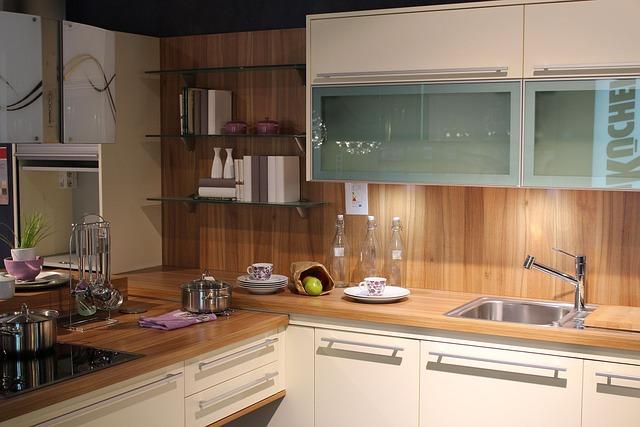
As mentioned above, one drastic feature does not guarantee you an expensive look. Besides, as for any other part of the home, there are lots of small details/things that end up defining the whole experience. Sure, there can always be that one statement piece. But it’s everything else, combined, that keeps your attention. It’s the harmony of how these finishes, materials, and colors work with one another. And that’s what we’re going to focus on here. As long as you know what’s good, you’ll more easily recognize what isn’t.
As we’ve already stated, the kitchen is the heart of the home; it’s where families and any gatherings tend to gravitate towards. That’s why high-end kitchens are designed to combine both functionality and looks.
On that note, most common mistakes happen right there when one side is neglected, or both end up mishandled. The following are some crucial mistakes that keep repeating, no matter the price and space.
Too Many (Different) Finishes
One of the first mistakes is made long before the kitchen is even built. After proportions and dimensions comes the choice of colors and materials.
Not so rarely, it goes in the wrong direction when having so many colors and different materials, it becomes messy even when it’s clean. This kind of interior failure creates a feeling that the kitchen is smaller and becomes outdated faster.
Plus, if there is also a mixture of different patterns with materials, it can become chaotic and overwhelming, creating visual clutter.
On the contrary, what actually makes the kitchen feel more expensive and pleasant to stay in is an intentional mixture of two to three materials.
It all ends up in color theory, matching warm and cool tones with light counter finishes.
In commercial settings, this principle is applied through consistent material choices like stainless steel sink benches, which demonstrate how a single cohesive finish can keep a workspace looking clean and unified.
On the contrary, what actually makes the kitchen feel more expensive and pleasant to stay in is an intentional mixture of two to three materials.
It all ends up in color theory, matching warm and cool tones with light counter finishes.
Storage That Functions Poorly
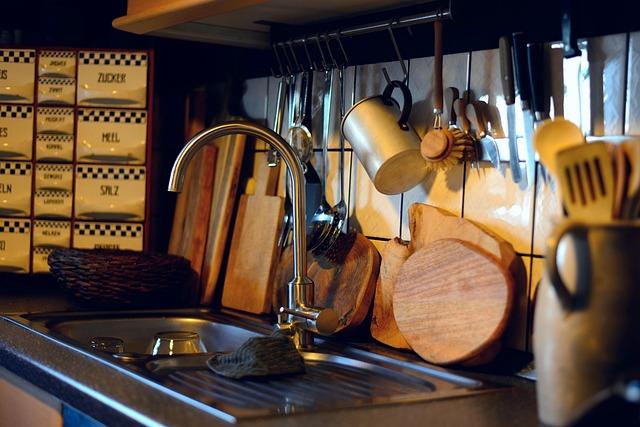
When talking about functionality, people tend to overestimate existing kitchen cabinets and corners, not using them to their full potential.
More precisely, for some time, there was a trend to leave corners open, as it is the perfect spot for additional shelves. However, in most cases, it didn’t go as planned, ending up as inaccessible storage and clutter.
Luckily, for that luxury feeling, the goal follows a clean aesthetic with functionality.
It has been introduced as deeper drawers paired with vertical organization (used for those wasted corners).
Also, concealed kitchen design has been a trend for a while. It not only gives you additional space to hide working mess and additional compliances, but it also provides you with an elevated look.
Poor Layout Planning
Maybe the most important part that separates cheap-looking kitchens from luxury ones is definitely decisions made on the spur of the moment.
From the start, you create an idea and lay out how it’s going to look. But what tends to be forgotten is the entire workflow.
If you are heavily focused on countertops and materials, the only goal is for it to look modern. The bigger long-term issues are usually cabinet proportions, awkward spacing, and storage layouts that were never fully planned out.
These might not look as problematic at first, but gradually they become more and more frustrating.
Like when you are baking, and don’t have a free surface to put down the roasting pan, or when there are SO many dishes ending up all over the counters.
In these cases, people tend to change things mid-project, overrunning their initial budget.
So, to avoid these issues, homeowners now spend more time planning layouts to the most minor detail before the actual start.
One way to plan layouts is by working with companies that produce custom-made and semi-custom furniture pieces, but at the same time provide you with 3D renderings as well as layout previews, such as iCabinetry Direct. It’s always nice to know what the end result is going to be before you invest, especially if you’re going with furniture pieces that are both high-quality and look extremely high-end.
And looks do matter here. A lot. You want furniture that will stand the test of time. You want furniture that won’t look dated in five years.
Then, there’s another hidden mistake – lightning.
When the lights aren’t positioned properly, it can create unwanted shadows and dullness.
To prevent overhead lighting, opting for under-cabinet lighting will add depth and highlight kitchen details.
Conclusion
At the end of the day, kitchens that feel custom and elevated are usually the ones made out of thoughtful choices rather than an immense budget.
Every step matters, from the idea to testing and then implementing.
The biggest difference between a kitchen that feels rushed and those that feel custom lies in the functionality and the ease these spaces provide. If it gives you enough storage and you can function, while it also adds to the atmosphere through lighting and efficient planning, you are on the right path.
From there, carefully matched materials, finishes, and colors are the last steps separating you from your ideal kitchen.