Every summer, I watch the same thing happen. The thermostat creeps down, the AC runs longer, and utility bills start climbing in ways that make me wince. If you’re a homeowner who has felt that same frustration, you already know the tension between staying comfortable and keeping costs reasonable.
The good news is that expensive system upgrades aren’t the only path forward. Over the years, I’ve found that small, intentional DIY adjustments can make a real difference in what I pay each month, and none of them required a contractor.
Seal Leaks and Swap Filters First
Most of the energy your AC wastes never shows up on a diagnostic report. It escapes through gaps around windows, door frames, and ductwork joints that you’d barely notice with your hand. According to the Department of Energy, air conditioning accounts for roughly 12% of total household electricity costs. That’s a significant slice of any budget, and it means even modest efficiency gains translate into real savings over a full cooling season.
I started by walking through my house with an incense stick on a windy day, watching the smoke bend near problem spots. A few dollars’ worth of weatherstripping and caulk later, my system stopped fighting against itself.
Filters were the other quick win I almost overlooked. A clogged filter forces the blower motor to push air through what is essentially a wall of dust, and the harder that motor works, the more electricity it pulls. Now I swap or clean mine every month during summer. It takes about two minutes, costs next to nothing, and the difference in airflow is something you can actually feel at the vents.
What I’ve learned is that neither of these steps works as a one-time project. Stacking these habits is one of the most reliable ways to reduce AC energy costs without replacing equipment. The real savings come from pairing them with a consistent maintenance routine, checking seals before summer, replacing filters on schedule, and staying ahead of problems before they start costing you money.
Help Your AC Breathe Better

Once I sealed the leaks and started changing filters regularly, the next thing I noticed was how much airflow patterns affected my comfort. Even a well-maintained AC can’t do its job if the air it produces has nowhere to go.
I found several vents in my house that were either closed or blocked by furniture. A couch pushed against a supply vent, a bookshelf parked right in front of a return. Every one of those obstructions forces the system to push harder while delivering less cooling to the rooms I actually use.
Moving furniture even a foot or two away from vents and returns made a noticeable difference. The air circulated more evenly, and the AC cycled off sooner because rooms reached the set temperature faster.
Ceiling fans were the other piece I had been underusing. Set counterclockwise in summer, they push cool air downward and create a wind-chill effect that makes a room feel several degrees cooler than it actually is. That effect gave me enough confidence to raise my thermostat by two or three degrees without any real change in comfort. The fan uses a fraction of the electricity the AC does, so even a small bump on the thermostat adds up over weeks and months of steady use.
Stop Heat Before It Reaches Your AC
For a while, I was focused entirely on making my AC run better. Then it hit me that the smarter move was giving it less work to do in the first place. Reducing heat gain before it enters your living space means the system cycles less often, and that’s where real summer savings start to add up.
Windows are the biggest offenders in most homes. I put reflective window film on my south- and west-facing windows, and I close the blinds on those sides during peak sun hours. The combination is surprisingly effective for how little it costs. Blackout curtains work well too, especially in bedrooms where you want it dark anyway.
I also changed a couple of habits that were quietly working against me. Running the oven or dryer in the middle of a hot afternoon pumps heat directly into your home, and your AC has to remove every bit of it. Now I cook on the stovetop or grill outside during the hottest stretch of the day, and I run the dryer after sunset.
The last thing I tackled was the attic. Even small insulation improvements up there can keep heat from radiating down into living spaces. I added a layer of blown-in insulation over a weekend, and the upstairs rooms stopped feeling like they were five degrees warmer than the rest of the house. For homeowners looking to cut cooling costs, starting with heat prevention is often more effective than any thermostat adjustment.
Thermostat Habits That Actually Save Money
All the sealing, airflow fixes, and heat prevention I’ve covered only go so far if the thermostat itself is working against you. How you set it, and how consistently you stick to those settings, has a direct impact on utility bills.
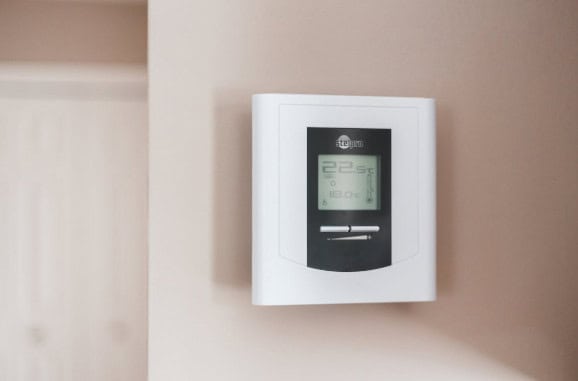
I keep mine at 78°F when I’m home and bump it up a few degrees when I leave. A programmable or smart thermostat handles that shift automatically, so I don’t have to remember or rely on willpower after a long day.
One habit I had to unlearn was cranking the AC down to 68°F the moment I walked in the door. The system doesn’t cool any faster at a lower setting. It just runs longer trying to reach an unnecessarily cold target, burning through electricity the entire time. Pairing a slightly higher thermostat setting with ceiling fans gives me the same comfort at a fraction of the cost. The fan creates enough of a cooling effect that I genuinely don’t notice those extra degrees on the dial.
Lower Bills Start With Smaller Fixes
None of the steps I’ve covered require professional tools or a large budget. Weatherstripping, filter changes, fan adjustments, window film, and smarter thermostat habits are all straightforward DIY projects that cost very little on their own.
What makes them powerful is the stacking effect. Each fix trims a small amount from your utility bills, but combined over a full summer, those savings add up in ways that genuinely surprised me. If you’ve been putting off these small improvements, this is the season to start.