Owning a home comes with ongoing responsibilities, but many costly repairs can be avoided with regular maintenance. Instead of waiting for something to break, successful homeowners follow a preventative care cycle that keeps major systems in good condition throughout the year. Small inspections and routine upkeep often take only a little time, yet they can prevent expensive problems and extend the life of your home.
(photo credit: Microsoft Stock Images)
Spring Is the Time to Inspect and Refresh
Winter can be hard on a home. As temperatures warm, begin with a complete walk around your property to look for signs of damage. Inspect the roof from the ground for missing or damaged shingles, loose flashing, or debris that may have collected during winter storms. Check gutters and downspouts for clogs and make sure they direct water away from the foundation.
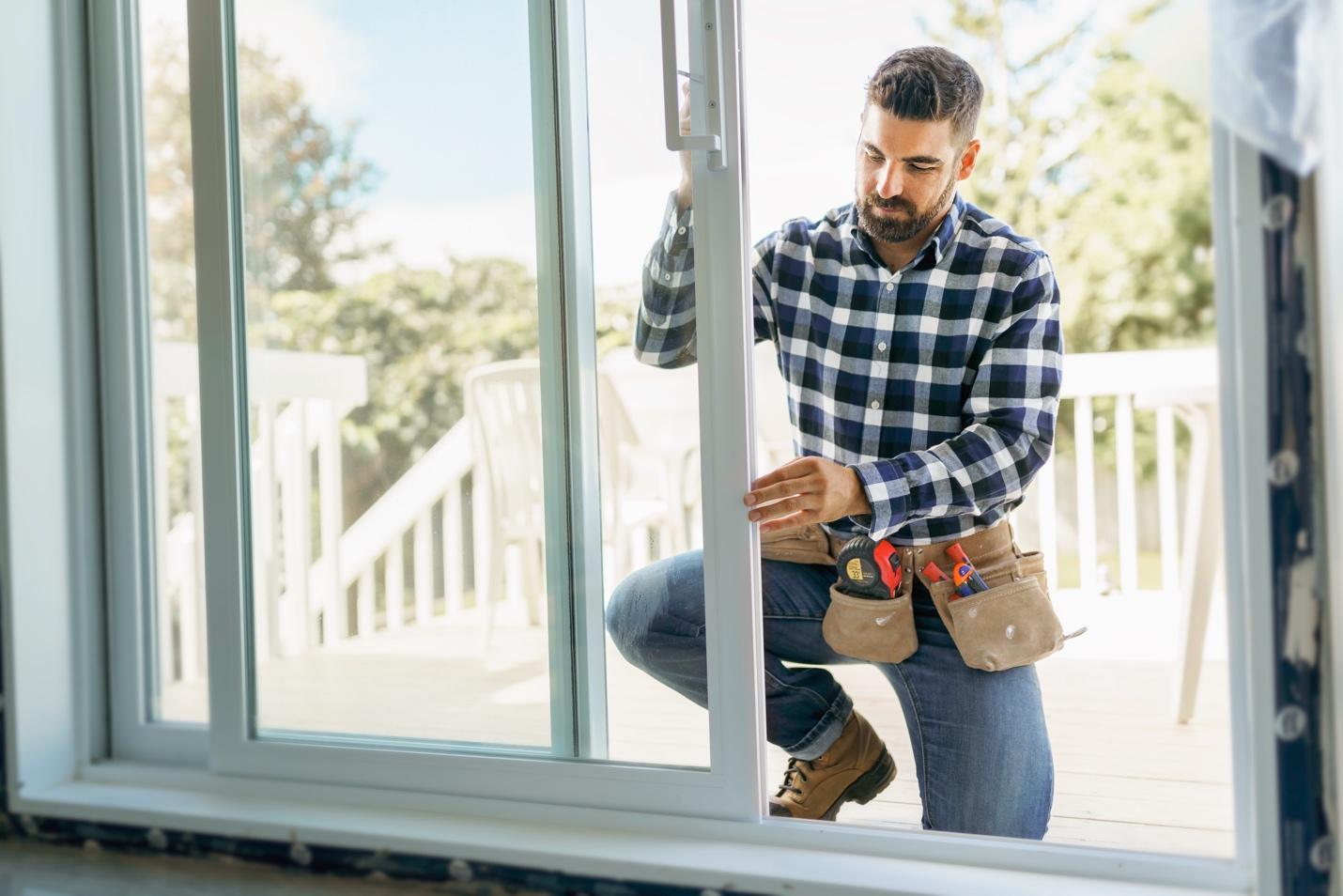
Examine siding, windows, doors, and exterior trim for cracks or gaps that may allow moisture or pests to enter. Replace worn caulk where needed and look for peeling paint that could expose wood to the elements.
Inside the home, test smoke detectors and carbon monoxide detectors, replace batteries if necessary, and inspect the basement or crawl space for moisture or signs of water intrusion. Spring is also a good time to service your air conditioning system before the hottest weather arrives.
Summer Focuses on Outdoor Maintenance
Longer days make summer an excellent season for exterior projects. Trim trees and shrubs so branches stay clear of the roof, siding, and power lines. Overgrown vegetation can trap moisture against the house and increase the risk of storm damage.
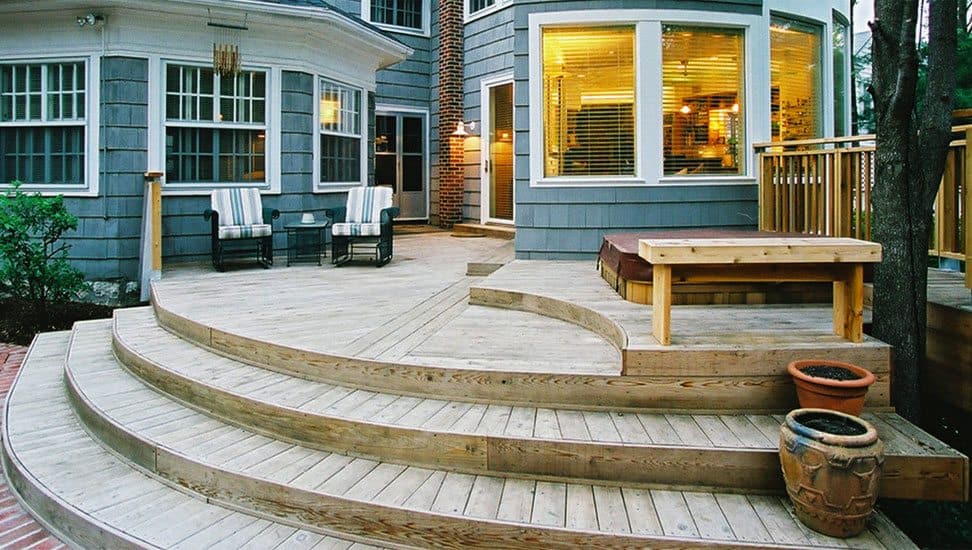
Inspect decks, patios, fences, and outdoor stairs for loose boards, damaged railings, or cracked concrete. Addressing small repairs early helps prevent larger structural issues later.
Keep an eye on irrigation systems and outdoor faucets. A small leak can waste significant amounts of water over the course of the season. Summer is also an ideal time to wash siding, clean windows, and inspect exterior lighting. These simple tasks improve both appearance and safety.
Fall Prepares Your Home for Colder Weather
Fall maintenance centers on protecting the home before winter arrives. Clean gutters after leaves have fallen to prevent blockages that can lead to water damage or ice buildup. Inspect weatherstripping around doors and windows to reduce drafts and improve energy efficiency.
Schedule heating system maintenance before temperatures drop. Replace furnace filters and make sure vents remain clear throughout the home. Check your chimney if you use a fireplace, and inspect attic insulation for areas that may need improvement. Walk around the property and remove dead branches or weak limbs that could fall during winter storms.
Winter Is About Monitoring and Prevention
Cold weather often reveals problems that were not noticeable during warmer months. Watch for ice buildup along roof edges, excessive condensation on windows, or frozen pipes in unheated spaces. Addressing these concerns early can prevent larger repairs. Continue replacing HVAC filters according to the manufacturer’s recommendations and keep snow away from foundation vents when possible.
Pay attention to unusual sounds coming from heating equipment or plumbing systems. Small changes often signal maintenance needs before equipment fails. Winter is also a good time to organize maintenance records, warranties, and receipts so everything is easy to locate when needed.
Keep an Eye on Your Home’s Major Systems
Seasonal maintenance is important, but certain systems deserve attention throughout the year. Check plumbing fixtures periodically for slow leaks beneath sinks, around toilets, and near appliances. Even minor leaks can eventually damage flooring, cabinets, and drywall. Electrical systems should also receive occasional visual inspections. Look for outlets that feel warm, frequently tripped breakers, or flickering lights, all of which may indicate a larger issue.
Roof inspections should become part of your long-term maintenance routine as well. After major storms, visually inspect for missing shingles or debris. When concerns arise, experienced roofers can identify damage that may not be visible from the ground and recommend appropriate repairs before leaks develop. Heating and cooling equipment, water heaters, garage doors, and kitchen appliances all benefit from regular cleaning and manufacturer-recommended maintenance schedules.
Create a Home Maintenance Calendar
One of the easiest ways to stay organized is by creating a maintenance calendar. Divide larger jobs into smaller monthly tasks rather than trying to complete everything at once. For example, you might clean gutters in October, service the furnace in November, and inspect weatherstripping in December.
Digital calendars and reminder apps make it easy to schedule recurring maintenance without relying on memory. Keeping a written log of completed work also provides a useful history of your home’s care. If you decide to sell your property, documented maintenance records can demonstrate that the home has been consistently maintained.
Practical Ways to Stay Ahead of Repairs
Preventative maintenance works best when it becomes part of your routine. Start by walking around your property once each season with a checklist. Looking at your home from top to bottom often reveals small issues before they become expensive repairs.
Address minor problems promptly instead of putting them off. Replacing a cracked piece of caulk or tightening a loose handrail usually costs far less than repairing damage caused by months of neglect.
Set aside a small annual maintenance budget. Having funds available for routine upkeep makes it easier to complete repairs when they are needed rather than delaying them because of unexpected costs.
Finally, learn the age and expected lifespan of your home’s major systems. Knowing when your roof, furnace, water heater, or air conditioner may need replacement helps you plan financially and reduces the chance of unpleasant surprises.
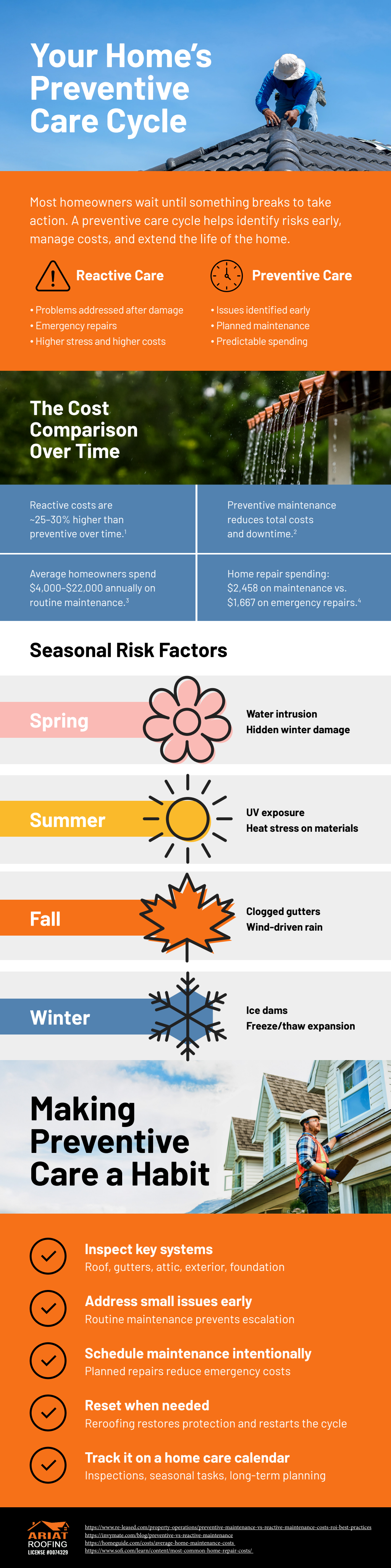
A home stays in better condition when maintenance becomes an ongoing habit instead of a reaction to problems. Following a seasonal preventative care cycle helps protect your investment, improve safety, and reduce unexpected repair bills. Start by choosing one maintenance task to complete this week, then build a simple calendar that keeps your home on track all year long. Look over the infographic below to learn more.
Infographic: