What would your yard look like if it actually matched your life, not just your mower schedule? The good news is that innovative yard and garden designs in 2026 aren’t about fancy extras. They’re about practical upgrades that save time, water, or space, while still looking intentional.
In the average home, more than 30% of all water use happens outdoors, and in dry regions that share can climb to roughly 60%, with inefficient irrigation wasting up to half of that.
If you take one thing from this post, make it this: the best yards mix three ingredients, a clear style, a smart layout, and a few standout features. Those features can be simple, like vertical planting, a crisp gravel zone, layered borders, or subtle tech that handles the boring parts.
You don’t need a huge budget or a blank-slate lot. You just need a plan that fits your space, and a style you won’t get tired of by July.
Start with your style, then build a simple plan that fits your space
A yard can feel “off” even with healthy plants. Usually, it’s not the plants. It’s the lack of a style anchor and a layout that repeats. So first, pick your direction fast, then sketch a plan you can stick to.
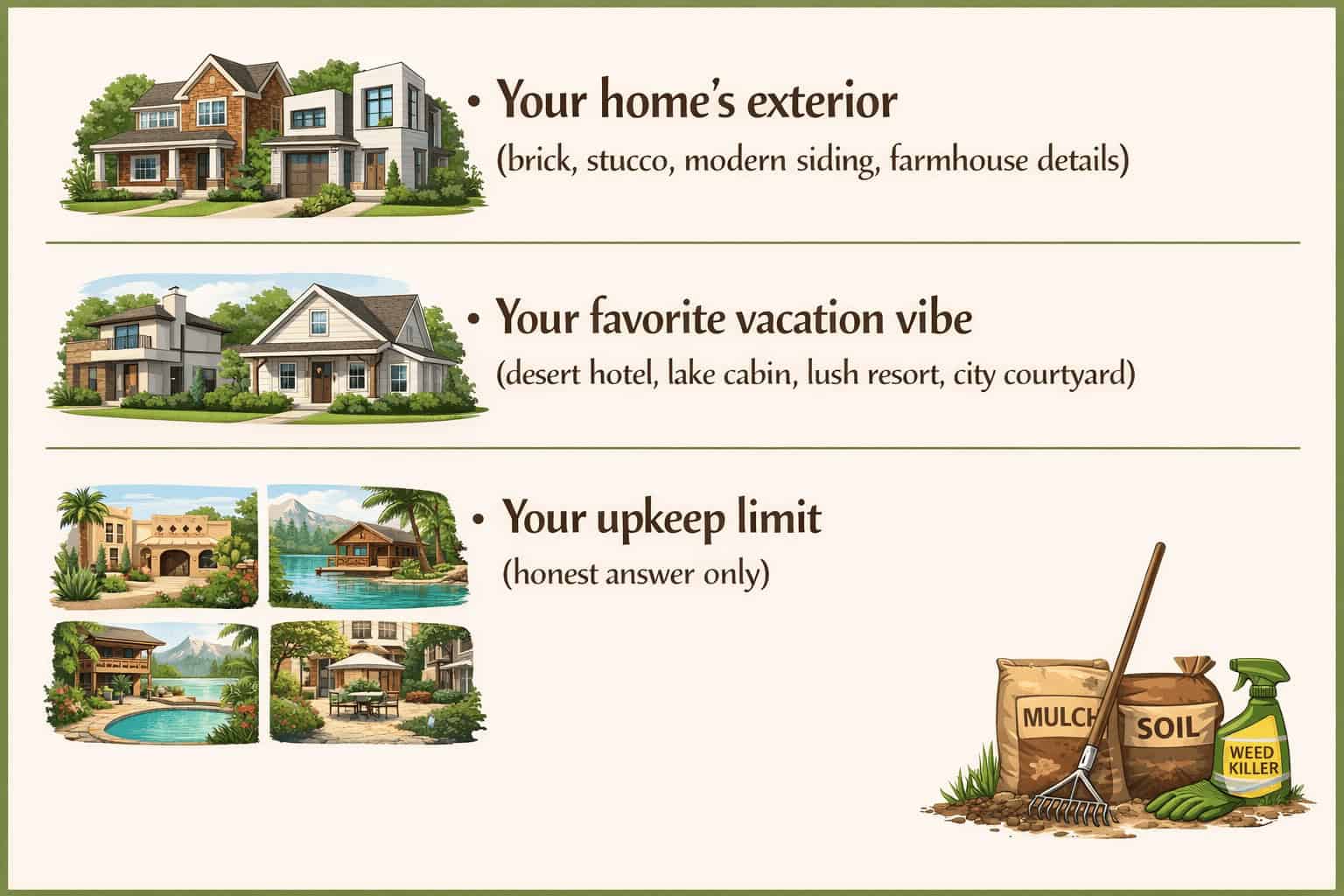
Start by checking three clues:
Next, do a quick plan on paper. No fancy software needed. Draw a rough map of your yard, then mark sun and shade. After that, choose 2 to 3 zones you’ll design on purpose, not by accident. Most yards do well with a hangout zone, a planting zone, and one clear path between them.
64% of homeowners say they want multi‑functional outdoor spaces that can handle relaxing, entertaining, and even remote work. So, designing on purpose for how you actually use the yard quickly pays off.
Finally, keep your plant choices tight. A smaller palette looks more “designed,” and it’s easier to maintain. Think in layers, too. Mixed, layered planting (ornamental grasses, perennials, then small shrubs) gives you movement and texture, and it avoids that dated “row of bushes” look.
A fast style picker: modern, rustic, minimalist, tropical, or eco-focused
- Modern garden designs tends to use clean lines and simple shapes. That same clean, drought-aware approach also helps explain why Santa Fe landscape design has stayed influential for homeowners who want structure, texture, and lower water use. Picture large pavers, black or wood screens, and mixed beds with grasses and perennials.
- Rustic backyard style feels like a relaxed meadow with structure. Stone, weathered wood, and a fire pit corner fit right in. Plant choices look natural, like coneflowers, salvia, and airy grasses.
- Minimalist garden designs are for people who hate visual clutter. Gravel gardens, green-on-green texture, and a few sculptural plants carry the space. Materials are simple, and the empty space matters as much as the planted space.
- Tropical garden style brings bold leaves and privacy. Think lush layers, big containers, and screens that hide fences. Even a small patio can feel like a mini resort when container gardens add height, texture, and bold leaf shapes.
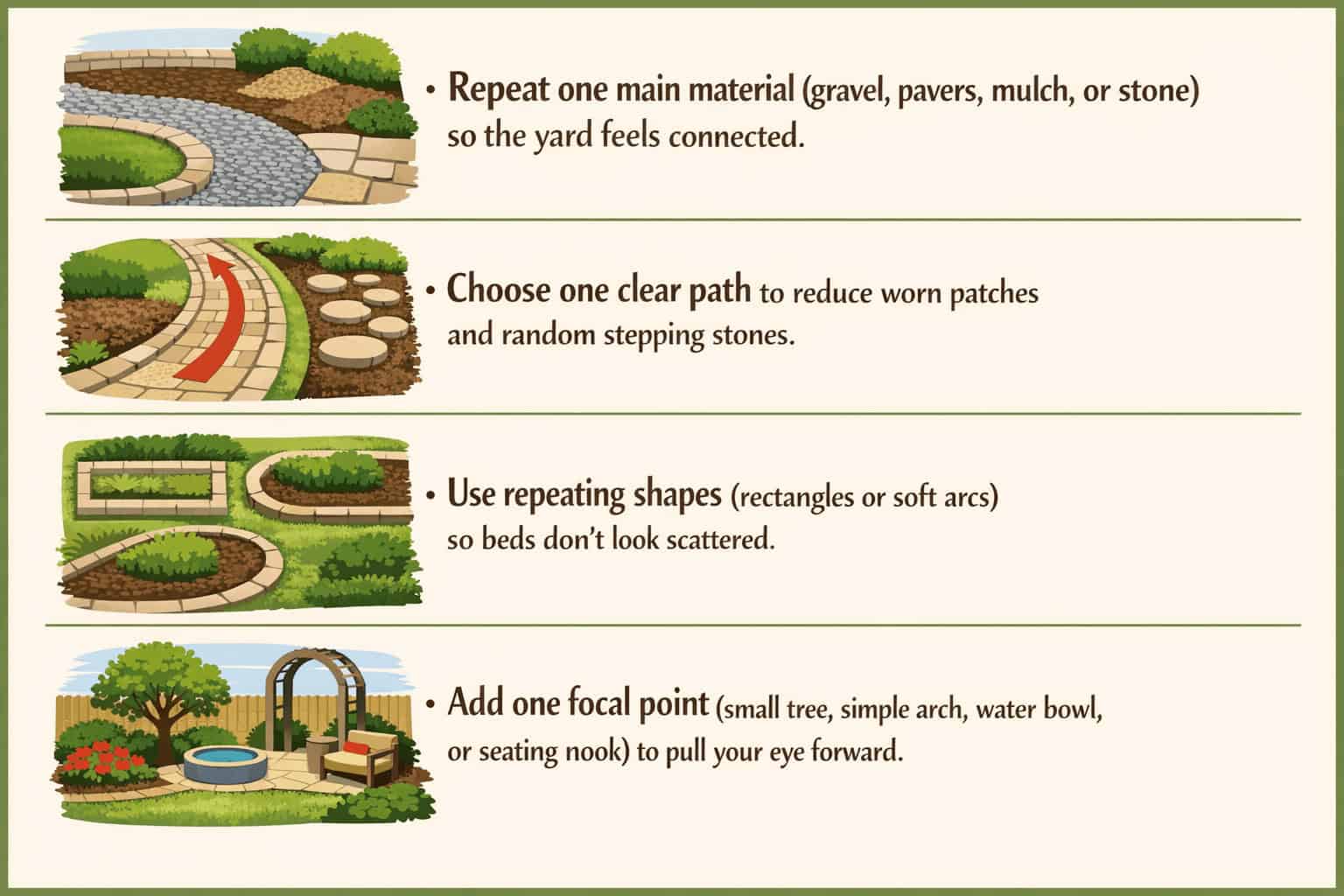
Layout that works: repeat shapes, create one clear path, and add a focal point
A smart layout doesn’t need perfect symmetry. It needs a few rules that keep the yard readable.
Privacy helps, too. Screens, trellises, and airy structures can block views without making the yard feel like a box.
Innovative garden designs you can mix and match in any yard
Once your style and layout are set, the fun part starts. The most useful 2026 yard and garden designs share a theme: they add function without adding chores. You’ll see more “soft structures” (arches, pergolas, obelisks, trellises) that give the garden bones, while plants keep things relaxed and natural.
Also, lawn is no longer the default. People are swapping parts of the yard for gravel gardens, meadow patches, and mixed borders that support pollinators. At the same time, outdoor living stays a priority, with small “rooms” that make you want to step outside on a random Tuesday.
Below are upgrades you can use in almost any style, then scale up or down depending on your space.
Grow up, not out: vertical gardens, screens, and climbing structures
Vertical planting is the small-yard cheat code. It adds green without eating your floor space, which matters on patios, side yards, and narrow lots.
Wall trellises work well near seating, because they soften hard surfaces fast. Obelisks and slim arches make great anchors in planting beds, and they give climbing plants a clear job. Screen panels can double as privacy and a place for vines, which is handy when you want separation without blocking light.
For a tropical-leaning twist, try kokedama (a plant grown in a wrapped soil ball) hung in a cluster at different heights. It’s bold, and it turns a blank corner into a feature.
Vertical planting can also help with water use. When you pair it with mulch and place it out of the harsh afternoon sun, plants dry out slower, and you water less.
Rethink the lawn: gravel gardens, meadow patches, and low-mow groundcovers
If grass feels like a part-time job, you’re not alone. A smarter approach is to keep the lawn only where you use it, then upgrade the rest.
Gravel gardens are a strong choice for hot, sunny spots, especially along driveways or front borders that bake all day. They look sharp, save water, and can cut weeds when you use a proper base and clean edging. Plant them with drought-tough perennials and grasses for a modern, lively look.