Winter in North Texas does not look like winter anywhere else, and that is exactly why roofs here get caught out by it, and why a North Texas winter roof inspection has to check different things than a summer one. There is no steady snow load to plan around. What arrives instead is a handful of freeze events, a few rounds of sleet and freezing rain, and long stretches of wind coming off open ground north of the metroplex. A roof can pass the summer without complaint and still fail in January, because the two seasons test completely different parts of it.
An inspection in October or November is worth more than one in March. By March the damage has already happened and the question is only how much. The useful version of this appointment is a written assessment of where a roof stands before the first hard freeze, and a short list of things worth fixing while the weather still allows it.
The problem is that the word inspection covers a wide range of work. Some of what gets called an inspection in this region is a ten minute walk around the yard attached to a sales pitch. Knowing what a thorough one includes makes the difference obvious.
It is tempting to check the roof yourself, and a look from the ground is worth doing: missing shingles, lifted edges and sagging gutters are all visible from the yard. But climbing a cold, damp roof is how homeowners get hurt, and much of what causes winter failures sits where a ladder or a photo cannot reach.
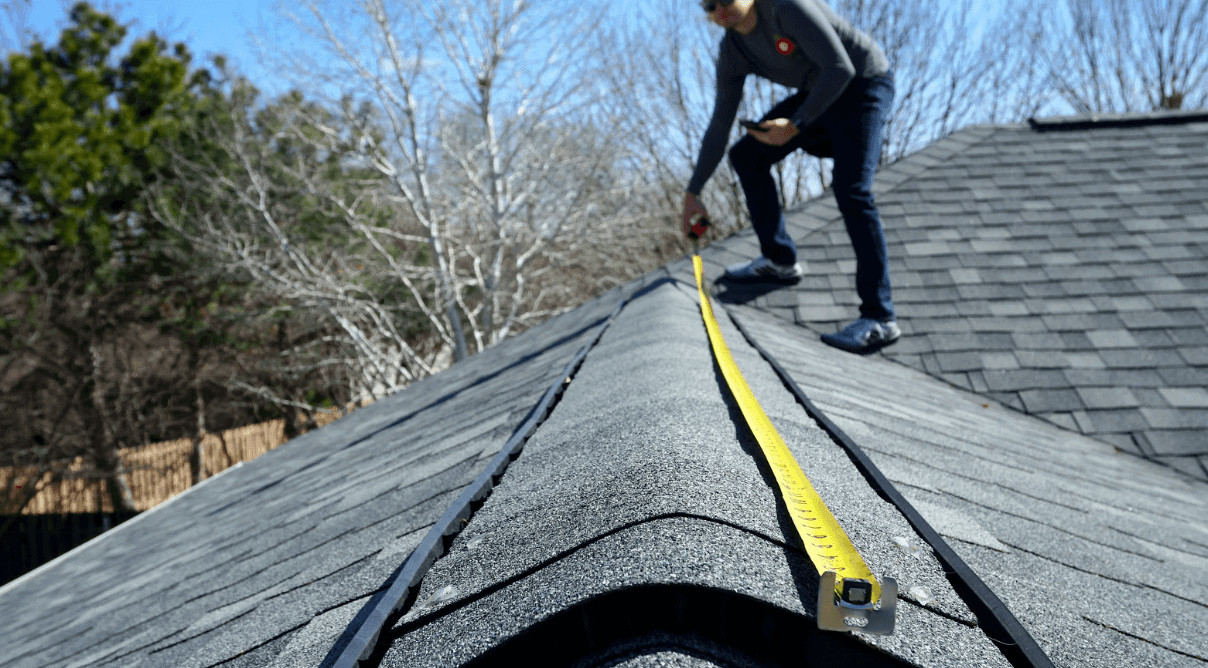
The shingle surface in a North Texas winter roof inspection
The shingle field is the part everyone expects to be checked, and it is also where a weak inspection stops. A real surface assessment separates three things that look similar from the ground.
Age related wear is granule loss spread evenly across slopes, with the heaviest loss on the south and west exposures that took the worst of the summer. Storm damage is scattered and random, with bruises that feel soft under a thumb. Installation problems are patterned, showing up in straight lines or repeating at the same point on every course, usually from nailing that was too high or too deep.
These three have different answers. The first means budgeting for a replacement in a known window. The second means a conversation about a claim. The third sometimes means a workmanship warranty is still in play. An inspector who reports only that the roof is in rough shape has not told a homeowner anything they can act on.
Wind is the specific North Texas concern heading into winter. Shingles that have broken their seal strip stay in place through calm weather and lift the first time a strong north wind catches them. A hand check along the rakes and the ridge finds unsealed tabs that no photograph from the driveway will show.
Flashing and sealant need the same hand check. The metal and caulk around chimneys, vents and pipe boots expand and contract with every swing between a warm afternoon and a freezing night, and joints that held all summer can crack open by January. Water finds those gaps first, which makes them a better predictor of a winter leak than the shingles around them.
Gutters, because winter is a drainage season
Gutters get treated as a separate trade, which is a mistake in a pre-winter check. Freezing rain and sleet melt slowly, and that meltwater has to leave. When it cannot, it backs up under the first course of shingles and sits against the fascia.
North Texas rarely builds the kind of ice dam that New England homes get, but it does not need to. A gutter packed with pecan and oak leaf litter in November holds water through a freeze and thaw cycle, and the damage shows up as rotted fascia board and staining on the soffit. Several winters of that and the roof edge has no sound wood left to nail into, which turns a straightforward reroof into carpentry.
Overhanging trees belong in the same check. Branches that rub the shingles scrape off granules, limbs that are already dead come down in the first ice storm, and the shade underneath keeps that slope damp long after the rest of the roof has dried. The pecan and oak that fill the gutters are often the same trees doing this.
The inspection should note whether the gutters are clear, whether they are pitched correctly, whether the downspouts discharge away from the foundation, and whether the drip edge actually extends into the gutter rather than behind it. That last detail is wrong on a surprising number of houses and it sends water straight down the fascia every time it rains.
The half that happens inside
An inspection that never goes into the attic is incomplete. Most of what matters in winter shows up on the underside of the deck first.
Daylight visible through the decking is the obvious one. Less obvious and more common is frost on the nail shanks on a cold morning, which means warm moist air is reaching the deck and condensing there. Dark staining along the rafters marks where it has been happening for years. Wet or compressed insulation under a penetration points to a leak that has not yet reached a ceiling, which is the best possible time to find one.
The attic also answers questions the surface cannot. A roof that looks fine outside and shows widespread staining inside is a ventilation problem, not a shingle problem, and replacing the shingles without addressing it just restarts the clock on the same failure.
What the homeowner should be handed afterward
A verbal summary is not a report. The output of a proper inspection is a written document with dated photographs, organized by area, that says what was found and what it means.
It should separate urgent items from items that can wait, and it should put a number on both. A homeowner reading it should be able to tell the difference between fix this before December and watch this over the next two years. Any recommended work should come with a written scope and a price that is not contingent on signing that day.
Contractors such as Epic Roofing & Construction document findings this way as a matter of course across Denton County, and the written record matters beyond the immediate repair. It establishes the roof’s condition on a specific date, which is the single most useful piece of evidence a homeowner can have when a hailstorm arrives in spring and an adjuster wants to attribute the damage to prior wear.
A note on how these get sold
Free inspections are standard and there is nothing wrong with them. What is worth watching is the gap between the inspection and the recommendation.
An inspector who finds a problem and explains it is doing the job. One who arrives with a replacement contract already filled out, or who creates urgency around a deadline that has nothing to do with the roof, is selling. The tell is usually whether the person will leave the photographs behind without a signature attached to them.
When to schedule a winter roof inspection in North Texas
The practical window in this region runs from the middle of October to early December. Temperatures are still high enough for sealant to cure and for shingles to seal down properly, crews are not yet booked out by spring storm work, and any repair found has time to be completed before the first freeze rather than during it.
A roof that goes into a North Texas winter with sealed shingles, clear gutters, and a dry attic will come out the other side the same way. One that does not usually announces it in February, on the coldest week of the year, when every roofer within fifty miles already has a waiting list.