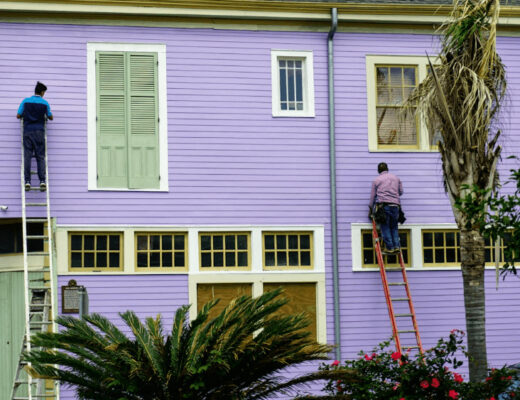
If your roof and siding are both getting up in years, you’ve probably wondered whether it makes sense to just replace them together rather than tackling one project now and the other a few years down the road. There’s no universal answer, but there’s a clear way to think through the decision.

The Case for Bundling the Projects
The most straightforward argument for doing both at once is cost efficiency. Many contractors offer a meaningful discount when a homeowner bundles roofing and siding work into a single contract, since it reduces overhead on things like scheduling, equipment mobilization, and project management compared to running two separate jobs months or years apart.
There’s also a practical scheduling advantage. Roofing and siding work both typically require scaffolding, ladders, or other access equipment around the perimeter of the house. Setting that up once for a combined project, instead of twice for two separate ones, saves both money and disruption to your property and landscaping.
Bundling also reduces the odds of one project affecting the other. A new roof installed alongside old, deteriorating siding can sometimes reveal water damage at the transition points between the two systems, damage that’s easier and cheaper to address while everything is already exposed, rather than discovering it later during a separate siding project.
The Case for Staggering Them
Bundling isn’t automatically the right move for every homeowner. The most obvious reason to stagger the projects is cash flow. A combined roof and siding replacement is a significant expense, and spreading that cost across two separate projects, even a few years apart, may be more manageable for some household budgets than one large outlay.
There’s also a legitimate case for staggering if only one of the two systems is actually near end of life. Replacing sound, well-performing siding just because the roof needs attention wastes money on something that didn’t need replacing yet. The right call depends on the actual condition of each system, not on convenience alone.
How to Actually Evaluate Which System Needs Attention
Rather than guessing based on age alone, a few signs point to each system’s real condition:
For the roof: widespread granule loss, curling or cracked shingles, visible sagging, or a roof already past 20 years old for standard asphalt shingles are strong signals it needs replacement soon.
For siding: warping, cracking, fading beyond what a fresh coat of paint can fix, or soft spots that indicate moisture has gotten behind the surface material all suggest siding is nearing the end of its useful life.
If both systems show clear signs of wear, bundling likely makes financial sense. If only one does, it may be smarter to address that one now and revisit the other later.
What a Combined Project Actually Looks Like
A well-run combined roofing and siding project typically starts with the roof, since roofing work can occasionally damage or dislodge siding near the roofline, and it’s more efficient to finish that work first and address any resulting siding repairs as part of the same overall project rather than as an afterthought. Contractors experienced in combined projects will usually sequence the work this way rather than tackling both simultaneously in a way that risks rework.
Getting an Honest Assessment Either Way
Because the right answer depends on the specific condition of your roof and siding, not a general rule, it’s worth getting a professional evaluation of both systems before deciding. Vanguard Roofing & Siding can walk through the actual condition of each and give you a straight answer about whether bundling saves you real money in your specific situation or whether staggering the projects makes more financial sense for your budget.