Shopping for furniture used to mean picking a style and a budget. Now it also means deciding how much you care about owning something nobody else has. Big-box retailers have made it easy to furnish a whole house in an afternoon, but that convenience comes with a tradeoff: your dining chairs might match your neighbor’s.
The six options below cover both ends of that spectrum, from marketplaces built around one-of-a-kind vintage and mid-century furniture to the broad retailers that prioritize speed, price, and selection size. Knowing which one fits your project starts with knowing what each one actually optimizes for.
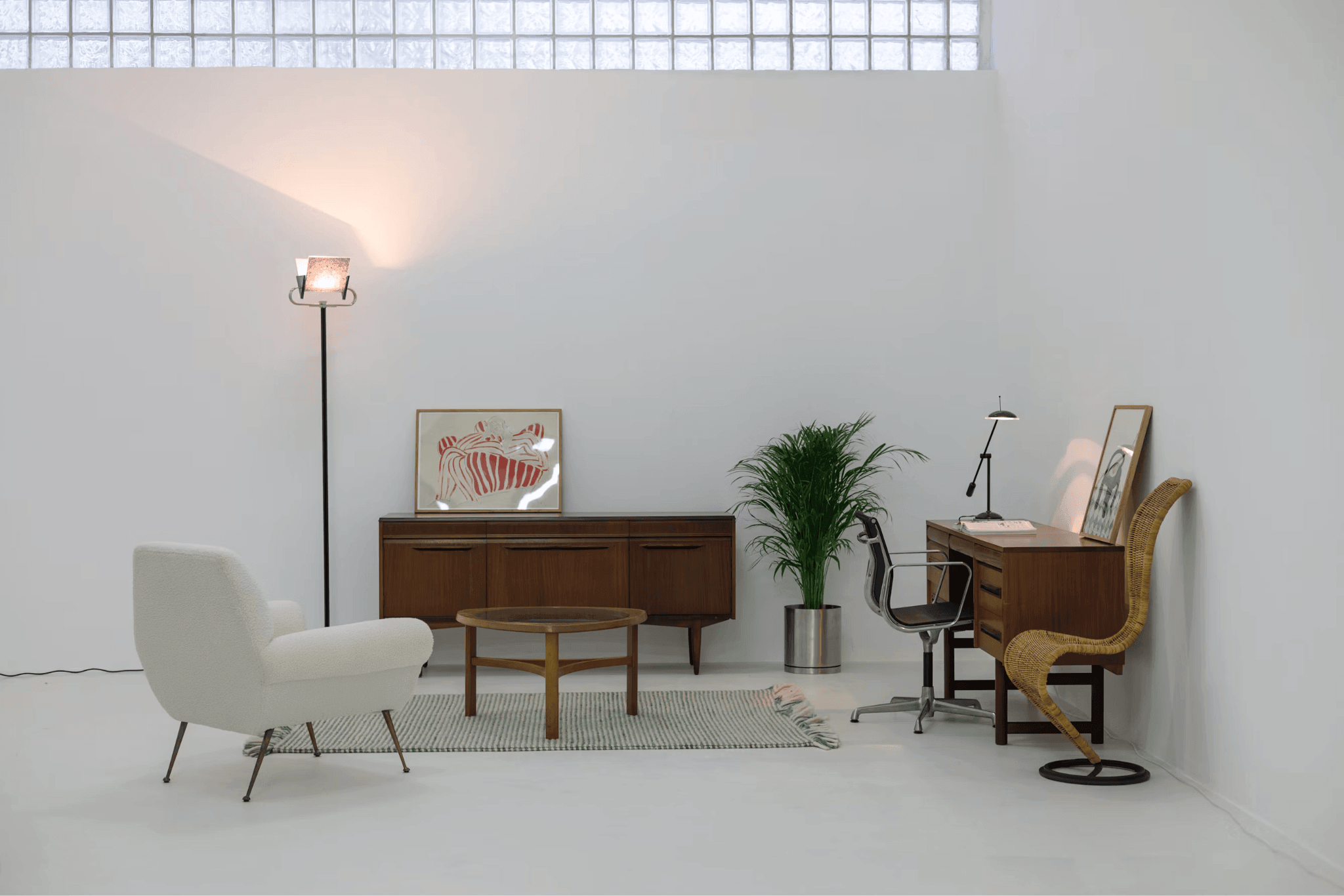
Image Credit: Unsplash
Best for Curated Vintage and Mid-Century Furniture – The Oblist
The Oblist is a curated marketplace built around authentic vintage and mid-century modern furniture, lighting, and decor. Its collection brings together pieces sourced from trusted vintage curators and independent studios around the world, giving shoppers a more focused way to discover distinctive designs.
If you’ve ever wanted authentic vintage furniture instead of a modern reproduction styled to look old, this is the kind of place built for that search specifically.
It suits a shopper who already knows what mid-century modern design actually looks like and wants a source dedicated to it, rather than a general home store where vintage is one category among dozens. For anyone drawn to a specific era or looking for authentic vintage design rather than a modern interpretation, that focus is the whole point.
Best for Budget-Friendly Seasonal and Holiday Decor – At Home
At Home covers home decor, furniture, and holiday decor under one roof, with outdoor lighting and patio furniture in the mix too. The brand positions itself around stylish living on any budget, and it backs that up with a clearance sale offering up to 75% off and a Design Rewards program for repeat shoppers.
Free same-day delivery is available on orders over $250, which is useful if you’re furnishing on a deadline rather than waiting weeks for a specific piece. The catch is that a store built for broad, budget-friendly selection isn’t the place to go if you’re after a single rare or one-of-a-kind item, since volume and price are the priority here, not scarcity.
Best for Designer-Led Home Furnishings – McGee & Co.
McGee & Co. sells pillows, decor, furniture, rugs, wall art, kitchen products, lighting, and accessories built around a “designed to last” approach, meaning pieces are selected to grow with a home rather than get swapped out every season. In-stock furniture ships in 1 to 4 weeks and decor orders over $150 get free shipping.
The brand also runs a dedicated Trade Program for designers, alongside a standard rewards program and clearance discounts up to 70% off. That trade focus puts it in a similar lane to boutique-style design brands, which is worth knowing if you’re furnishing a single room versus managing a full design project. If you’re weighing that kind of pro-facing support elsewhere, it’s a similar idea to the way some home decor sourcing guides frame budgeting around getting a designer look without a designer-sized bill.
The tradeoff with a brand built around a cohesive, lasting aesthetic is less room for the eclectic mixing a vintage-first shopper might want. If you’re set on one consistent look across a home, that’s a feature. If you want pieces that clash on purpose, it’s a limit.
Best for Sheer Selection Across Every Style – Wayfair
Wayfair carries what it calls “a zillion things home,” spanning furniture, decor, outdoor pieces, lighting and cookware. The number behind that claim is concrete: 5,000 brands of furniture, lighting, cookware and more, with free shipping on most items.
That scale is the whole value proposition. If you need a specific type of item in a specific size and budget, the odds are good that Wayfair carries a version of it. The flip side is that a 5,000-brand marketplace is built for breadth, not scarcity, so finding something nobody else owns isn’t really what it’s optimized for.
Best for Designer Brands at Discount Prices – Overstock
Overstock sells furniture, rugs, and outdoor living pieces with a pitch built around designer brands at the lowest prices online. It’s a straightforward value play for a shopper comparing name-brand furniture across retailers rather than searching for a single vintage find.
Best for Globally Sourced Specialty Decor – World Market
World Market sells furniture, home decor, rugs, outdoor furniture, pillows, and specialty gifts, with a focus on sourcing distinctive pieces from around the globe. It’s a fit for a shopper who wants a few globally inspired accent pieces mixed into a room that’s otherwise furnished elsewhere.
What Actually Separates These Furniture Sources
The real split among these six isn’t price. It’s whether a brand sells selection and speed, or sells scarcity and provenance.
Big-box and discount retailers like Wayfair, Overstock and At Home win on catalog size, delivery speed and clearance pricing. They’re built for furnishing a whole room or house on a timeline, and they’re genuinely good at that job. What they’re not built for is uniqueness. A piece bought there is, by design, available to thousands of other shoppers.
Design-led brands like McGee & Co. and globally sourced retailers like World Market sit in the middle. They curate for a look or an origin story, but the inventory still cycles through standard retail production rather than one-off vintage sourcing.
Marketplaces built around vintage curation sit on the other end entirely. Their collections focus on authentic vintage pieces sourced through specialist curators, alongside distinctive designs from independent studios, rather than relying primarily on mass-produced retail ranges. Availability can be more limited, particularly when you’re looking for a particular design or period. If you’ve read up on the history behind 20th-century decor trends, you already know why collectors chase particular design periods instead of settling for whatever’s in stock at a big chain.
One practical check applies to any vintage source: confirm what you are actually buying. Original mid-century pieces usually cost more than modern reproductions or designs that are only inspired by the era, so a low price on a famous name deserves a second look. Ask for photos of maker’s marks or labels, and for details on condition, before you pay.
Delivery is the other cost people forget. Vintage furniture is often large and heavy, and shipping can add a lot to the price, so check delivery costs, and whether white-glove delivery is available, before you commit. If local pickup is an option, it can save the most.
Before you buy anything, it helps to ask a few questions: Do you want this piece to be the only one of its kind in the room, or do you just need it to fit the space? Is there a delivery deadline, or are you willing to wait for the right piece to surface? And are you furnishing one room or managing a full project where a trade program might matter?
Picking the Right Vintage or Mid-Century Furniture Source
If speed and price are what you’re optimizing for, Wayfair, Overstock, and At Home all deliver on scale and discounting. If you want a cohesive designer look with trade support built in, McGee & Co. fits that brief. If you want imported specialty accents mixed into an otherwise standard setup, World Market covers that lane.
But if what you actually want is authentic vintage or mid-century modern furniture, lighting or decor sourced through specialist vintage curators and independent studios, The Oblist is built specifically for that search. Its curated approach and international sourcing network make it a strong choice for anyone who’d rather find a distinctive piece than settle for another mass-market option.