An active sitting chair shows up in almost every conversation about fixing desk-job back pain, usually right alongside standing desks and lumbar cushions, but the category itself covers a much wider range of designs than most people realize.
Before comparing specific products, it helps to understand what actually separates an active sitting chair from a conventional ergonomic chair, since the two are often marketed with similar language despite working on completely different principles.
The short version is that a conventional ergonomic chair is designed to hold the body in one supported, static position, while this kind of chair is designed to keep the body moving in small, controlled ways throughout the day. That difference in philosophy, more than any single feature, is what determines whether a chair actually changes how someone’s posture holds up over an eight-hour workday.
What Makes a Chair “Active” Instead of Just Ergonomic
A conventional office chair, however well padded or adjustable, locks the pelvis and spine into a single position and expects the body to hold that position through willpower and postural muscle strength alone. Over a long workday, those postural muscles fatigue, and posture gradually collapses regardless of how good the chair looked in the showroom.
Active sitting posture works differently. Instead of relying on a fixed position held by tired muscles, the seat itself introduces small, continuous movement, keeping the postural and core muscles lightly engaged rather than static for hours at a stretch. This is the core idea behind core engagement while sitting: light, ongoing postural muscle activation replaces the slow collapse that happens when a chair simply locks the body in place.
The Different Types of Active Seating
The active sitting category is broader than most shoppers expect, and the differences between options matter more than the shared “active” label suggests. A balance ball chair uses an unstable, rounded surface to force constant small corrections, which does engage the core but offers little structural back support for a full workday. A wobble stool chair works on a similar principle with a flat seat on an unstable base, trading support for a wider range of motion.
A kneeling chair alternative shifts weight forward onto the shins, which can open up the hip angle and reduce lower back compression, but it places sustained pressure on the knees that some users find uncomfortable over long sessions. A saddle chair takes a similar forward-tilted approach with a narrower, horse-saddle-shaped seat, popular in dental and clinical settings where a more upright working posture is useful.
A movement-based ergonomic chair takes a different approach again: rather than removing structural support to force movement, it pairs a supportive, contoured seat with a controlled pivoting mechanism, allowing multidirectional motion while still providing real back and pelvic support. That combination is part of why the category has grown beyond the balance-ball and kneeling-chair era into more structured dynamic sitting chair designs.
What the Research Says About Dynamic Sitting
The core claim behind this kind of design, that small continuous movement keeps postural muscles more engaged than static sitting, has been tested directly. A study comparing trunk muscle activity on a dynamic chair versus a static chair during office tasks found that the dynamic seating condition produced measurably more chair movement and altered trunk muscle activation patterns compared to conventional static seating.
That kind of finding supports the general mechanism behind active sitting vs static sitting, though it does not mean every product in the category performs identically. A design that provides genuine multidirectional movement paired with actual structural support is working on a different level than a design that primarily relies on instability, which is one of the more useful distinctions to understand before assuming all active sitting chair benefits are interchangeable across products.
Where This Approach Fits Into the Active Sitting Category
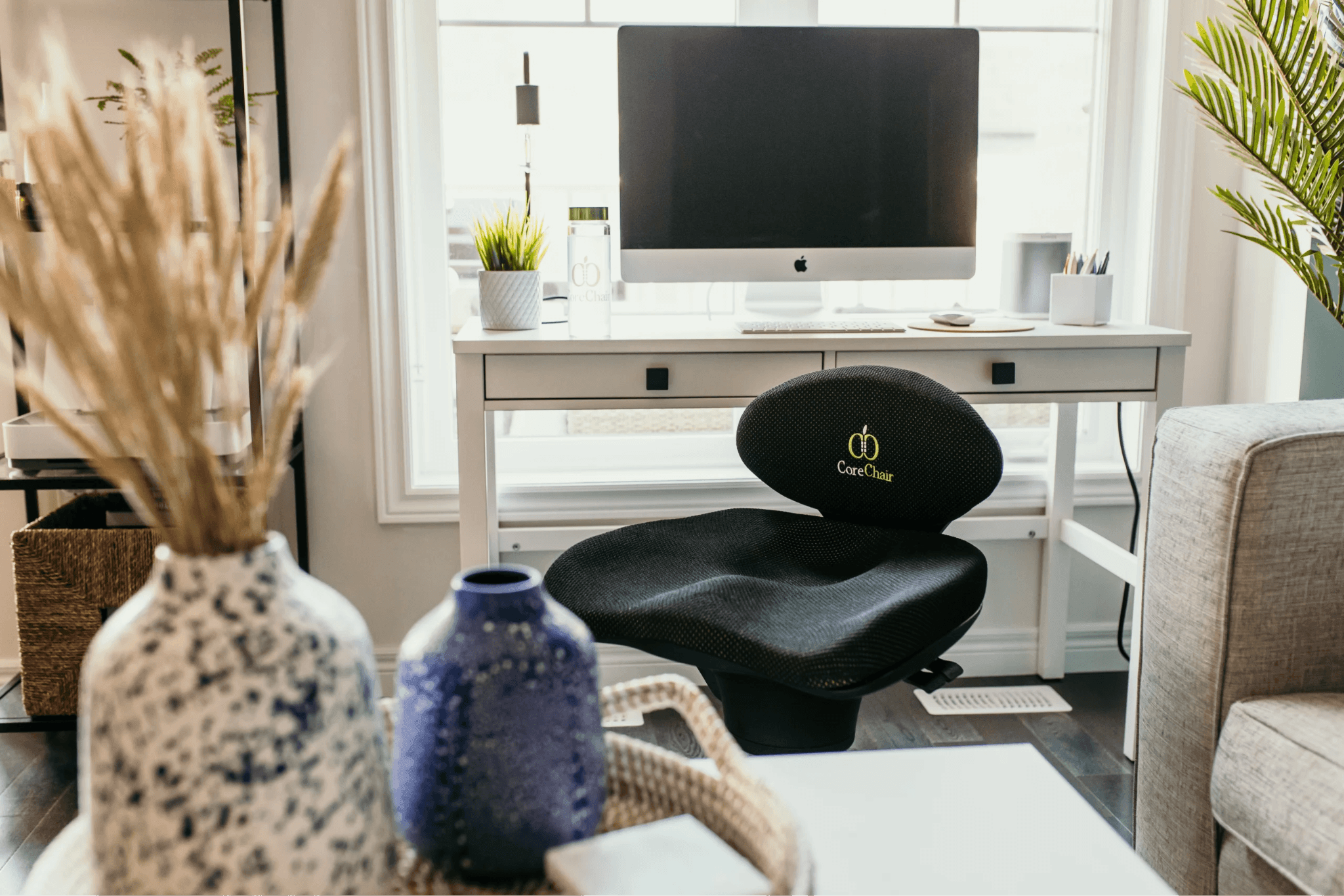
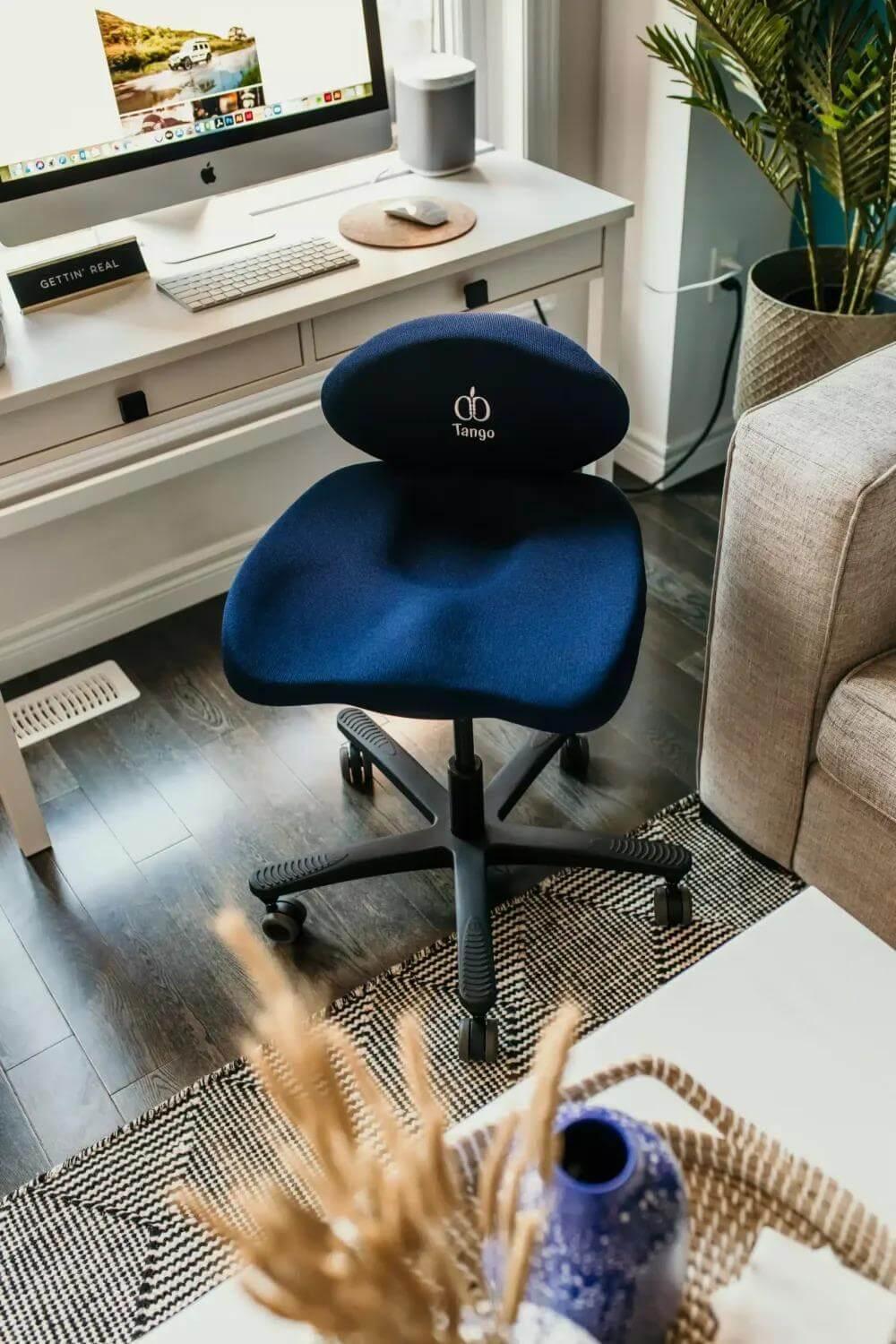
CoreChair sits toward the more structured end of the active sitting spectrum. Rather than removing back support the way a balance ball or basic wobble stool does, it combines a sculpted, supportive seat with a pelvic stabilizer and a controlled pivoting base, aiming to deliver the muscle-engagement benefit of dynamic movement without sacrificing the back support a full workday actually requires.
That combination is the practical answer to a common question about whether active sitting actually works for someone who also needs real back support, not just core activation. A chair that only wobbles addresses one problem while potentially creating another for people with existing back pain who need more structural support than an unstable seat alone provides.
Who Actually Benefits From This Kind of Design
People with a sedentary desk job who notice their posture deteriorating by mid-afternoon are the most obvious candidates, since that pattern usually reflects postural muscle fatigue rather than a single bad habit. Anyone who has already tried a standard high-end ergonomic chair without lasting relief is also a reasonable candidate, since the problem in that case is often the static design itself rather than insufficient cushioning or adjustability.
People specifically searching for the best home office chair for back pain should pay attention to whether a given design sacrifices structural support to achieve movement, since that tradeoff matters more for someone managing an existing back condition than for someone simply trying to improve day-to-day posture. Clinical and specialized seated roles, such as dental work or lab benches, also benefit from designs that combine movement with a more upright working posture.
What to Look for Before Buying
A few concrete factors separate a well-designed dynamic chair from a gimmick. Genuine multidirectional movement, rather than movement in only one plane, more closely matches how the body naturally shifts throughout a workday. Real structural support at the seat and lower back matters just as much as the movement mechanism itself, since a chair that only provides instability without support solves half the problem at best. A genuinely well-designed active sitting chair should pass both tests, movement and support, not just one. Trying a chair in person, or confirming a real return policy before buying online, also matters more for this category than for a standard office chair, since how a given mechanism feels varies more from person to person than cushion firmness does.
Adjustability for a person’s specific height, weight, and desk setup also affects whether the movement mechanism actually functions as intended, since a poorly fitted dynamic chair can end up encouraging awkward compensations rather than natural postural engagement. None of this replaces getting up and walking around periodically, but a well-designed dynamic chair does address the hours in between those breaks, which is where most of the static postural loading actually accumulates over a working day.
Anyone comparing options is generally better served by understanding which category a specific chair falls into, balance-based, kneeling-based, or a supported dynamic design, than by assuming the word “active” on a product page guarantees a particular kind of benefit. The mechanism behind the movement, and whether it comes at the cost of real support, is what actually determines whether an active sitting chair delivers on the idea behind the category.