A leaking frameless shower door is one of the more common post-installation complaints, and it’s rarely actually a problem with the glass itself.
Understanding what genuinely controls water in a frameless enclosure helps you evaluate an installer’s process and troubleshoot a leak if one develops down the road.
Why the Glass Panel Isn’t Where Leaks Usually Start
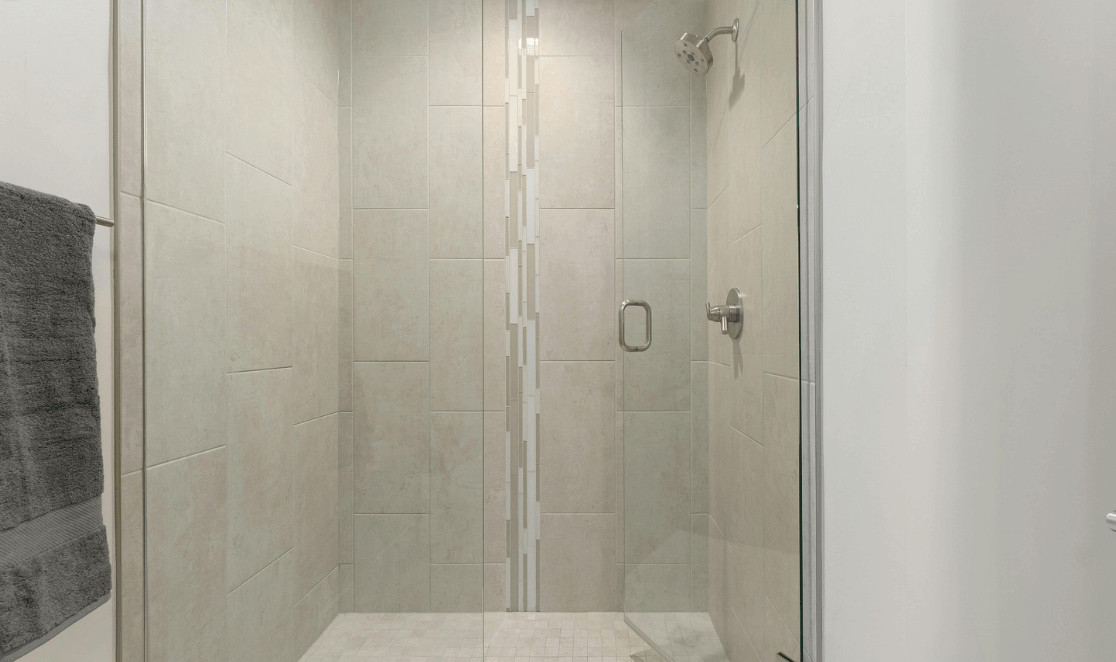
Tempered glass panels are solid, continuous surfaces; they don’t leak on their own. Water intrusion in a frameless shower almost always traces back to the details around the glass: the seal where a swinging door meets its frame or an adjacent fixed panel, the bottom edge where the door meets the shower pan, and the connection points where panels meet the wall.
Why the Bottom Sweep Matters More Than Most Homeowners Realize
The bottom sweep, a flexible seal attached to the door’s lower edge, is doing a lot of the practical work in keeping water contained during a shower.
If this sweep is worn, improperly sized, or installed without accounting for the shower pan’s actual slope, water finds its way underneath the door far more easily than most homeowners expect.
This is one of the more common sources of a “new door leaking” complaint, and it’s often a straightforward fix once correctly diagnosed rather than a sign the whole installation is flawed.
Why Shower Pan Slope Genuinely Affects Door Performance
A properly sloped shower pan directs water toward the drain, and a frameless door installed without checking that slope can end up with water pooling right at the door’s base rather than draining away as intended.
This is a detail that needs to be assessed during the initial site measurement, not discovered after installation, since it directly affects where and how the bottom seal needs to be configured.
Why Vinyl Strips and Sweeps at Panel Junctions Do Real Work
Where a swinging door meets a fixed panel or the wall, clear vinyl strips or specialized sweeps create the seal that keeps water from escaping through that gap during normal use.
These components wear over time, particularly in a household with heavy shower usage, and periodic replacement of worn seals is a normal, expected part of maintaining a frameless enclosure, not a sign something was installed incorrectly.
Why Precise Measurement Is the Real Foundation of Leak Prevention
Before any of these individual seals and sweeps can do their job properly, the underlying installation needs to be precise: correct wall plumb, accurate curb height, and glass panels sized and positioned to work with the actual conditions in that specific bathroom rather than a generic assumption.
An installer who checks wall plumb and curb level as a standard part of the measurement process, rather than assuming standard conditions, is addressing leak prevention at the root rather than relying entirely on sealant to compensate for measurement gaps.
Why Shower Head Direction Is an Overlooked Factor
Beyond the enclosure itself, where the showerhead points and how it sprays affects how much water pressure any given seal or gap actually needs to withstand.
An installer who considers spray direction as part of the overall design, not just the glass configuration, is accounting for a real variable that affects leak risk in ways a generic installation approach might miss.
What to Do If Your Existing Enclosure Is Leaking
If you’re dealing with a leak in an already-installed frameless shower, the fix is rarely a new door. More often, it’s about identifying which specific seal, sweep, or alignment issue is letting water through and addressing that component rather than assuming the entire enclosure needs replacement.
Getting an Installation That Addresses Leak Prevention From the Start
Because leak prevention depends on specific, checkable details rather than the glass itself, homeowners should ask how an installer will account for wall plumb, curb slope, sweeps, and seals during the measurement and design process.
These details are common considerations in frameless shower installations. Examples from Spartan Glass & Mirror show how custom enclosures can be designed around the dimensions and layout of the shower rather than relying on heavy framing.