For homeowners in colder parts of the US, fall roof and siding maintenance is an important part of getting a home ready for winter. While Charles & Hudson covers home improvement projects for homeowners across the country, winter preparation looks different depending on where you live. In New England, for example, late October often means fallen leaves, frosty mornings, and a shrinking window to finish outdoor repairs before the first snowfall.
Photo by Martha Monjaras on Unsplash
Some of these jobs are manageable weekend projects, especially if you have the right tools and some DIY experience. Others, particularly those involving steep roofs, damaged flashing, or structural repairs, are better left to professionals. In areas such as southern New Hampshire, homeowners may turn to local contractors like Pine & Harbor Roofing and Siding contractor in Salem NH, for roofing, siding, and exterior repairs before winter weather arrives.
This guide breaks down which roof and siding maintenance tasks you can safely tackle yourself, when to hire a contractor, and what to check before snow and freezing temperatures make repairs more difficult.
How Do You Sort Fall Roof and Siding Maintenance Into Two Piles?
A simple three-question test settles most cases. If any answer is yes, the job leans toward a professional:
- Does the work put you above a single-story eave or on a steep roof pitch?
- Does it open the weather barrier, such as shingles, flashing or the wrap behind siding?
- Could a mistake void a manufacturer’s warranty on the roof or siding?
Everything else is fair game for a capable DIYer. Siding repairs, gutters, trim joints and attic air sealing are all within reach of a well-stocked garage.
Which Siding Repairs Can You Handle With a Zip Tool?
A cracked vinyl panel is the classic weekend fix. A snowblower kicks up a rock, or a ladder slips, and one course of siding splits. Swapping that single panel takes about an hour and a few cheap tools:
- A siding zip tool, sometimes sold as a siding removal tool.
- A flat pry bar and a claw hammer.
- Tin snips for trimming the new panel to length.
- Roofing nails sized for the existing siding.
- A replacement panel matched to the color and profile.
The Polymeric Exteriors Institute, the trade group formerly known as the Vinyl Siding Institute, publishes the method in its vinyl siding installation manual. You slip the tool under the panel above, unzip its lock and bend it out gently. Then you pull the nails, remove the damaged panel, and nail the new one in place. A final pass with the tool zips the upper panel back down.
Do this job on a mild afternoon, not in January. Cold vinyl turns brittle and can crack as you flex it. Leave a little space under each nail head, too. Vinyl moves with temperature, and a nail driven tight will cause buckling by spring.
What Should You Do About Gutters and Trim Before November?
Clean gutters are the cheapest winter insurance you can buy. Leaves packed in a trough hold water, and that water freezes into a solid block at the eave. The Charles & Hudson guide to cleaning rain gutters walks through the job from scoop to downspout flush.
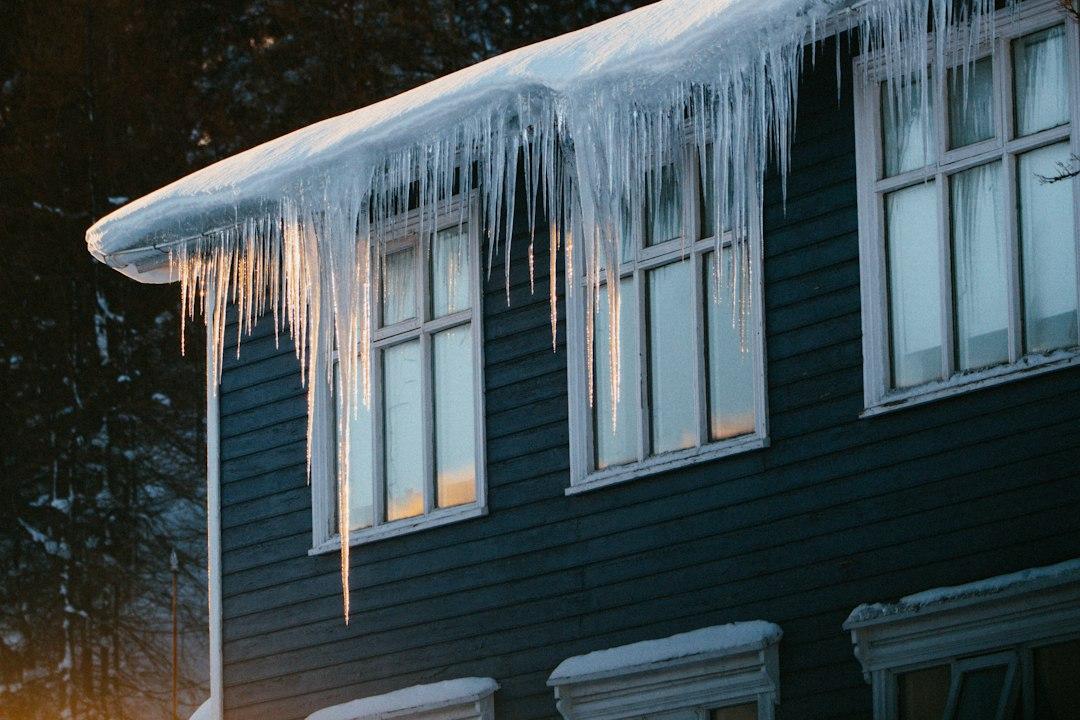
Photo by Ása Steinarsdóttir on Unsplash
Ladder setup matters more than speed here. A standoff such as the Surestep ladder stabilizer keeps the rails off the gutter itself. That protects the gutter and gives you a wider, steadier footprint.
While you are up there, check the trim. Look for open joints where corner boards meet window casings. Run a bead of exterior sealant into any gap wider than a credit card. Push a screwdriver into soft-looking wood, and if it sinks in, note the spot for a professional.
Before you put the ladder away, take a slow lap around the house from the ground. Binoculars show cracked, curled or missing shingles, and loose flashing at chimneys and walls, better than you would expect. Photograph what you find and leave the roof itself alone.
Why Do Ice Dams Start In the Attic, Not On the Roof?
Most New England homeowners blame the roof for ice dams. The real cause usually sits under it. North Dakota State University Extension explains that ice dams form when attic heat melts snow that then refreezes at the colder eaves. The trapped water backs up under shingles and into ceilings.
That puts part of the fix in DIY territory. NDSU recommends about 15 inches of blown-in attic insulation, roughly R-50, in northern climates. It also flags heat leaks at plumbing and wiring holes, recessed lights and attic hatches. Sealing those gaps with foam and caulk is a solid Saturday project.
While you are in the attic, look at the vents too. Soffit and ridge vents let cold air run under the roof deck, and blown-in insulation can bury the soffit openings. Pull the insulation back from the eaves, and make sure any vent screens are in one piece and free of debris.
Two more tasks belong on your list. Buy a roof rake and pull snow off the lower few feet of roof from the ground. Keep it well clear of overhead power lines. NDSU also warns that heat tape treats the symptom rather than the cause.
Look up while you are out there. Branches that hang over the roof scrape shingles in wind and drop leaves into the gutters all winter. Trim what you can reach from the ground, and call a tree service for limbs above the roofline. The same roof rake pulls wet leaves off the low edge of the roof.
Which Fall Maintenance Jobs Should Go Straight to a Contractor?
Some work fails all three questions at once. These jobs belong on a contractor’s schedule, not your weekend:
- Tear-off and reroofing, including the ice and water barrier at the eaves.
- Flashing repairs where a roof meets a chimney, dormer or sidewall.
- Rot in the sheathing behind siding, which needs walls opened up.
- Full-wall or full-house siding replacement.
- Removing an existing ice dam, which pros do with low-pressure steam.
The ice barrier deserves a word. Under the International Residential Code, areas with a history of ice dams need it from the eave to at least 24 inches inside the exterior wall. Most of New England falls into that category. A roofer who skips it on a new roof is cutting a corner you will pay for later.
How Do You Get a Fair Quote Before the Schedule Fills?
Fall is peak booking season for exterior crews, so call before the first leak. A little prep also makes the estimate more accurate.
Take photos of every elevation, including close-ups of problem spots. Measure the length of each wall and note the roof’s rough pitch. If a company offers a free inspection, use it, and ask what they found in writing.
Ask the same questions of every bidder. Will they install an ice barrier at the eaves? How will they handle flashing at walls and chimneys? What happens if they find rot once the old material comes off?
Frequently Asked Questions
Can I Replace a Vinyl Siding Panel In Cold Weather?
It is better to wait for a mild day. Vinyl stiffens in the cold and can crack when you bend the panel above. A fall afternoon in the 50s works well.
Does a Roof Rake Damage Shingles?
It can if you scrape hard. Leave a thin layer of snow on the roof rather than pulling down to the shingle surface. Work from the ground and never from a ladder.
What Is an Ice and Water Barrier?
It is a self-sealing membrane installed under shingles along the eaves. It stops water backed up by an ice dam from reaching the roof deck. Building codes require it in areas prone to ice dams.
When Should I Call a Roofer Instead of Fixing a Leak Myself?
Call a roofer when the leak sits near flashing, a chimney or a valley. Those spots need the roofing system opened up and resealed. A leak that returns after a DIY patch also calls for a professional.