A workbench shapes how you tackle projects in the garage. Every job – repairs, assembly, making parts – depends on the bench’s strength and layout. The best workbench makes you more accurate and focused, and keeps your must-have tools close by.
Define Your Work First
Figure out what type of work you’ll do most. Heavy mechanical work? Look for a heavy duty work table with storage that comes with a tough frame and should shrug off oil, brake fluid, and solvents. Woodworking? Go for a thicker top that eats up vibration and really grips clamps. Working with electronics or fine parts? You’ll want a smooth surface, lots of light, and easy-access outlets.
If your garage is a mix of all that, pick a steel frame you can count on, and a top you can swap out when it gets beat up. That handles the big stuff and lets you start fresh if the surface gets trashed.
Set the Correct Size and Height
Match the bench size to your wall space and leave enough room to move around. Give yourself clearance for tool chests, rolling carts, or awkwardly long parts. If it’s too cramped, you’ll end up working at odd angles, and that’s asking for trouble.
The height really makes a difference: standup jobs want the surface at wrist level when your arms are relaxed. Heavier mechanical tasks can go a bit lower (handy when you’re really leaning in). If you do small, careful work – like wiring or measuring – the bench should sit a little higher. If more than one person will use the bench, adjustable frames are the easy fix.

Frame Strength and To Materials
The frame has to hold its shape, even when you’re cranking down a vise or using a press. Welded steel is the stiffest by far. Bolt-together steel can work, but only if it’s tightened right and you check those bolts once in a while.
As for the surface: hardwood tops eat up vibration and can get sanded down if needed. Bamboo resists moisture better and stays put over time. Steel tops handle welding and spills (but they ring like a bell and can scratch soft parts). A sturdy steel frame teamed with a hardwood or composite top handles most garage chores without fuss.
Load Capacity and Stability
Manufacturers list load ratings, though these numbers often refer to static weight. Real work introduces dynamic forces from hammering, pressing, and torque. A table that holds an engine block might groan or flex if you’re breaking loose a frozen bolt in a vise.
You can boost stability with wide feet, leveling mounts, and a solid grip on the floor. Anchoring it to the wall is a small job that totally pays off, especially if you do grinding, pressing, or any heavy work. It cuts wobbles and helps you nail tricky tasks.
Smart Storage Solutions
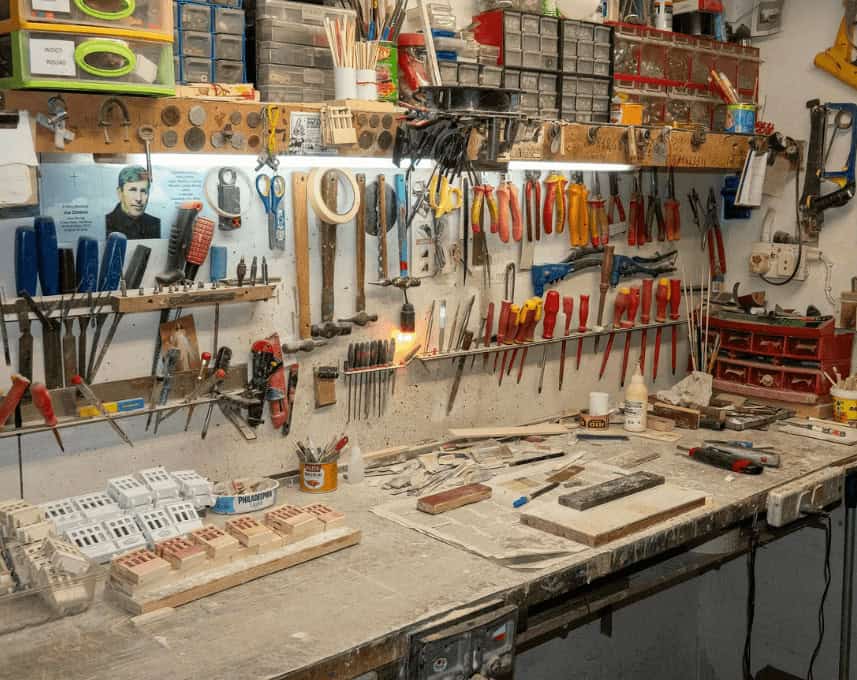
Good storage keeps your tools where you can grab them. Drawers work for sockets, calipers, or small bits. Stash power tools and cases on lower shelves. Pegboards or back panels let you put high-use stuff right at eye level.
Still, don’t box yourself in. If cabinets jut too far forward, you’ll end up crouching or stretching. Keep toe space open so you can stand close to your work without leaning.
Power and Lighting
Easy access to outlets keeps you from tripping over cords and makes work smoother. Stick a power strip or a row of outlets along the back edge so the work surface stays clear and you’re not constantly unplugging things.
Good task lighting is a lifesaver: an adjustable LED on the frame throws light where you need it for measuring, cutting, or wiring. Being able to really see what you’re doing makes for fewer slip-ups and less eye strain.
Fixed or Mobile Installation
Fixed benches are rock-solid, no question. They’re best if your shop layout doesn’t change and you do a lot of heavy lifting. Anchoring it to the wall just locks everything in place.
But if you’re short on space, a mobile bench comes in handy. Locking casters are a must, and make sure they’re heavy-duty so the bench doesn’t drift mid-job. Many people end up with a big, stable main bench and a smaller cart they can wheel wherever they need it.
Common Workbench Types Comparison
| Workbench Type | Best Use | Strengths | Limitations |
| Hardwood top on steel frame | General repair, woodworking | Good vibration control, serviceable surface | Sensitive to fluids and welding heat |
| All-steel bench | Automotive and metal work | High load capacity, fluid resistance | Transmits vibration, marks soft materials |
| Adjustable-height bench | Shared workspaces | Ergonomic for multiple users | Slightly less rigid, higher cost |
| Mobile workbench | Small garages | Flexible positioning | Reduced stability under heavy load |
| Storage-integrated bench | Tool-dense workflows | Organized layout | Less legroom if poorly designed |
Each bench design serves a specific purpose. Matching the bench to the primary workload produces better results than choosing by appearance.
Cost and Service Life
The best workbench is supposed to serve for years. Flimsy steel legs, weak screws, particleboard surfaces – they never last. Fixing or replacing a busted bench is way more expensive than getting a solid one from the start.
Pick a bench with a strong frame, thick top, and quality hardware. You can always add extras later. A tough, basic bench takes more load and won’t need constant repairs.
The Best Place to Install the Workbench
Keep it close to your main tools and outlets, but leave space for big projects and long materials. Good placement means you work, not walk, and you stay focused on what you’re actually building or fixing.
Organize storage so your go-to tools are right in reach. That way you’re not turning your back or hunting for things – and you drop fewer bolts, trust me.
Conclusion
The best workbench just fits how you work. Get the height right, make sure it’s solid and stable, and set it up so tools and storage don’t slow you down. Choose carefully and install it with a little care, and you’ll have a shop space that performs well for many years.