A small apartment can be surprisingly difficult to furnish, there may be enough room for the essentials, but adding a workspace, storage, or a comfortable place to unwind can quickly make the layout feel crowded. However, the challenge becomes even more complicated when there’s a limited budget to work with, especially for students and recent graduates setting up a home for the first time.
Sometimes, the instinct might be to find the cheapest version of everything on the shopping list. But low prices don’t necessarily translate into good value if furniture doesn’t fit the space, storage doesn’t solve the right problem, or a purchase becomes unnecessary once the room is arranged. A more effective approach is to work out what the apartment needs to do, spend on the items that support those functions, and leave room for improvements as priorities become clearer.
Start With the Space, Not the Shopping List
But before browsing furniture stores or collecting decorating ideas, take a closer look at the apartment itself; a studio that needs to accommodate sleeping, studying, eating, and relaxing requires a different arrangement from a one-bedroom apartment with a separate living area. Understanding those differences helps determine which purchases are genuinely necessary.
Start by measuring the rooms, doorways, and the areas where furniture will sit. A sofa might fit along a wall on paper but leave too little room to open a cabinet or walk comfortably through the living area. Similarly, a desk that looks compact in a showroom may dominate a narrow bedroom once a chair and storage are added.
A basic floor-plan sketch can help visualize these relationships before spending anything. For a more detailed layout, Sweet Home 3D is a home-design application that lets users arrange furniture within a floor plan and preview the results in three dimensions. Even a simple drawing with measurements can reveal where a smaller table, a narrower desk, or a different furniture arrangement would make more sense.
It’s also worth considering daily routines before deciding how to divide the room. Someone who studies at home most evenings may need a dedicated work surface, while someone who mainly uses the apartment to sleep and relax might prioritize comfortable seating and accessible storage. The objective isn’t to fit every possible piece of furniture into the apartment. It’s to make room for the activities that matter most.
Decide Where to Spend and Where to Save
Once the layout is clear, the next step is deciding which purchases deserve priority. A limited budget doesn’t require choosing the least expensive option in every category. Instead, it calls for distinguishing between items that affect everyday comfort and those that can wait.
A mattress, for example, serves a different purpose from a decorative side table. Someone who works or studies from home regularly may also benefit more from a suitable desk and chair than from additional living-room accessories. The right priorities depend on the household, but the principle remains the same: allocate money according to how frequently an item will be used and what problem it solves.
Secondhand furniture can help stretch a budget, particularly for pieces that don’t need to match perfectly or look brand-new. Local resale shops, community marketplaces, and estate sales may offer desks, bookshelves, dining tables, and other useful items at different price points. Before committing to a purchase, check the item’s dimensions, condition, stability, and any signs of damage. Transportation costs matter, too. A bargain can become less appealing if moving it requires an expensive delivery service.
There is also value in delaying decisions. A new apartment may initially seem to need an extra cabinet or accent table, but living in the space for a few weeks can reveal whether that item is actually useful. Empty space isn’t automatically a problem that needs fixing.
Consider someone setting up a studio apartment while attending graduate school. A compact desk and comfortable chair might be essential for regular coursework, while a separate console table and decorative shelving can wait. That approach leaves the room functional from the beginning without requiring every purchase to happen at once.
Make Limited Square Footage Work Harder
Buying fewer things is only part of the solution. How furniture is arranged, how storage is organized, and how different areas serve multiple purposes can all influence how comfortably a small apartment functions.
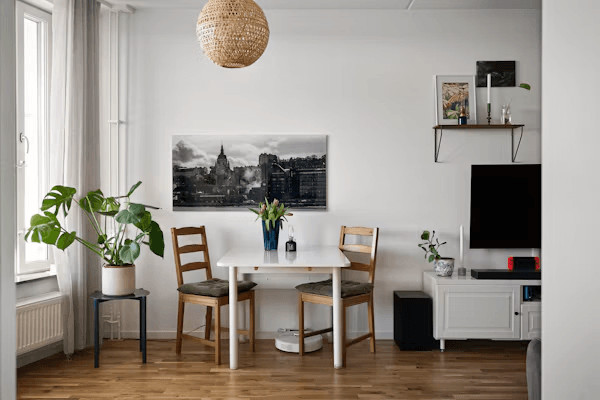
Use Vertical Space to Free Up the Floor
When floor space is limited, walls can provide useful storage opportunities. Shelves, hooks, and wall-mounted organizers can keep books, everyday accessories, and other belongings accessible without occupying another section of the room.
The key is to match storage to what needs to be kept. Frequently used items should remain easy to reach, while less frequently used belongings can go higher up. Overloading shelves or mounting heavy items without suitable fixings can create safety problems, so installation should account for the wall type, the item’s weight, and any rental restrictions.
Vertical storage also works best when it replaces an existing problem. A shelf that clears a cluttered desk is useful; adding several shelves simply because the wall is empty may introduce more storage than the apartment needs.
Choose Furniture That Serves More Than One Purpose
Multifunctional furniture can be especially useful when separate pieces would consume too much room. A storage ottoman can provide seating and hold blankets, nesting tables can be separated when needed and stacked when they aren’t, and a desk may double as a dining surface in an apartment without space for a dedicated table.
These choices require some thought, however. A piece that technically serves two purposes isn’t necessarily practical if switching between them is inconvenient or if its dimensions make the room harder to navigate. A dining surface used for studying, for instance, needs enough space for the activities it supports and a place to store materials when the surface changes roles.
Rather than looking for furniture with the greatest number of features, focus on the functions the household genuinely needs. One well-chosen piece can be more useful than several inexpensive items that compete for the same space.
Create Separate Zones Without Adding Walls
A single room doesn’t have to feel like one undifferentiated space. Furniture placement, a rug, or task lighting can help distinguish a sleeping area from a workspace or establish a small dining corner within a studio.
Lighting is particularly useful because different activities call for different conditions. A desk lamp can provide focused illumination for reading or working without requiring brighter overhead lighting throughout the room. A floor lamp near a chair can also establish a comfortable reading area without adding bulky furniture.
Keep circulation in mind when creating these zones. Leaving clear paths between the entrance, kitchen, bathroom, and main furniture pieces often matters more than fitting in another decorative element. A layout that looks attractive but makes everyday movement awkward hasn’t solved the underlying space problem.
Plan Furnishing Decisions Alongside Other Financial Commitments
Setting up a home is one part of managing the costs of living independently. Rent, utilities, groceries, transportation, and other recurring expenses all compete for a place in the household budget. For students and recent graduates, education costs may be another significant consideration.
Anyone considering an advanced degree needs to evaluate the costs of graduate school separately from the expenses associated with establishing a home. Reviewing available financing options, eligibility requirements, and repayment responsibilities for student loans for graduate school can help prospective students understand the financial commitments involved before deciding how to approach further education.
Those obligations deserve careful consideration in their own right. Education financing and furnishing a home are separate financial decisions, and a loan intended for qualified higher-education expenses should not be treated as a furniture budget. Understanding the full cost of a degree, alongside other existing obligations, helps people make more informed decisions about their overall financial commitments.
That same deliberate approach is useful when furnishing an apartment. There is no requirement to finish every room immediately, and a home can remain comfortable while decorative purchases are postponed. Prioritizing essential furniture, keeping track of planned purchases, and allowing time to identify genuine needs can help prevent a move from turning into a series of rushed shopping decisions.
Add Personality Through Gradual, Practical Improvements
Once the essentials are in place, decorating becomes an opportunity to make the apartment feel personal rather than another item on a long list of expenses.
Artwork, textiles, secondhand accessories, and small DIY projects can introduce color and character without requiring a complete redesign. A few cushions or a throw can change the feel of a neutral sofa, while framed prints can make a blank wall more inviting. These additions don’t have to be purchased together, and there’s no need to settle on a complete color scheme before moving in.
For renters, reversible changes can be particularly practical. Freestanding shelving, removable decorative elements, and lamps offer ways to personalize a room without making permanent alterations. Before using adhesive products, drilling holes, painting, or installing fixtures, check the lease and the suitability of the proposed method for the surface.
It’s also worth distinguishing between an improvement that makes a room more enjoyable and one that merely fills an empty spot. A lamp that makes evening reading more comfortable has a clear purpose. An extra piece of furniture purchased only because a corner looks bare may introduce clutter without improving how the room functions.
Giving a home time to develop makes it easier to make these distinctions. Once the layout has been tested and everyday routines are established, it becomes clearer which finishing touches will add lasting value and which purchases can be skipped.
Build a Home That Works Before Making It Look Finished
Furnishing a small apartment successfully isn’t about finding a clever solution for every square foot or buying an entire matching set of furniture. It’s about understanding the space, choosing items that support everyday life, and making improvements in an order that makes sense.
Careful measurements can prevent costly mistakes, multifunctional furniture can reduce the need for extra pieces, and thoughtful storage can make a compact layout more manageable. Just as importantly, leaving nonessential purchases until later gives people room to learn what their home actually needs.
A comfortable, well-designed apartment can take shape gradually. When each purchase has a purpose, a limited budget becomes a reason to be more deliberate about design, rather than a barrier to creating a home that feels personal and works well.