Your neighbor swears by her screen porch. You barely use yours. Same street, same summer, same bugs. What’s the difference?
Probably what’s on the walls.
Roll-down screens and solid shutters serve different purposes. Buying the wrong one doesn’t just waste money; it also wastes time. It wastes the whole porch.
So, let’s figure out which one actually fits where you live.
What Are We Actually Comparing?
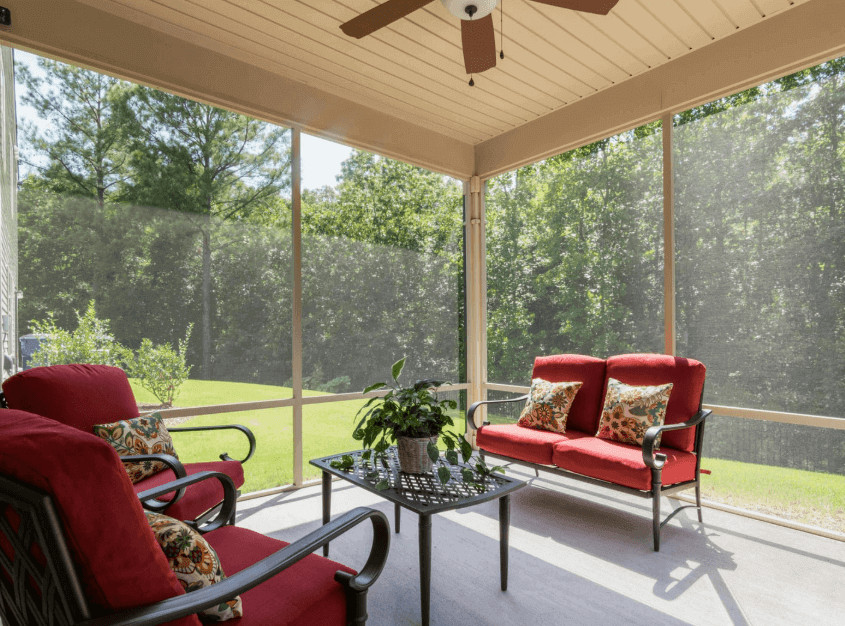
Screen porch shutters are solid panels, usually wood, composite, or aluminum, that you open and close like traditional shutters. They block wind, rain, and light when shut. When open, they fold back against the walls, and your porch feels wide open.
Roll-down screens are retractable mesh screens that drop from a housing unit mounted above your porch opening. They filter light, block insects, reduce glare, and cut wind, but they’re not solid. You can still see through them, and air still moves through them (just less of it).
Two totally different products solving a similar problem in very different ways.
Hot and Humid Climates (Think: Florida, Gulf Coast, Southeast)
If you live somewhere where summer feels like standing inside a mouth, ventilation is everything. A solid shutter closed on a hot day? You’ve basically built a sauna.
Roll-down screens are the clear winner here. The mesh allows airflow while blocking the brutal afternoon sun and keeping mosquitoes out. That’s the trifecta you need in a hot, humid climate. You get shade without losing the breeze, and that breeze is the only thing standing between you and misery from June through September.
Many homeowners in the South run their screens down by midday and roll them up in the evening when the temperature drops. It becomes part of the rhythm of outdoor living. Shutters in this climate tend to sit open most of the year anyway, which raises the obvious question: why have them at all?
| Screen Porch Shutters | Roll Down Screens | |
| Pros | Solid privacy when closed, durable long-term | Airflow and shade combo, insect protection, flexible use |
| Cons | Trap heat when closed, minimal ventilation | Not a solid barrier, less effective in heavy rain |
| Verdict | Overkill for most hot, humid homes | Better fit for this climate |
Coastal and High-Wind Climates (Think: Carolinas, Texas Gulf, Pacific Northwest Storms)
Wind changes the equation completely. If you’re on the coast and storm season is real, roll down screens, even heavy-duty ones, have limits. Mesh can shred in serious wind events. It can bow, strain the housing, and wear out faster than advertised if you’re regularly catching strong gusts.
Solid shutters are built for exactly this. Rated hurricane shutters are tested for wind loads that mesh screens simply can’t match. They protect not just from wind but from wind-driven rain that would soak right through any screen.
That said, it’s not a total shutout for roll-down screens. Companies like Sun and Security make heavy-gauge roll-down systems that handle significant wind pressure, far beyond what a standard screen can take.
So if you’re in a moderate coastal area (not direct hurricane path territory), a quality roll-down system can still hold up well, especially if you value year-round visibility over maximum storm protection.
The general rule: the more severe and frequent your storms, the more you need something solid.
| Screen Porch Shutters | Roll Down Screens | |
| Pros | Hurricane-rated options available, handles wind-driven rain, highly durable | Heavy-duty versions manage moderate wind well, maintain outdoor visibility |
| Cons | Blocks views and airflow when closed, feels excessive in mild weather | Mesh has limits in extreme storms and can strain under sustained high winds |
| Verdict | Best for high-risk storm zones | Viable for moderate coastal exposure |
Cold Climates (Think: Midwest, Northeast, Mountain West)
Cold climates flip the question entirely. Your enemy isn’t heat or bugs. It’s a short outdoor season.
Shutters make more sense here because you’re trying to extend use into the shoulder seasons. A solid shutter closed against a cold October wind lets you sit on your porch with a cup of coffee when a screen would just let that cold air right through. You’re not screening out bugs. You’re creating a buffer against the elements.
Roll-down screens in cold climates often get retracted and stored for months. You’re paying for a product that sits dormant half the year. Shutters, on the other hand, become your porch’s weatherproofing during those chilly but still-beautiful fall afternoons.
One caveat: if you also deal with hot summers (the Midwest absolutely does), a combination approach is worth considering. Some homeowners use roll-down screens for summer and solid panels for fall and winter. It’s more of an investment, but it covers all your bases across every season.
| Screen Porch Shutters | Roll Down Screens | |
| Pros | Extends porch season into fall and winter, solid wind and cold buffer | Useful during summer months for bug and sun control |
| Cons | Less useful in warmer months without ventilation options | Essentially unused for half the year in colder regions |
| Verdict | Better primary option for cold climates | Works as a seasonal supplement, not a standalone solution |
Dry and Sunny Climates (Think: Phoenix, Southwest, Southern California)
Sun protection is your main concern here. Bugs are minimal. Storms are rare. Heat is relentless.
Ask anyone in Phoenix. By 11 am in July, your porch is either a shaded retreat or a place you avoid until sunset. There’s no middle ground. Roll-down screens with solar mesh are perfectly suited for this.
The solar fabric blocks up to 90% of UV rays in some products, keeping your porch cooler and protecting your furniture from fading. Because the air is dry, you want airflow rather than trapping hot air behind a solid panel. A closed shutter in Phoenix in July is just a different kind of miserable.
Shutters in dry climates tend to be more of a design or privacy choice than a functional one. They can look sharp. But they don’t do as much practical work as roll-down screens do for daily sun management.
| Screen Porch Shutters | Roll Down Screens | |
| Pros | Strong privacy, clean aesthetic, good for occasional cool nights | Blocks up to 90% UV, allows airflow, protects furniture from sun damage |
| Cons | Traps heat when closed, overkill for mild storm risk | Slightly less private than solid shutters |
| Verdict | Better as a design or privacy feature | Clear functional winner for sun and heat management |
The Honest Bottom Line
| Climate | Better Choice |
| Hot and Humid | Roll Down Screens |
| Coastal and High Wind | Solid Shutters (or heavy-duty roll down) |
| Cold Climates | Solid Shutters |
| Dry and Sunny | Roll Down Screens |
Neither option is universally better. The right one is the one that solves your actual problems, not the one that looks best in the catalog.
Before you decide, spend a week paying attention to your porch. When do you avoid it? What’s driving you inside? Heat, bugs, wind, rain? That’s your answer. And if you’re in Phoenix or anywhere in the Southwest, odds are the answer is staring at you from the afternoon sky.