A crack in a driveway or patio does not automatically mean the concrete needs to come out. Hairline cracks can stay put for years without causing trouble. A crack that keeps growing, develops a raised edge, or appears alongside a sinking section is a different story.
What causes that damage often comes down to what is happening beneath and around the slab. In Upstate South Carolina, including Greenville, clay soil, heavy rain, and drainage problems can be especially hard on concrete. The same basic lesson applies to slabs elsewhere: before deciding how to fix a crack, figure out why it formed.
Sometimes that means filling a crack or resurfacing worn concrete. Sometimes the slab has moved enough that replacement is the better use of your money. Here is how to tell the difference.
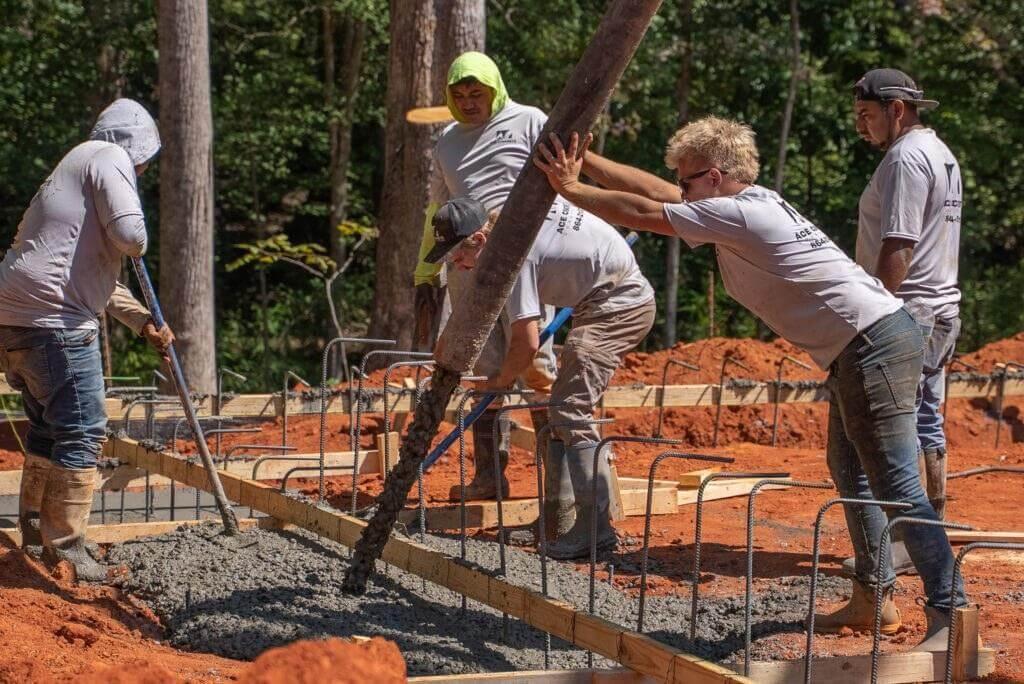
By the Ace Concrete Construction team
Reading the Cracks
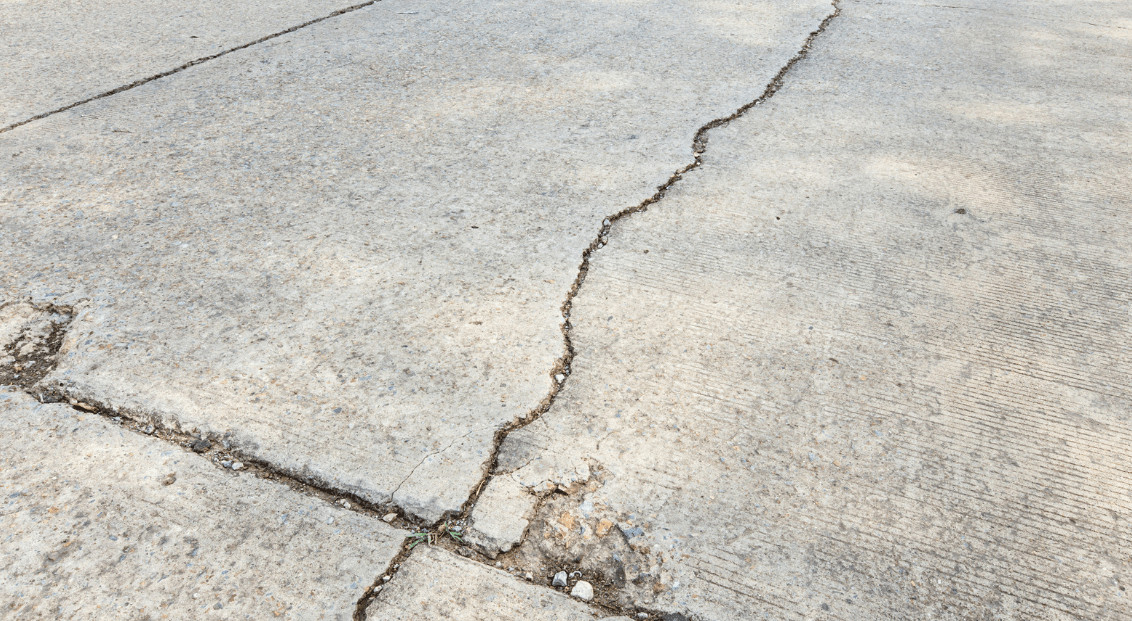
Thin, shallow cracks that wander across the surface without much width are usually shrinkage cracks, left over from curing. They look worse than they are and rarely change how the slab performs.
The cracks worth taking seriously are the ones that keep widening, that show a height difference from one side to the other, or that run in a straight line where a slab has clearly dropped. A lip you can catch your toe on means one section has settled below its neighbor, and that points to something under the slab, usually washed-out or poorly compacted base.
Why Upstate Slabs Crack
The red clay across Greenville and the surrounding counties swells and shrinks with moisture, and that movement works on anything sitting on top of it. Drainage is the usual culprit behind the worst damage.
Downspouts dumping right next to a slab, a grade that slopes the wrong way, or a low spot that holds water will undermine even a well-poured surface over time. Original construction plays a part too.
A driveway or patio poured on loose fill, or poured too thin for the loads it carries, starts its clock early. We also see spalling, where the top surface flakes and pits, often from a weak surface finish, de-icing salt, or water that soaked in and expanded during a cold snap.
Fixes That Work When the Slab is Sound
If the slab is still solid and the damage is limited to a crack, joint, or worn surface, there is usually no reason to tear the whole thing out. Small cracks can be cleaned and filled with a flexible sealant or polymer patch that can handle some movement as the slab expands and contracts.
A spalled or pitted surface can sometimes be resurfaced with a bonded overlay. And if one section has dropped but the concrete itself is still in good shape, it may be possible to lift it by pumping material underneath rather than replacing the slab.
Anyone considering concrete repair in the Greenville area should also look at what caused the damage. Poor drainage or an unstable base will not disappear when a crack is filled. If water is washing out the soil below the slab, that problem needs attention too or the repair may not last.
When Replacement Is The Honest Answer
Sometimes patching is throwing good money after bad. If a slab is broken into several pieces that rock independently, if the base beneath it has washed out across a wide area, or if the concrete is crumbling rather than just cracked, a repair will not hold and you will be back at it within a season.
In those cases the durable fix is to remove the failed concrete, correct the base and the drainage that caused the failure, and pour new. Skipping the base correction is the mistake that turns one replacement into two. The concrete on top is only ever as good as what got fixed underneath it.
Staying Ahead of the Damage
Cracked concrete is easier to deal with before water and movement make the damage worse. Check problem areas after a hard rain, pay attention to sections that have started to sink or lift, and look at where downspouts send water. The crack itself may only be part of the story.
That is especially important in places like Greenville and Asheville, where clay soil and drainage can contribute to movement below a slab. The same goes for concrete anywhere else: fix the cause, not just the crack.
A sound slab may only need a relatively small repair. If you are dealing with minor surface damage, this guide on how to repair cracks in concrete covers the basic repair process. A badly settled or crumbling slab may be ready for replacement. Getting that distinction right the first time is usually cheaper than repairing the same problem twice.