A fence built on a solid plan – confirmed property lines, proper post depth, and no buried surprises
Most fence projects start the same way. You get a quote, price out materials, and maybe watch a few YouTube videos on post-setting. Then you pick a Saturday and start digging. It feels like the hard part is the physical labor. It isn’t.
The mistakes that cost homeowners real money – and sometimes force them to tear the whole fence down – almost always happen before the first hole. Skipped permits. An assumed property line that turned out to be wrong. Post holes dug straight through a gas line nobody knew was there. None of these is complicated to avoid. They just get overlooked.
Here’s what those steps are and why each one matters more than choosing the right stain color.
Don’t Skip Utility Locating Services in San Antonio Before Digging Post Holes

Color-coded paint marks show public utility lines – but irrigation, outdoor lighting, and propane lines won’t appear without a professional locating service
Every post hole goes two to three feet underground. That’s exactly where gas lines, water mains, electric conduit, and telecom cables run. Hitting one isn’t just expensive – it can be dangerous.
A 2025 survey by the Common Ground Alliance found that 46% of Americans planning to dig that year wouldn’t call 811 first. That’s roughly 27 million people gambling on not hitting anything. According to PG&E data published in 2025, 89% of homeowner-caused utility damage incidents in Northern California in 2024 happened where 811 was never called. The average repair bill: $3,500. Worst-case single-strike costs can reach $56,000, according to GP Radar’s 2024 industry analysis.
Call 811 before you dig. It’s free, it’s legally required in most states, and it dispatches locators within a few business days to mark public utility lines with color-coded spray paint.
According to experts specializing in utility locating services in San Antonio, the catch is that 811 only covers public utilities. Your irrigation system, outdoor lighting conduit, propane lines, and pool equipment wiring won’t show up on those markings. On older lots, in particular, private lines are installed over decades with little documentation.
Start With the Survey, Not the Shovel
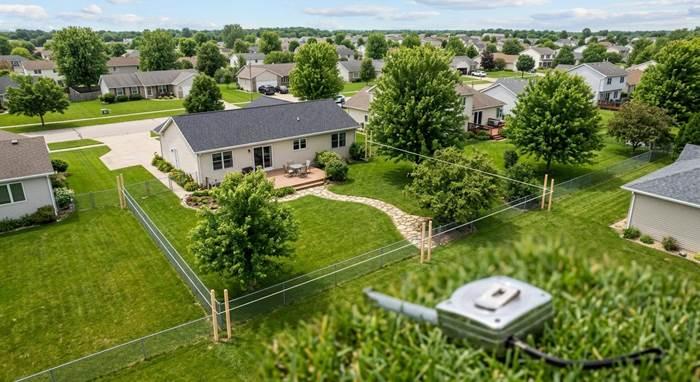
Confirming property lines before buying materials is the step most homeowners skip – and the most expensive one to skip
Most homeowners assume they know where their property ends. They’re often wrong – sometimes by a few inches, sometimes by several feet.
A fence installed two inches over the line is still on your neighbor’s land. Depending on local ordinances and your neighbor’s patience, that can mean a formal dispute, a forced removal, or a rebuild cost that wipes out anything you saved by doing it yourself. Don’t guess. Pull your deed plat from county records or check your local GIS parcel viewer online. If there’s any real uncertainty, hire a licensed surveyor before you buy a single post.
Permits matter just as much. Many municipalities require a building permit for fences taller than four feet, and front-yard fences often face tighter setback requirements than backyard fences. Fees typically run $100 to $500. Skipping a permit can mean daily fines, a demolition order, and voided homeowner’s insurance coverage if you ever file a claim, according to Family Handyman’s fence planning guide. HOA rules layer on top of municipal codes. Check both before you buy anything.
The Materials Mistake: Buying Before You Plan
Choosing fence materials based on looks leads to early failure and higher lifetime cost. That’s a blunt statement, but the pattern shows up constantly.
Wood is the natural starting point, and it works well – but only with regular maintenance. Annual sealing or staining in wet climates, and treatment in termite zones. Vinyl runs more upfront ($30 to $60 per linear foot installed, according to Angi’s 2025 cost data) but holds up for decades with minimal upkeep. Pressure-treated pine sits in the middle: affordable and reasonably durable, but vulnerable to rot at ground contact if posts aren’t set correctly.
Soil is the variable most people ignore entirely. Clay-heavy soil expands and contracts with moisture, gradually loosening fence posts over the years. Sandy soil drains well but doesn’t grip posts without proper concrete fill. The post depth rule is simple: bury at least one-third of the post’s total length underground, with a two-foot minimum. Most fence failures trace back to shallow posts, not bad materials. Quick-set concrete works fine – just use enough of it.
For a practical rundown of fence types and how they hold up over time, This Old House has a useful fencing overview worth reading before you commit to a material. If you’re considering less conventional options like corrugated steel panels, the backyard privacy fence guide on this site covers some of those creative approaches.
Gates, Grades, and the Details That Bite You at the End
Yard slope trips up more installations than bad lumber. A fence that doesn’t account for grade ends up with gaps underneath, panels that tilt off-angle, or sections that simply won’t line up. Two approaches exist: stepping the fence in horizontal sections that drop at set intervals, or racking it so the panels follow the slope continuously. Most pre-built fence kits only handle one method. Check before you buy.
Gates need separate attention. The posts flanking a gate carry dynamic load every time it opens and closes – they need to go deeper than standard fence posts and get packed with more concrete. Gate hardware is where builders routinely cut corners. Cheap hinges and latches are the most common reason a gate starts dragging or won’t latch correctly within 18 months of installation. Don’t save $30 on hardware and end up with a non-working gate.
If you plan to install accessories such as lighting, address numbers, or a fence-mounted letterbox, account for them during the design phase. Adding these features later may require additional reinforcement, wiring, or modifications that are easier and less expensive to handle while the fence is being built.
Layout errors are the last trap. Eyeballing panel spacing along a long fence run results in visible misalignment even on flat ground. Stakes, string lines, and a can of spray paint take maybe an hour. Skipping them costs several more hours repositioning posts that aren’t where you thought they were.
If the fence is part of a bigger outdoor project, working through the full yard layout before committing to a fence line saves rework later. Thinking through innovative yard and garden designs is a good way to see how all the outdoor pieces fit together before any holes get dug.
The Fence Itself Is the Easy Part
The actual installation – digging holes, mixing concrete, running string lines, nailing boards – goes smoothly when you’ve done the legwork beforehand. The problems that force homeowners to redo sections, pay fines, or have awkward conversations with neighbors almost always trace back to what got skipped in the planning stage.
Confirm your property lines before buying a single post. Call 811, then get professional locating for your private lines before you dig. Pick materials that match your climate and soil, not just your budget. Set posts deep with real concrete. Account for slope before you’re standing in a half-dug yard, wondering why nothing lines up.
Do those things, and the fence you build this spring is the one that’s still standing straight in ten years.