Construction and renovation projects are becoming more complex every year. Rising material costs, labor shortages, tight deadlines, and unexpected delays continue to put pressure on contractors, builders, and homeowners alike. Because of this, more companies are turning to AI-powered tools to help manage projects more efficiently and avoid costly mistakes.
AI is already changing the way construction teams plan, build, and renovate. Contractors now use AI to track budgets, predict delays, improve job-site safety, and streamline communication between crews. Architects and designers are also using AI tools to create smarter layouts and speed up the planning process. Rather than replacing workers, AI is helping teams make faster decisions, reduce waste, and keep projects moving forward.
In this article, we’ll look at eight practical ways AI is transforming construction and renovation projects in 2026.
Why Companies Want to Use AI in Construction
Construction is one of the oldest industries in the world, and in many ways, it still operates like it. Projects run on spreadsheets, phone calls, and paper trails. Decisions get made on gut feeling and experience. And when something goes wrong, a delayed shipment, a miscommunication between teams, an equipment breakdown, the ripple effects can cost thousands before anyone even realizes there’s a problem.
Part of the challenge is the nature of the work itself. Every project is different. Sites change daily. Crews rotate. Weather, supply chains, and client decisions introduce constant variables that are hard to plan for. The job has always demanded adaptability, and that adaptability has historically come from human experience rather than technology.
However, that is starting to change. A new generation of AI tools is being built specifically for the complexity of construction. Not generic software retrofitted for the industry, but systems trained on project data, site conditions, material costs, and building codes. Tools that understand the difference between a residential renovation and a commercial build. Systems that can process thousands of variables and surface the ones that matter.
If you want to have a deeper look at this, you can read Fieldwire’s guide on how AI is transforming the construction industry.
8 Ways you can use AI in construction and renovation in 2026
1) Implement smarter scheduling

Planning is one of the biggest challenges in construction and renovation projects. Delays, rising costs, and missing materials can slow down the entire job.
AI helps companies plan projects in a faster, smarter way, and can review past projects and spot possible problems before work begins. They can predict delays, track material costs, and help teams stay within budget. This gives project managers more control from the start.
AI also improves scheduling. Timelines can update automatically when changes happen on-site. This helps teams manage workers, deliveries, and deadlines without creating major disruptions.
For renovation projects, AI can also help with cost estimates and space planning. Some tools can create layouts and suggest better ways to use available space.
Better planning leads to fewer mistakes, lower costs, and smoother projects overall.
2) Plans renovations more accurately
Homeowners and contractors alike are using AI to take the uncertainty out of renovation. Tools trained on thousands of past projects can estimate material costs with high accuracy. Some platforms let homeowners photograph a room and receive a renovation plan with itemized costs and suggested contractors in a few minutes.
AI visualization tools go further. Upload a photo of your kitchen and see a photorealistic render of the finished result before a single tile is touched. Decisions that used to happen after expensive mistakes now happen upfront. Fewer change orders. Less waste.
Finding hidden problems is getting easier too. Thermal imaging and sensor data fed into AI models can detect moisture, aging wiring, and structural issues behind walls before demolition starts. Contractors know what they’re walking into. Surprises drop significantly.
On the project management side, AI tracks progress against schedule, flags delays, and can verify phase completion from daily site photos before the next payment is released. For homeowners, that means less chasing. For contractors, it means cleaner handoffs.
3) Overcome the skilled labor shortage
Construction is facing a serious problem. Experienced tradespeople are retiring faster than new workers are entering the field. In the US alone, the industry needs to hire over half a million additional workers on top of normal hiring just to meet demand. AI is helping close that gap without waiting for the pipeline to catch up.
The first way is productivity. AI tools give existing workers better information, real-time site conditions, material availability, and task sequencing, so they spend less time waiting and more time building. A crew of ten with good AI tooling can outperform a crew of fifteen without it.
The second way is automation of repetitive tasks. Robotic systems are now handling bricklaying, rebar tying, concrete finishing, and drywall installation on commercial sites. These aren’t experimental prototypes; they’re deployed on active projects. They don’t replace skilled workers. They handle the volume of work so skilled workers can focus on the parts that actually require judgment and experience.
4) Generative design

Architects have always worked within constraints. Budget. Footprint. Building codes. Structural limits. Whether designing skyscrapers, custom homes, or double-wide mobile homes, the job has always been to find the best solution inside those boundaries, and it has always taken time.
Generative design flips the process. Instead of an architect drawing one solution and refining it, the software generates hundreds of viable options simultaneously. Feed in the constraints, and the algorithm does the exploration. The architect’s job shifts from drawing to deciding.
The results are often surprising. Generative tools regularly produce layouts and structures that human designers wouldn’t have considered, not because they’re more creative but because they have no habits. No defaults. No bias toward what was done last time.
On commercial projects, the gains are measurable. Structural designs optimized by AI use less material without sacrificing load capacity. HVAC layouts generated algorithmically reduce energy consumption from day one. Floor plans optimized for natural light reduce long-term lighting costs.
5) Helps with budget management
Some construction projects have a major problem, and that is going over the budget, but AI is helping to stop that. The core problem has always been information; too little of it, too late. A material price spikes, and nobody notices until the order is placed. A subcontractor falls behind, and the knock-on effects aren’t calculated until two weeks of delay have already compounded. A design change gets approved without anyone modeling its full cost impact.
AI budget management tools fix the information problem. They monitor material prices in real time and flag when costs are drifting from the estimate. They track subcontractor progress against schedule and calculate downstream impacts before they become emergencies. They model the full cost of a change order in seconds, not days.
Some platforms go further. They analyze spending patterns across hundreds of past projects to identify where budget leakage typically happens, which phases run long, which material categories overshoot, and which site conditions drive unexpected costs. That pattern recognition becomes a live early warning system on active projects.
6) Improves work safety
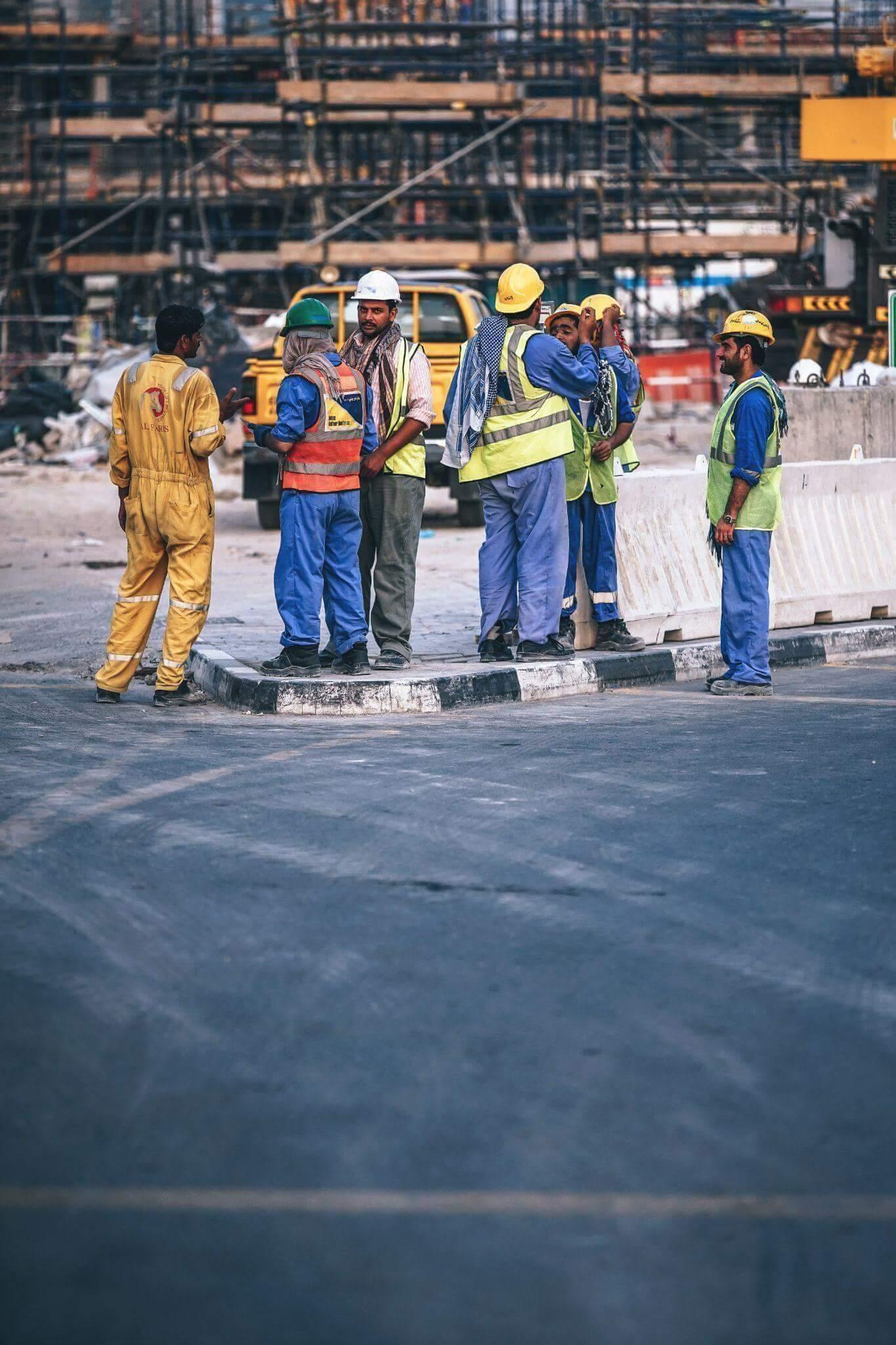
Construction is one of the most dangerous industries in the world. Falls. Equipment strikes. Electrical incidents. Structural collapses. The numbers are stark; one in five worker deaths in the US happens on a construction site.
Safety training helps reduce risks. Regulations help, but incidents still happen at a rate the industry has accepted for decades, and the good news is that AI is refusing to accept it.
Computer vision systems mounted across job sites now monitor activity in real time. They detect missing hard hats and hi-vis vests the moment a worker steps on the site. They flag when someone enters a restricted zone. They identify when heavy equipment and workers are on a collision course before the collision happens. Alerts go to site managers instantly, not in an incident report filed afterward.
The shift from reactive to predictive is the key change. Traditional safety management responds to what went wrong. AI safety systems intervene before anything goes wrong.
7) Better communication across teams
Construction projects involve a lot of people: Architects, Engineers, Contractors, Subcontractors, Suppliers, Clients, and Inspectors. On a large project, the list runs into the hundreds. Getting all of them aligned: on scope, schedule, changes, and expectations has always been one of the hardest parts of the job.
Miscommunication is expensive. A drawing gets updated, and the wrong version gets built. A client approves a change verbally, and the contractor hears something different. A subcontractor finishes a phase, and nobody upstream knows for three days. These aren’t unusual scenarios. They happen on almost every project, and they cost time and money every time.
AI communication tools are closing those gaps. Natural language processing tools now sit inside project management platforms and automatically extract action items, decisions, and commitments from meeting notes, emails, and site reports. Nothing falls through the cracks because a system is tracking it, not a person’s memory.
8) Predictive maintenance
Equipment failure on a construction site stops work. A crane goes down, and an entire crew stands idle. A concrete mixer breaks mid-pour, and the batch is lost. A generator fails, and a whole phase gets pushed back. Anything can happen, really.
Traditional maintenance has always been reactive. Something breaks, and then it gets fixed. Scheduled maintenance helps, but it is blunt, servicing equipment on a calendar rather than on actual condition. Both approaches accept failure as inevitable, but on the other hand, AI predictive maintenance doesn’t.
Sensors embedded in heavy equipment now continuously monitor vibration, temperature, pressure, and performance output. AI models analyze that data in real time and detect patterns that precede failure, subtle shifts in how a machine sounds, moves, or consumes fuel that a human operator would never notice. The system flags the issue days or weeks before it becomes a breakdown.
AI is changing the way construction and renovation projects are managed and planned
Conclusion
AI is changing the way construction and renovation projects are planned, managed, and completed. From smarter scheduling and budget tracking to safer job sites and more accurate renovation planning, AI tools are helping teams work faster and more efficiently while reducing costly mistakes.
As these technologies continue to improve, more contractors, builders, and homeowners will rely on AI to simplify projects and stay competitive in a demanding industry. AI will not replace skilled workers, but it will continue to support better decision-making, improve communication, and help construction teams deliver higher-quality results from start to finish.