Anyone who has taped off a room before sanding already understands the core of mold work. You control where the dust goes first, and only then do you make dust. The sequence is the craft.
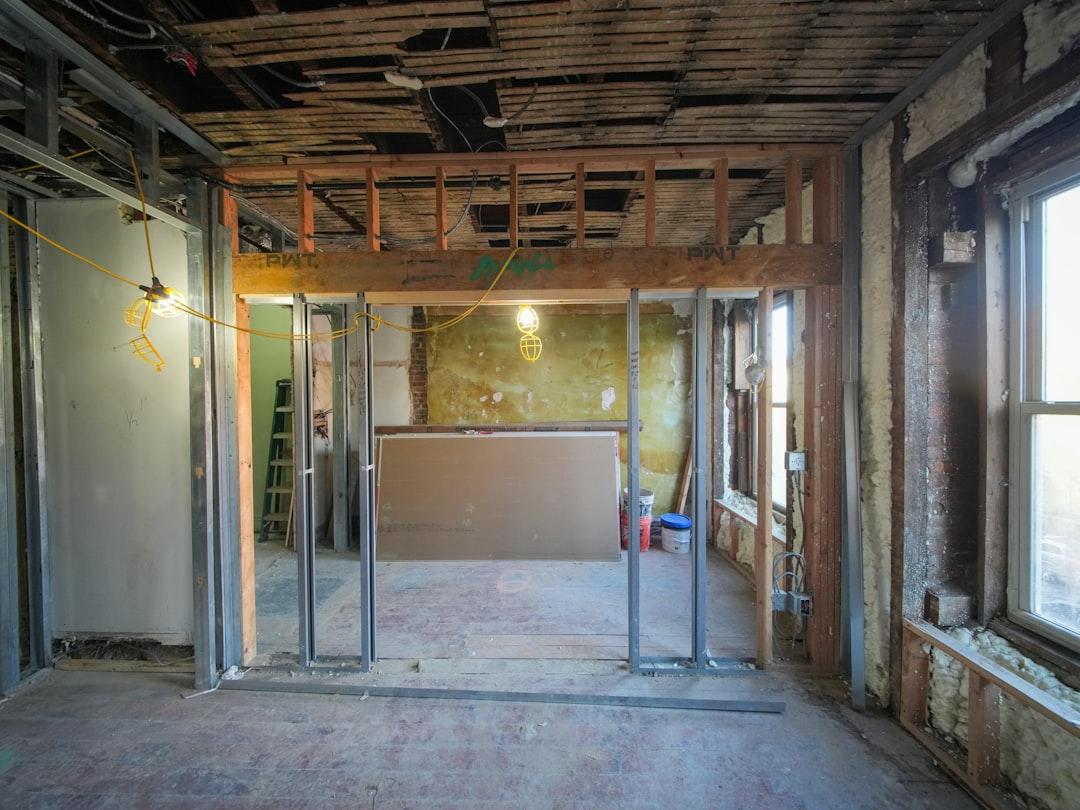
Photo by Olek Buzunov on Unsplash
Mold leaves less room for shortcuts because disturbing affected materials can spread spores into other parts of the home. That is why containment is an important part of professional remediation, particularly before damaged walls or other materials are removed.
Homeowners comparing bids can look at how contractors approach this step; for example, the process described by nycmoldremovalservices.com includes containment and HEPA filtration as part of remediation. Understanding what those measures involve makes it easier to compare the scope of work rather than simply choosing the lowest estimate.
Why Does the Work Area Get Sealed First?
Containment is a physical boundary between the work zone and the rest of the house. What it looks like scales with the size of the job:
- 6 mil polyethylene taped to walls, ceiling and floor in a single room.
- A zipped or overlapping flap where the doorway used to be.
- A separate chamber for changing out of dirty gear on larger work.
- Supply and return vents inside the zone, covered and taped shut.
The barrier does 2 jobs at once. It stops settled dust being tracked or blown into clean rooms. It also gives the air equipment a defined volume to work on.
Those covered vents do more work than they look. An open return pulls contaminated air straight into the ductwork. Anyone who has watched dust migrate during a live-in remodel knows how far it travels without a barrier.
What Do Negative Air and HEPA Filtration Actually Do?
They solve 2 different problems that people often merge into one. Negative pressure controls direction. HEPA filtration controls the particles themselves.
A negative air machine pulls air out of the sealed zone and exhausts it outside, so the enclosure sits below the pressure of the surrounding house. Air leaks inward through any gap rather than outward. Minnesota’s best practice guidance for larger buildings targets around 0.02 inches of water column, with at least 6 air changes per hour.
The HEPA element makes the exhausted air acceptable. A true HEPA filter captures 99.97 percent of particles at 0.3 microns, which covers mold spores comfortably. Vacuums inside the zone need the same rating, because a shop vacuum redistributes what it picks up.
Why Does the Cut-Back Extend Past the Visible Growth?
Because the visible edge is not the real edge. Growth travels through the paper facing and gypsum core faster than it surfaces, so the stain lags behind the colony. Cutting exactly on the stain leaves live material in the wall.
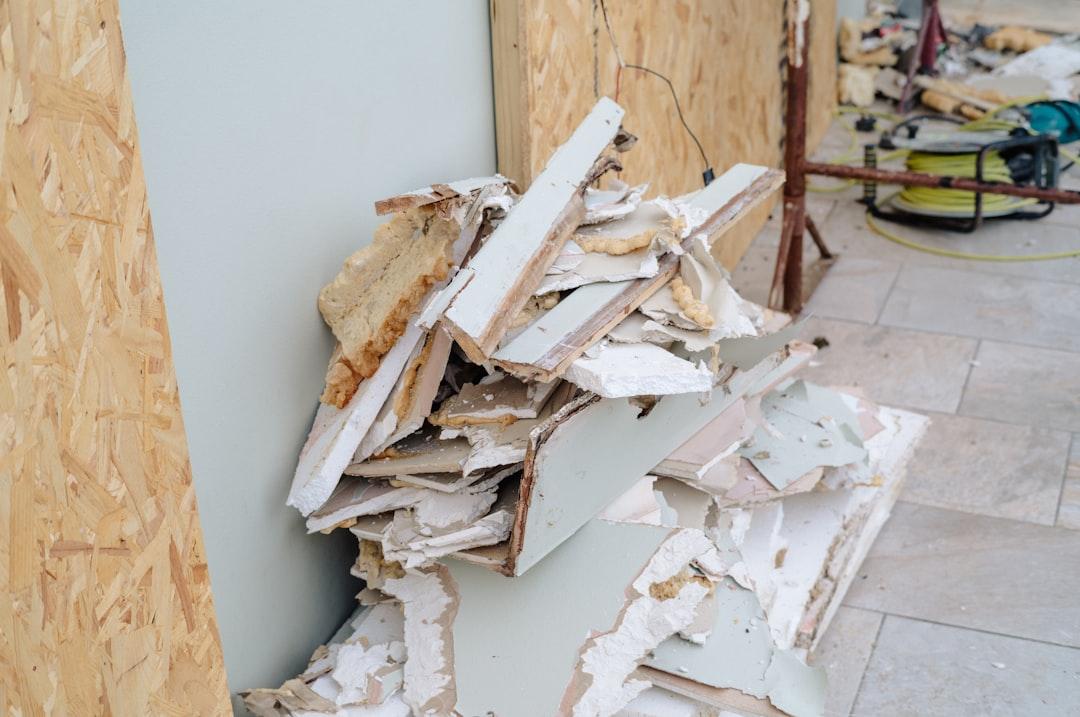
Photo by Annie Spratt on Unsplash
Crews typically remove 12 to 24 inches beyond what is visible, then square the opening to the nearest framing member. Cutting to a stud gives the replacement board something to land on. On insulation there is no cut-back debate, since batts come out entirely.
The moisture map sets the distance rather than the eye. A meter reading tells the crew where the wet zone ends, and the cut follows that line. Closing the hole afterward is ordinary drywall repair work, which is the easy half of the job.
How Does Contaminated Material Leave the House?
Sealed, and by the shortest route available. Debris goes into heavy poly bags inside the containment, and the outside of each bag gets wiped or HEPA vacuumed before it crosses the barrier. A bag filled in the hallway defeats the enclosure entirely.
Larger pieces get wrapped rather than bagged. Whole sections of board or cabinetry are sheeted and taped before anyone carries them through a clean space. Where an exterior door is available, most crews use it instead of the stairs.
After the last bag leaves, the zone gets HEPA vacuumed, damp wiped, then vacuumed again once surfaces dry.
Why Does Drying Come Before Rebuilding?
Because remediation without a dry substrate is a scheduled repeat. Spores are everywhere already, and moisture decides whether they establish. Close a wall on wet framing and you have paid for a delay, not a fix.
The source matters more than the drying equipment. A failed flashing detail, a slab without a vapor barrier, or a weeping supply line refills the cavity no matter how good the air movers are. A scope that never names the source is a warning sign.
Expect readings rather than opinions. Crews meter affected framing and undamaged material nearby, then rebuild once the 2 numbers converge. That usually takes 3 to 5 days, longer on plaster or masonry.
How Do You Read a Scope of Work?
A written scope should tell you the boundaries of the job before it starts. Texas licenses this trade and requires a remediator to work from a protocol written by an independent assessor. One firm is barred from both assessing and remediating a project, which is a useful benchmark even where no license exists.
Look for named dimensions, not adjectives. A scope worth signing states 5 things:
- The affected area in square feet.
- The containment method and where the barrier lines sit.
- The cut-back distance past visible growth.
- The number of air machines and where they exhaust.
- The clearance testing that closes the job.
Comparing 2 bids gets easier when both list those items, which is also how to weigh a large firm against a one-man operation.
What to Check Before You Sign a Remediation Contract
- Whether the assessor and the remediator are separate firms.
- Who repairs the moisture source, and whether it sits in the price.
- How material will leave without crossing a clean room.
- What happens if clearance testing fails the first time.
- Who pays for the rebuild once removal is done.
Telling Craft From a Spray Job
A crew that sprays a biocide on a wall and leaves has treated the stain, not the building. You can spot the difference from the paperwork alone. Real remediation names a boundary, removes material past the visible edge, dries the cavity, fixes the water, and proves the result with a test. Skipping the removal step sells you paint with extra steps.
FAQ
How Long Should a Typical Remediation Take?
A single-room job commonly runs 2 to 5 days, with drying adding a few more. Containment setup and teardown take a surprising share of that. A one-day quote for a wall-sized area usually means removal is being skipped.
Do I Need to Leave the House During the Work?
Often not, if the containment is properly built and the affected area is small. Households with asthma, infants, or anyone immunocompromised are usually advised to stay elsewhere. Ask for that answer in the written scope.
What Is Post-Remediation Clearance Testing?
It is an independent check that the work zone meets the agreed standard before containment comes down. Testing covers visual inspection, moisture readings, and usually air sampling. It only means something when the tester is not the crew being tested.
Is Fogging or Spraying a Substitute for Removal?
No, coatings and biocides are finishing touches rather than the job. Nothing sprayed on a surface reaches a colony living inside gypsum or insulation. Removal is what ends the problem.