I’ve spent more weekends than I can count out in the garage, and if there’s one thing every DIYer has in common, it’s that the workshop grows faster than we plan for. A shelf of stain and lacquer here, a battery charger there, an extension cord snaking under the table saw. All of that stuff represents real money and real time. It also happens to sit in one of the most fire-prone rooms in the house.
Most fire-safety articles are written for the whole home: check your smoke alarms, don’t leave the stove on, keep space heaters away from curtains. Good advice, but it skips right past the specific hazards sitting in your garage or shop. This piece covers what actually starts fires in a home workshop, the habits that keep your tools and your house standing, and what to do (and who to call) if prevention wasn’t enough.
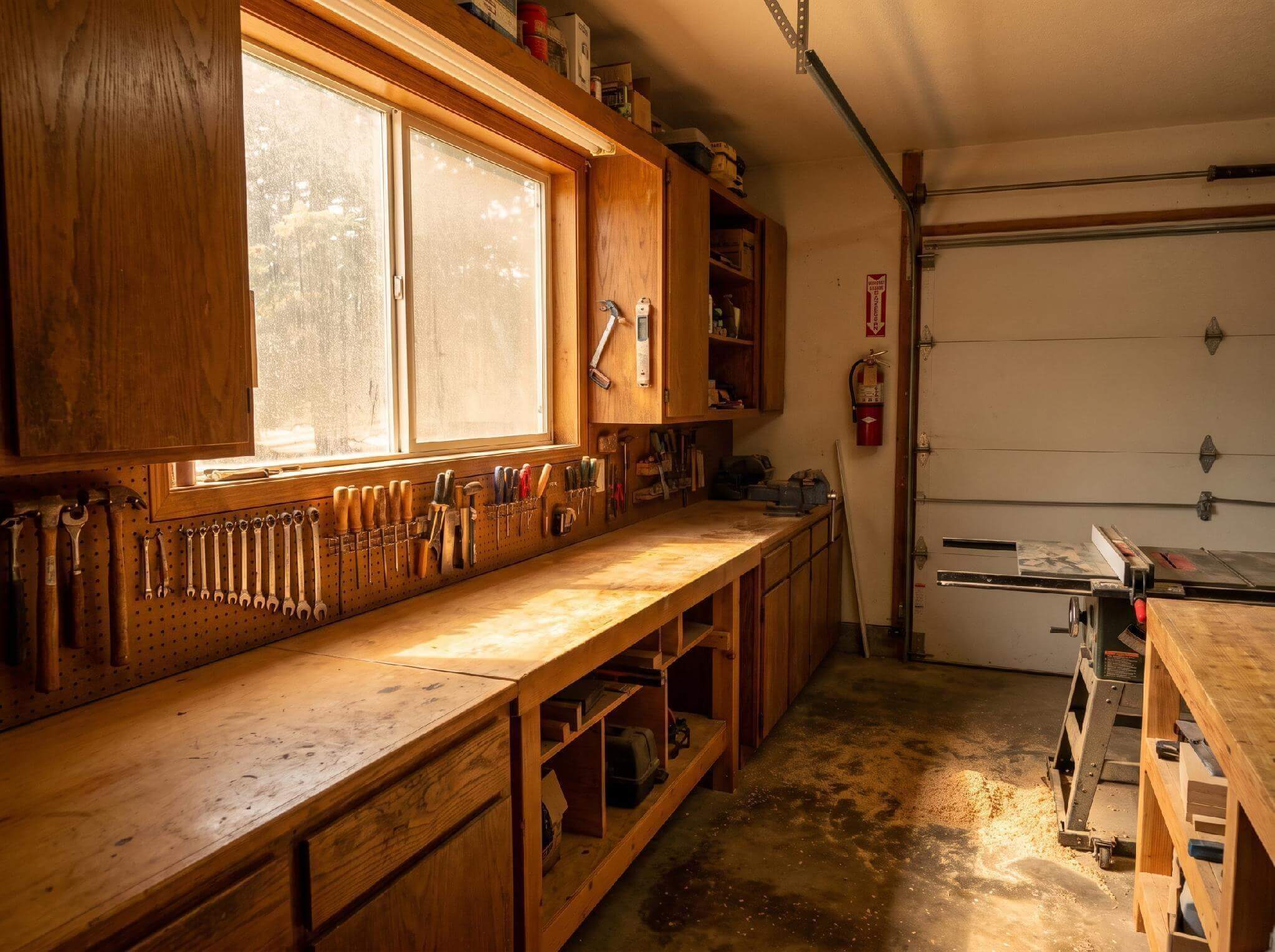
A well-organized home workshop with tools stored safely and a fire extinguisher within easy reach.
Why the Garage or Workshop Is a Fire Risk Waiting to Happen
A workshop packs more fire triggers into one room than almost anywhere else in a house. You’ve got power tools pulling heavy current, lithium-ion batteries charging overnight, sawdust drifting into every corner, and rags soaked in stain or linseed oil that can combust on their own without a spark anywhere near them.
Garages and basements get called out by name in federal fire-prevention guidance, flagging flammable liquid storage, oily rags, and overloaded circuits as the recurring culprits behind home workshop fires.
Even with good habits, fires happen. A shop that goes up fast can wipe out years of tool investment in minutes. Once the fire department has cleared the scene, the next step is often finding professional help. A quick search online for fire damage restoration near me can help property owners find a local crew to secure the building, board up openings, and begin drying out anything salvageable before moisture, mold, and corrosion add to the damage.
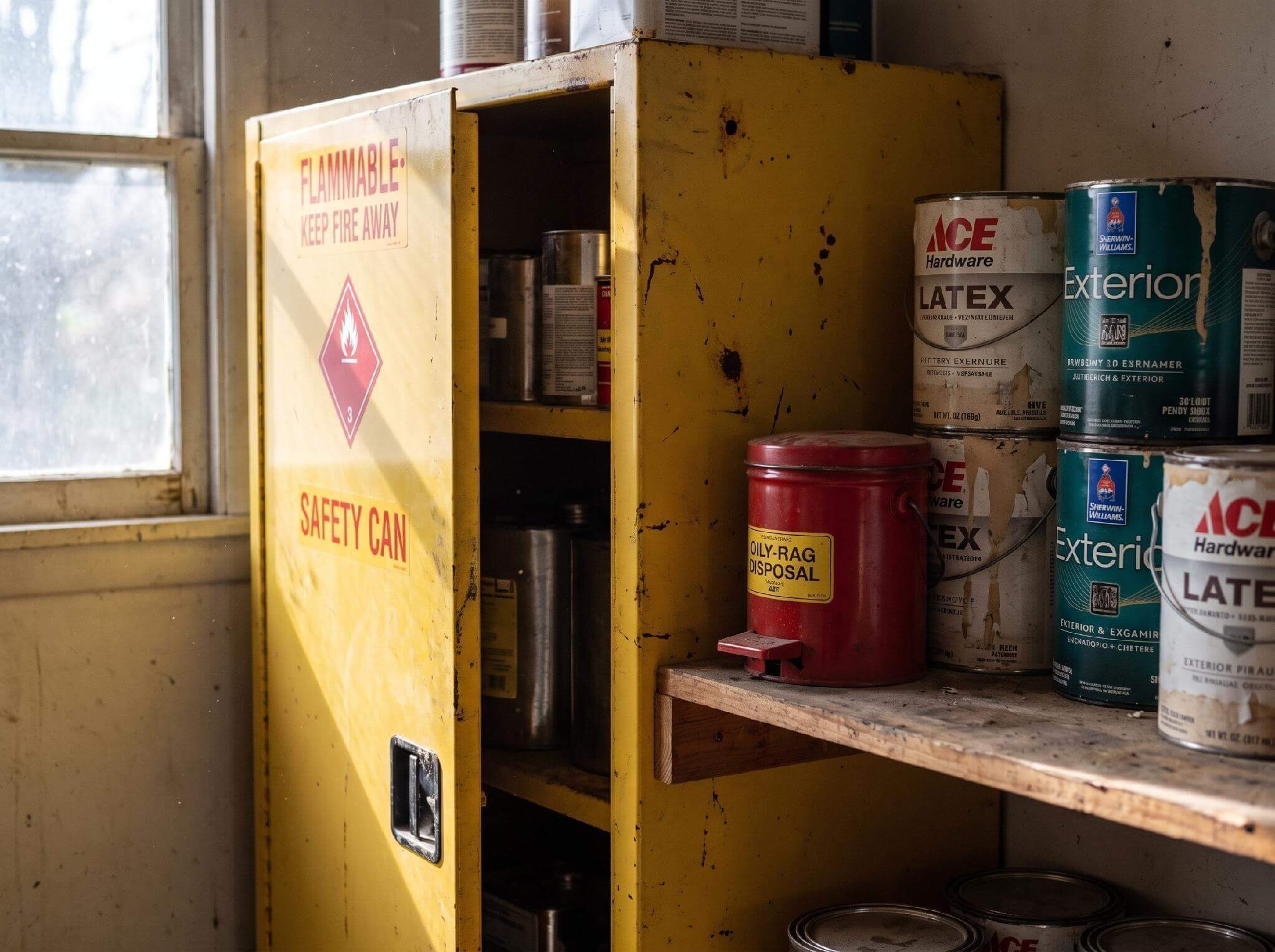
Storing flammable liquids and oily rags in approved metal containers cuts down on one of the most common workshop fire risks.
That’s the worst-case scenario, and most shops never get there. It’s still worth understanding why this particular room catches fire more often than the rest of the house.
Electrical issues alone account for roughly 30% of workshop fires, according to a breakdown from Fire Chief Global on garage and workshop fire protection. That tracks with what most of us have seen firsthand: a shop vac, a compressor, a space heater, and a battery charger all fighting for the same outlet strip isn’t a rare setup; it’s the default. A federal breakdown of common garage fire habits walks through exactly which mistakes raise that risk fastest, from overloaded outlet strips to unattended chargers.
None of that means giving up on power tools or going back to hand-cranked everything. It just means treating the shop’s electrical load and storage habits with the same seriousness you’d give a table saw blade guard.
If you want a deeper walkthrough of wiring and layout choices that cut that risk, our guide on setting up a safer home workshop covers the electrical and storage basics before you even pick up a tool.
Prevention Habits That Actually Work in a Home Shop
Most workshop fires trace back to a handful of preventable habits rather than some freak accident. Store flammable liquids like stain, paint thinner, and gasoline in an approved metal cabinet, not on an open shelf next to your welder. Drop oily rags into a sealed metal can instead of a cardboard box or trash bag; spontaneous combustion from linseed oil rags is a well-documented cause of shop fires, and it’s entirely preventable with a ten-dollar can.
Give anything that generates heat, like a bench grinder, a soldering station, or a space heater, at least 18 inches of clearance from anything flammable. The Department of Homeland Security notes that a small flame can grow into a major blaze in as little as 30 seconds, and a house fire can become fully involved in under three minutes. That’s not enough time to improvise; it’s enough time to grab a fire extinguisher you already know the location of, or it isn’t.
A few other habits worth building into your routine:
- Mount an ABC-rated fire extinguisher near the exit, not buried behind a workbench.
- Install interconnected smoke alarms so a fire in the garage triggers alarms throughout the house.
- Charge lithium-ion tool batteries on a non-combustible surface, away from the exit path, and never overnight unattended in a cluttered corner.
A 2025 fire-safety alert on flammable liquid storage warns homeowners about exactly this combination: flammable liquids, battery chargers, and garage appliances sharing tight quarters with limited ventilation.
None of these habits cost much or take long to build. What they buy you is time, and time is the one thing you don’t have once a fire starts.
Our piece on workshop safety habits for DIYers goes further into daily routines that keep a shop running without turning it into a fire hazard, and it’s worth a look once the storage basics above are handled.
If a Fire Does Happen: Salvaging Tools and Equipment
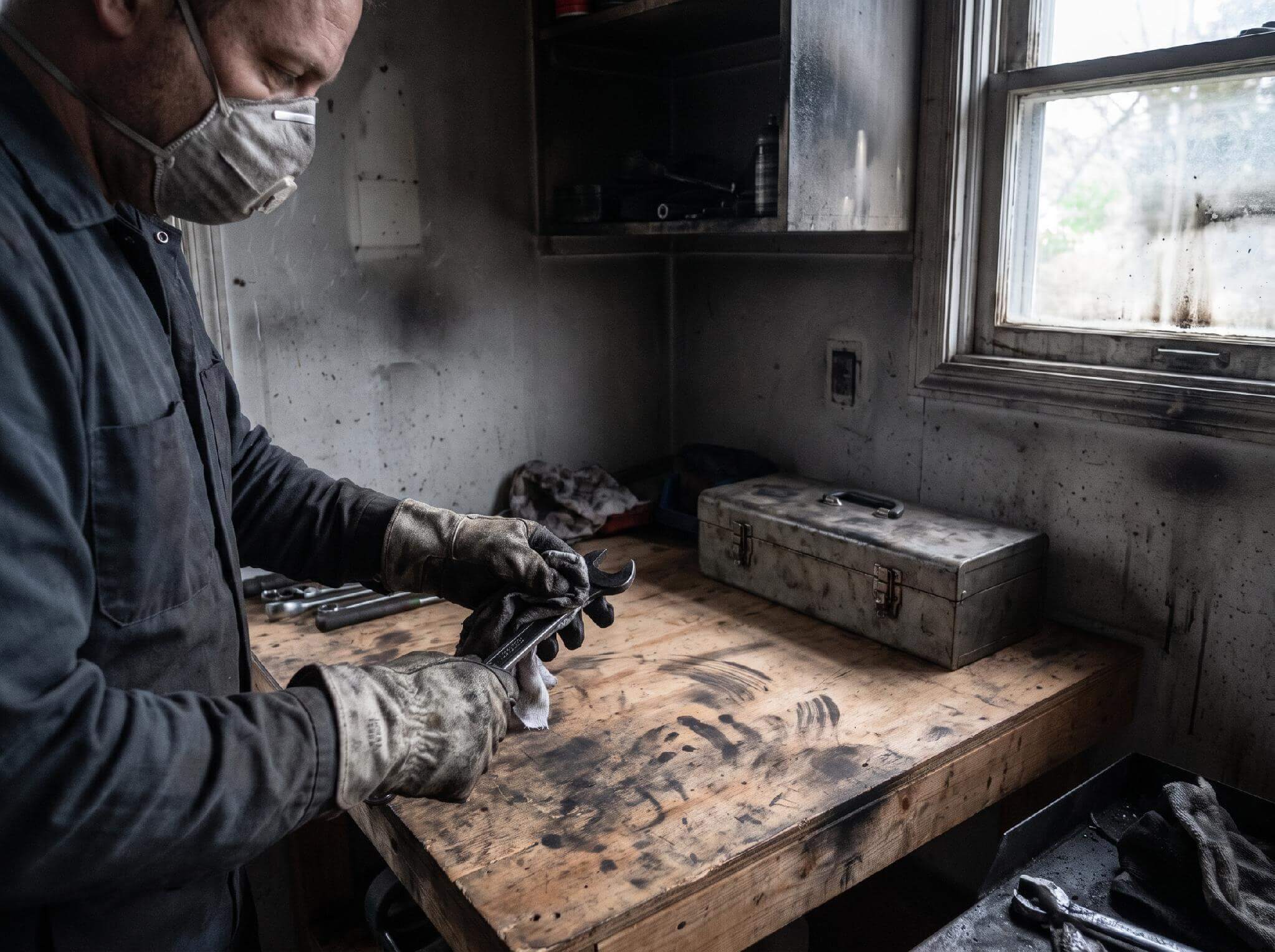
Cleaning soot from metal tools right away can prevent long-term corrosion after a fire.
Metal hand tools often survive a fire better than you’d expect. Soot wipes off, and a light coat of oil after cleaning keeps rust from setting in on blades and cast-iron surfaces. That part you can handle yourself with gloves, a mask, and some patience.
What you can’t handle with a shop rag is everything else a fire leaves behind. Smoke odor works its way into porous materials like wood, drywall, and insulation, and it doesn’t come out with soap and water. Power tools and anything with a circuit board can look fine and still have corrosive soot residue eating away at the internals.
The Fire Safety Research Institute’s overview of fire trends and causes notes how quickly modern fires spread and how much residual damage they leave behind compared to older building materials, which is part of why professional-grade equipment like ozone treatment, HEPA scrubbing, and thermal fogging exists in the first place. A garage sponge and elbow grease just weren’t built for that job.
One more thing worth saying plainly: don’t re-enter a fire-damaged structure until the fire department clears it. Structural damage isn’t always visible, and floors or ceilings that look fine can fail under weight they used to hold without issue.
Rebuilding a Safer Workshop After the Fact
Rebuilding after a fire is a rough process, but it’s also the one moment you get to fix the layout mistakes that contributed to the damage in the first place. Keep at least 36 inches of clear pathway to every exit, and don’t let that rule slide the way it probably did before. Mark your exit path clearly, even in a one-car garage, so you’re not stepping over cords and lumber scraps if you ever need to get out fast.
If your shop work has drifted toward welding, grinding, or anything that throws sparks, it’s worth setting that up in its own fire-safe zone rather than letting it bleed into your woodworking bench. We cover how to lay that out properly in our piece on adding a dedicated fire-safe work zone, which walks through flooring, ventilation, and clearance choices for that kind of setup.
A rebuild is expensive, and it’s a hassle; nobody’s arguing otherwise. But it’s also the cheapest insurance you’ll ever buy against the same mistake happening twice.
Conclusion
The tools and hours you’ve sunk into a home workshop are exactly what makes it worth protecting, and exactly what a fire threatens first. Most of the risk comes down to a short list of fixable habits: proper storage for flammables and rags, clearance around heat sources, a working extinguisher within reach, and smoke alarms that actually cover the garage.
Get those right, and you’ll avoid the vast majority of workshop fires before they start. If one happens anyway, know the difference between what you can clean up yourself and what needs a professional crew with the right equipment. That distinction is what protects the rest of your house, and the next version of your shop, once the smoke clears.