The modern luxury bathroom is no longer being treated as a purely functional room. It is becoming a private retreat, a place where architecture, wellness, materiality, and daily ritual meet.
For years, the visual focus in bathroom design sat almost entirely on the vanity, tub, lighting, or wall tile. The shower floor, by contrast, was often treated as a technical necessity: something safe, sloped, waterproof, and easy to clean.
That attitude is changing.
As homeowners invest more thoughtfully in spa-like bathrooms, designers are paying closer attention to every surface underfoot.
The shower floor is no longer the forgotten plane of the room. It is becoming one of the most important design details in the bathroom, shaping not only how the space looks, but how it feels.
A Dedicated Wellness Space
The rise of the spa-like bathroom reflects a larger cultural shift.
Homeowners, especially women, are looking for interiors that support calm, comfort, and sensory ease, and washrooms do bring in that starting point where the self care actually starts.
The bathroom is especially suited to this mood because it already holds the rituals of beginning and ending the day. A shower can be quick and practical, but it can also become something slower and more restorative when the space around it is designed with intention.
This is why designers are moving away from sterile, overly minimal bathrooms that feel more like showrooms than lived-in sanctuaries.
The all-white, high-gloss bathroom still has its place, but many homeowners now want more warmth, more texture, and more individuality. They want bathrooms that feel refined without feeling cold.
Tile plays a central role in that shift. Unlike paint or hardware, tile has permanence. It carries texture, color, pattern, scale, and surface variation. In a spa-like bathroom, the right tile can soften the architecture, ground the room, and create a sense of quiet luxury.
Why is the shower floor getting attention now?
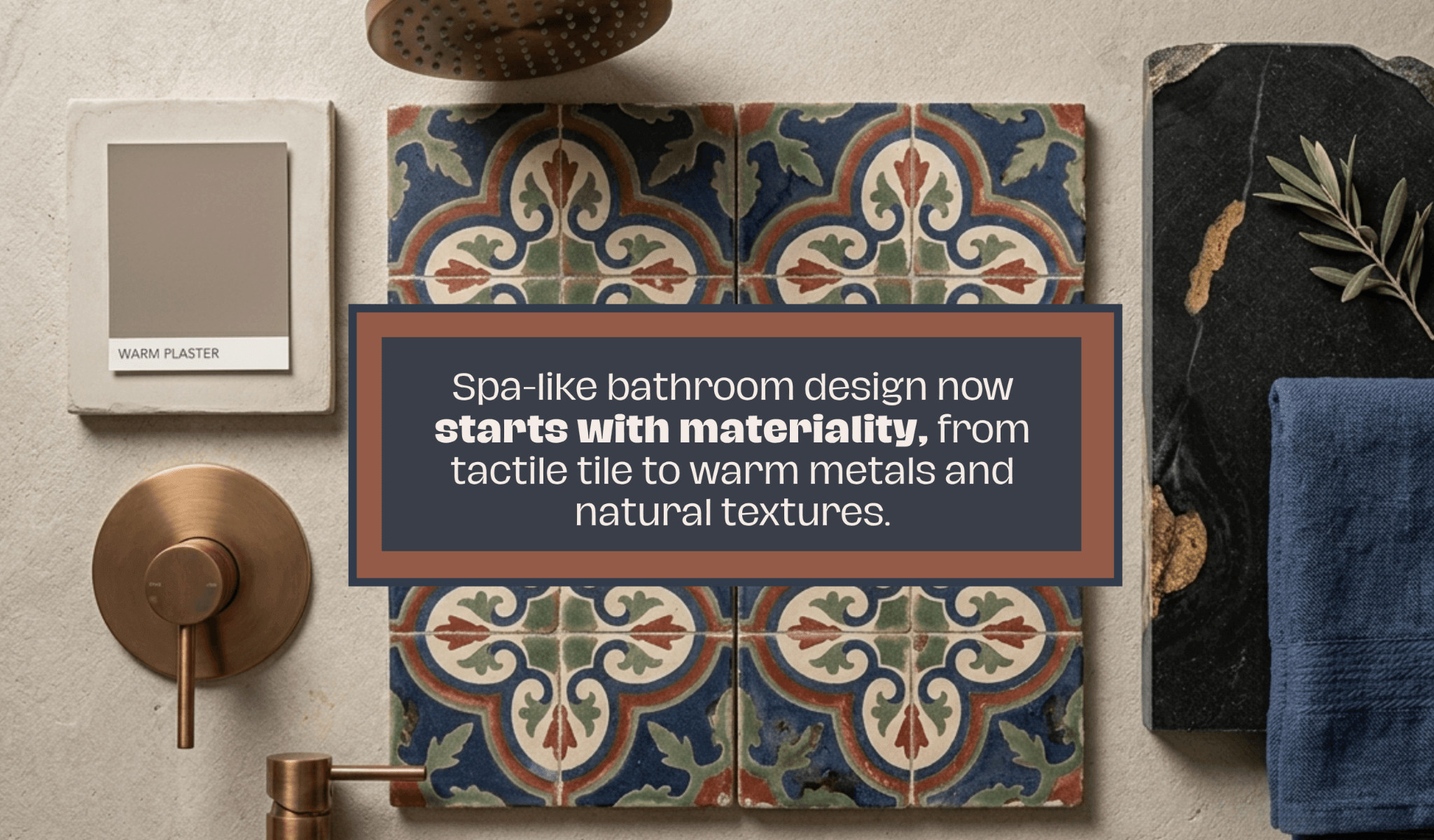
A shower floor may be small compared with the surrounding walls, but it has an outsized influence on the experience of the bathroom. It is the one surface the body physically meets every day. It affects safety, comfort, proportion, and visual rhythm.
In luxury bathroom design, that tactile quality matters.
A shower floor should not feel like an afterthought. It should relate to the rest of the bathroom while still performing properly in a wet environment. The scale of the tile, the grip of the surface, the direction of the layout, and the way it meets the drain all influence the finished result.
This is where designers are becoming more precise. Instead of defaulting to a basic shower pan or a generic mosaic, they are asking more layered questions.
- Should the floor quietly blend into the walls?
- Should it introduce a subtle contrast?
- Should it bring in stone, terracotta, cement, marble, or zellige-inspired character?
- Should the shower feel like a seamless wet room, or should the floor act as a design feature in its own right?
The best spa-like bathrooms do not rely on one dramatic gesture. They are built through details that feel considered from every angle, including the floor.
Moving away from minimalism
The retreat from hard minimalism does not mean bathrooms are becoming chaotic or overly decorative. Instead, the most successful interiors are embracing a more personal kind of restraint.
This might mean a soft tonal palette with handmade tile variation, a natural stone shower floor, or a patterned surface used in a quiet, architectural way.
In tile, character often comes from subtle imperfections: a glaze that catches light differently from one piece to the next, a handmade edge, a mineral surface, or a pattern that feels grounded rather than trendy.
This is especially important in bathrooms, where too much visual noise can disrupt the calming effect.
Designers are increasingly choosing materials that bring depth without overwhelming the room.
A textured shower floor, for example, can introduce warmth and movement while allowing the rest of the bathroom to remain serene.
clé and the return of surface character
As a U.S.-based design brand, clé has built its reputation around tile as more than a finish, and sits naturally within this conversation of character.
The brand approaches tile as a material with history, craft, and emotional presence, working across collections that include zellige, cement, stone, terracotta, marble, porcelain, and other distinctive surfaces.
Its range of tile for shower floor design reflects the larger movement away from bland utility and toward bathrooms that feel more considered, tactile, and quietly luxurious.
clé’s perspective is relevant because it treats tile as part of a larger design language, not simply as a surface covering.
In today’s spa-like bathroom, the shower floor has become one of the subtle details that gives the entire space its atmosphere.
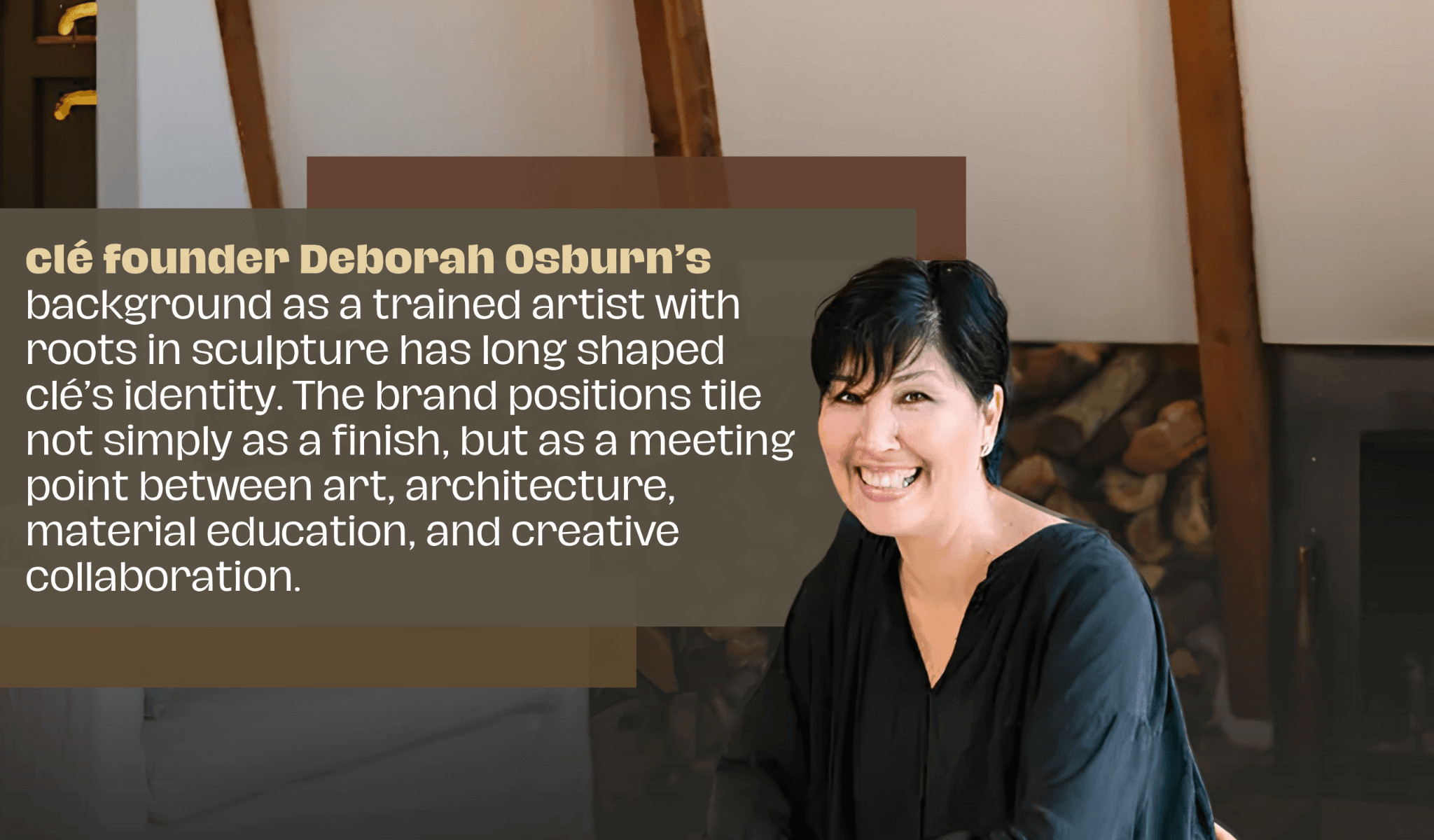
That perspective matters in luxury bathroom design because the new spa-like bathroom is not only about expensive fixtures or larger floor plans. It is about the atmosphere created through surfaces, tactility, craft, and detail.
- A shower floor from clé can be quiet or bold, depending on the material and layout.
- A marble mosaic can feel classic and hotel-like.
- A cement tile can bring pattern and depth.
- A zellige or terracotta surface can introduce warmth and handmade irregularity.
- A stone finish can make the shower feel closer to a natural bathing environment.
The common thread is that the shower floor is treated as a design decision, not a default.
The new language of luxury bathroom tile
Luxury bathroom design is becoming more sensory. It is less about polished perfection and more about atmosphere.
Designers are thinking about how tile feels underfoot, how water moves across it, how light reflects from the surface, and how the material changes the mood of the room.
This is why smaller-format tiles, mosaics, textured surfaces, and natural-looking finishes continue to matter in shower spaces. They can help with practical concerns such as slope and grip, but they also create a more intimate scale.
A shower floor does not need to match the walls exactly. In fact, a slight variation can make the room feel more layered.
For example, a bathroom might use large-format stone-look tile on the walls and a smaller honed marble mosaic on the shower floor.
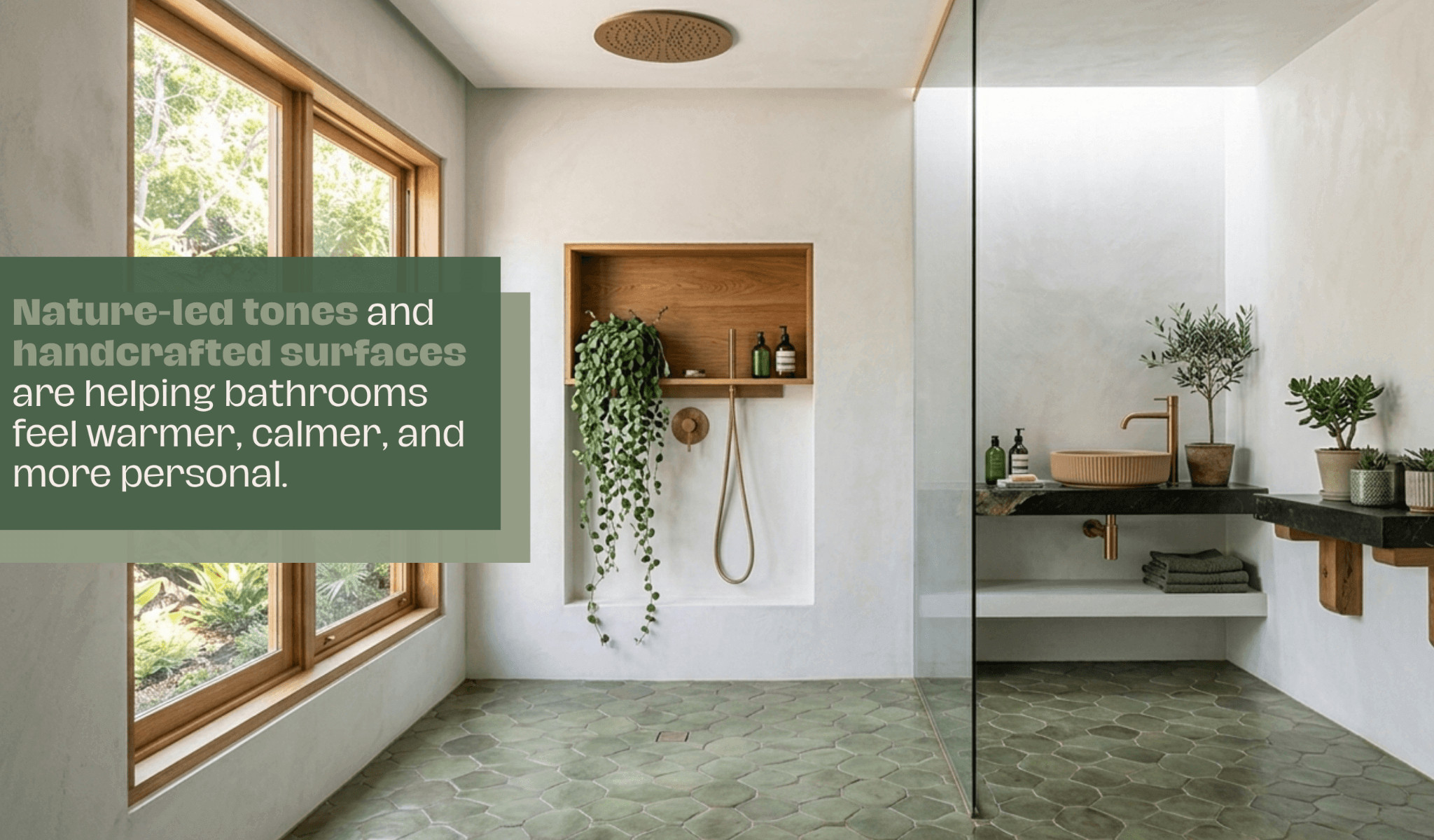
Another might pair calm plaster-like walls with a handmade tile floor in a muted green, clay, or warm neutral. In a more expressive home, the shower floor might become the first place where pattern enters the room.
The goal is not to make the floor loud. The goal is to make it intentional.
Color is becoming softer, warmer, and more personal
The spa-like bathroom is also changing the way homeowners think about color. Instead of stark white and cool grey, designers are leaning into colors that feel closer to nature: mineral blues, soft greens, sand, ivory, clay, mushroom, slate, and warm stone tones.
These colors are especially effective on the shower floor because they visually ground the space. A warm neutral floor can make a bathroom feel softer.
A darker stone or slate-inspired tile can add depth and contrast. A pale zellige-style or handmade tile can bring lightness while still avoiding a flat, sterile look.
This is one reason character-rich tiles have become so important.
A single flat color can sometimes feel too stark in a bathroom. But a tile with tonal variation allows the color to breathe. It feels more natural, more relaxed, and more connected to the idea of a private retreat.
Performance still comes first
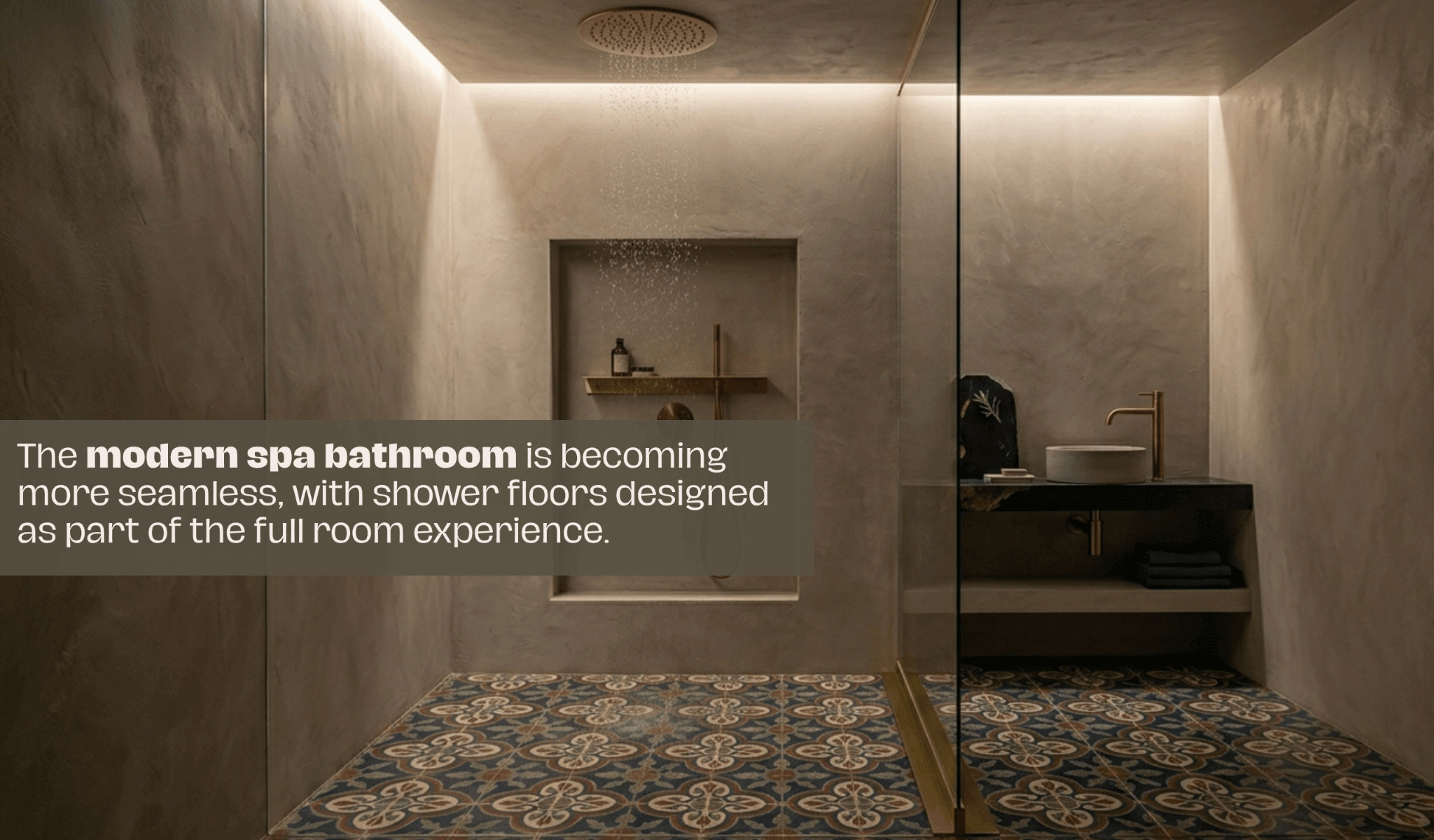
For all the interest in beauty, the shower floor remains a technical surface. It must be chosen with care. Slip resistance, drainage, grout lines, slope, sealing requirements, maintenance, and installation quality all matter. A beautiful tile that is wrong for the application can quickly become a problem.
This is why designers often think differently about shower floors than bathroom walls. A glossy wall tile may be beautiful vertically but unsuitable underfoot. A large tile may look seamless in theory but can be harder to slope properly in certain shower layouts. Natural stone can be elegant, but it may require more maintenance than porcelain or ceramic options.
The most successful luxury bathrooms balance atmosphere with performance. The shower floor should feel beautiful, but it should also be suitable for a wet, frequently used space. That balance is where expert material selection becomes essential.
The shower floor as a design signature
What makes this trend interesting is that it is subtle. The shower floor is not always the first thing a guest notices in a bathroom, but it is one of the details that gives the room its authority. When it is well chosen, the entire space feels more resolved.
That is the difference between a bathroom that simply looks expensive and one that feels designed.
A spa-like bathroom does not need to imitate a hotel suite exactly. In fact, the most compelling versions feel more personal than that. They might borrow the calm of a spa, the material richness of a boutique hotel, and the comfort of a private home.
The shower floor helps bring those ideas together because it is both practical and intimate, architectural and tactile.
As designers continue to rethink the bathroom as a space for wellness, beauty, and daily restoration, the shower floor will only become more important. It is where the room meets the body. It is where material choices become physical.
And in the new language of luxury bathroom design, that makes it far too important to ignore.