I can usually tell which tools I really like by looking at them. They are rarely the clean ones.
There is the scratched tape measure that has survived more drops than I can count. The hammer with a worn handle that somehow feels better than the newer one. And the flashlight I grab whenever I need to look behind a cabinet, under the sink, or beneath the truck.
None of them is especially exciting. They are not always the newest tools in the shop, and they probably did not have the longest feature lists when I bought them. They simply work.
Over the years, I have noticed the same thing with gear outside the toolbox. Work boots, pocketknives, backpacks, flashlights, and watches face many of the same challenges as tools. They need to hold up, feel right in use, and do their jobs without getting in the way.
Looking at what works in those other categories can tell us quite a bit about what makes a tool worth keeping.

Start With the Job
Consider a framing hammer. Its job is straightforward: drive nails efficiently, provide leverage when you need to pull one, and remain manageable after repeated swings.
Its weight, handle length, grip, and balance all follow from that job.
I find this easy to forget when looking at new tools. Put two drills side by side and your attention naturally goes to battery size, torque numbers, modes, speeds, and whatever new feature is printed most prominently on the box.
Some of those features may be useful. Others may never leave the setting they were on when the tool came out of the case.
Outdoor gear offers a good comparison. A waterproof jacket might have fewer openings because every zipper and seam is another place water could eventually find its way through. A hiking pack may look overloaded with straps until you use them to stop a heavy load from shifting around.
I have become much more interested in what a tool does well than in how many things the manufacturer says it can do. If you know the jobs you expect it to handle, the useful features tend to become obvious.
Look for the Part That Will Fail First
I have dropped tape measures onto concrete enough times to appreciate a tough case. But the case is rarely the part that eventually annoys me.
Maybe the belt clip bends. The hook develops too much play. The printed markings start disappearing near the first few inches. Or the return spring gets tired and leaves the last foot of blade hanging out.
None of those problems has much to do with how rugged the case looks.
Pliers can be made from excellent steel and develop play in the joint. A metal flashlight can survive plenty of drops but become useless because of a bad switch. Heavy leather boots can have years left in the uppers when a sole begins to separate.
That has changed what I look at when comparing gear. The tough-looking exterior still matters, but I spend more time checking the hinge, switch, seam, spring, latch, or connection that will be used hundreds of times.
Those smaller parts often tell you more about how something will age.
Good Gear Should Be Easy to Read – and what it has to do with good watches
Some tools have to give you useful information quickly. Think about a tape measure with faded markings or a level with a bubble that is difficult to see in poor light. Both may technically still work, but they slow you down because you have to stop and look twice. Accurate measurements can save a surprising amount of trouble before a project even begins, which is why a simple measurement walk before starting a weekend project can be worth the extra half hour.
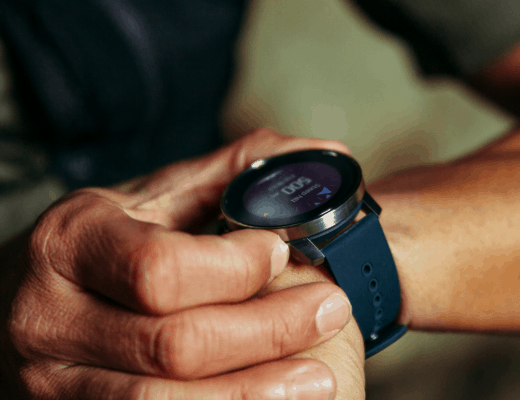
Take a professional Seiko Prospex, for example. The clear markers and strong contrast make the dial quick to read, much like the markings on a good tape measure or the display on a pressure gauge. You should be able to get the information you need without stopping to study it.
That matters for watches made for specific conditions. A dive watch is built around visibility underwater, so large luminous markers, strong contrast, and an easy-to-read bezel are especially useful. An outdoor watch has different demands. It may need to stay readable in changing light, rain, or while you are moving, with a durable case and a dial that does not feel crowded. Prospex covers both types, so the details vary from model to model. What they have in common is simple: you should be able to check the watch quickly and get on with what you are doing.
Before you get carried away wearing your watch during your home working project, remember this though: a watch may be useful everyday gear, but it does not belong on your wrist when operating machinery where it could catch. OSHA’s machine-guarding guidance specifically advises removing rings, watches, neck chains, and other jewelry when using power saws because these items can become entangled. Charles & Hudson’s own workshop safety rules for DIYers make the same point: rings, bracelets, and watches should come off before working with power tools where they could catch on moving parts.
Your Hands Will Notice Things a Spec Sheet Won’t
I have used plenty of screwdrivers that felt fine for the first few screws and considerably less comfortable by the 40th.
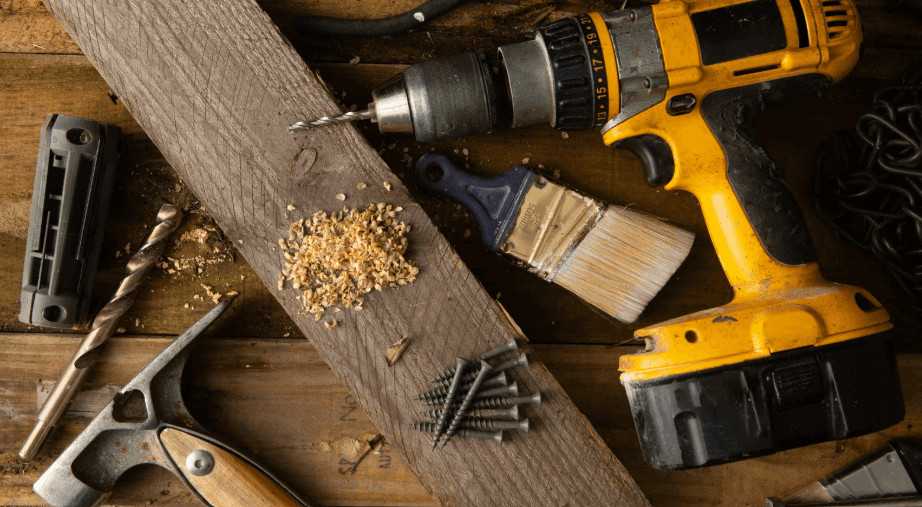
Anyone who has spent an afternoon installing cabinet hardware or assembling a deck knows how quickly a small annoyance can grow. A handle that is slightly too narrow starts digging into your palm. A drill that felt reassuringly solid at first starts feeling heavy when you have been holding it above shoulder height.
Grip texture matters more once your hands get sweaty. Balance matters when you are working at an awkward angle. Control placement matters when reaching a switch means changing your grip every time.
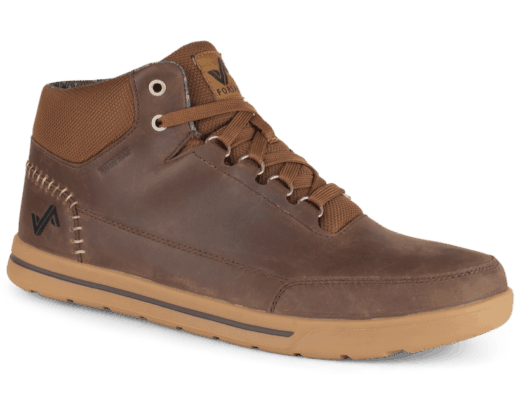
I have found work boots to be much the same. A pair can look nearly indestructible and still be the last pair you want to put on in the morning.
For tools I expect to use frequently, I still prefer picking them up before buying when possible. I hold them the way I would on a job rather than the way they are displayed on the shelf. Can I reach the trigger naturally? Are the switches in sensible places? Does the balance feel right?
A spec sheet can tell you that one drill weighs a few ounces less than another. It cannot tell you which one your hand will prefer after two hours.
Clever Features Have to Prove Themselves
I have owned more than one flashlight that required far too many button presses just to get the beam I wanted.
You want light. Instead, you get low, medium, high, flashing, another kind of flashing, and finally the setting you were looking for.
Extra modes are not necessarily bad. Sometimes they solve a real problem. The trouble starts when operating the tool becomes part of the job.
These days, I would rather have a tape measure with clear markings, a lock that holds, and a blade that retracts smoothly than one with a collection of clever extras I will rarely use. Power tools are no different. Additional settings can be valuable if they solve problems you regularly encounter. Otherwise, they are mostly more controls to remember.
The claw hammer has survived with remarkably little reinvention. The face drives the nail. The claw pulls it. The handle gives you grip and leverage.
Nobody has to stop halfway through hanging a door to remember which mode the hammer is in.
Think About What Happens After a Few Years
New tools rarely tell you much about how they will age.
After a few years, screwdriver tips get chewed up. Utility knife blades have gone through countless replacements. Saw blades dull. Batteries lose capacity. Dust finds its way into places you did not know dust could reach.
This is where I start caring much more about maintenance and repair than I did when the tool was new.
On some tools, replacing the worn part takes a minute. On others, a small failure turns the whole thing into trash.
Before buying something I plan to use regularly, I like to look at the obvious wear items. Can the blade be replaced easily? Is the battery available separately? Can I get into the areas that will need cleaning? If a common component wears out, is there any realistic way to replace it?
Not every $20 tool needs to become a family heirloom. And a heavily used tool will eventually reach the end of its life no matter how well it was made.
Still, it is frustrating to throw away an otherwise useful piece of equipment because one predictable wear part was never meant to be serviced.
Pay Attention to What You Already Use
I have found that an old workshop can be a better guide to buying tools than a wall of new ones at the store.
Look at what is actually worn.
The favorite hammer has marks across its face. The tape measure is scratched and probably has somebody’s name written on the back. The flashlight has paint or drywall dust in places that will never quite come clean.
Then there are the tools that still look new after three years.
That difference is worth noticing. The gear that gets used tends to fit both the work and the person doing it. You know where the controls are without looking. You know how it feels. You know what it will and will not tolerate.
When I am deciding what to buy next, specifications are still useful. I just do not give them the final say.
The beat-up tools already sitting on the bench usually have something to say about that.